

Key Takeaways
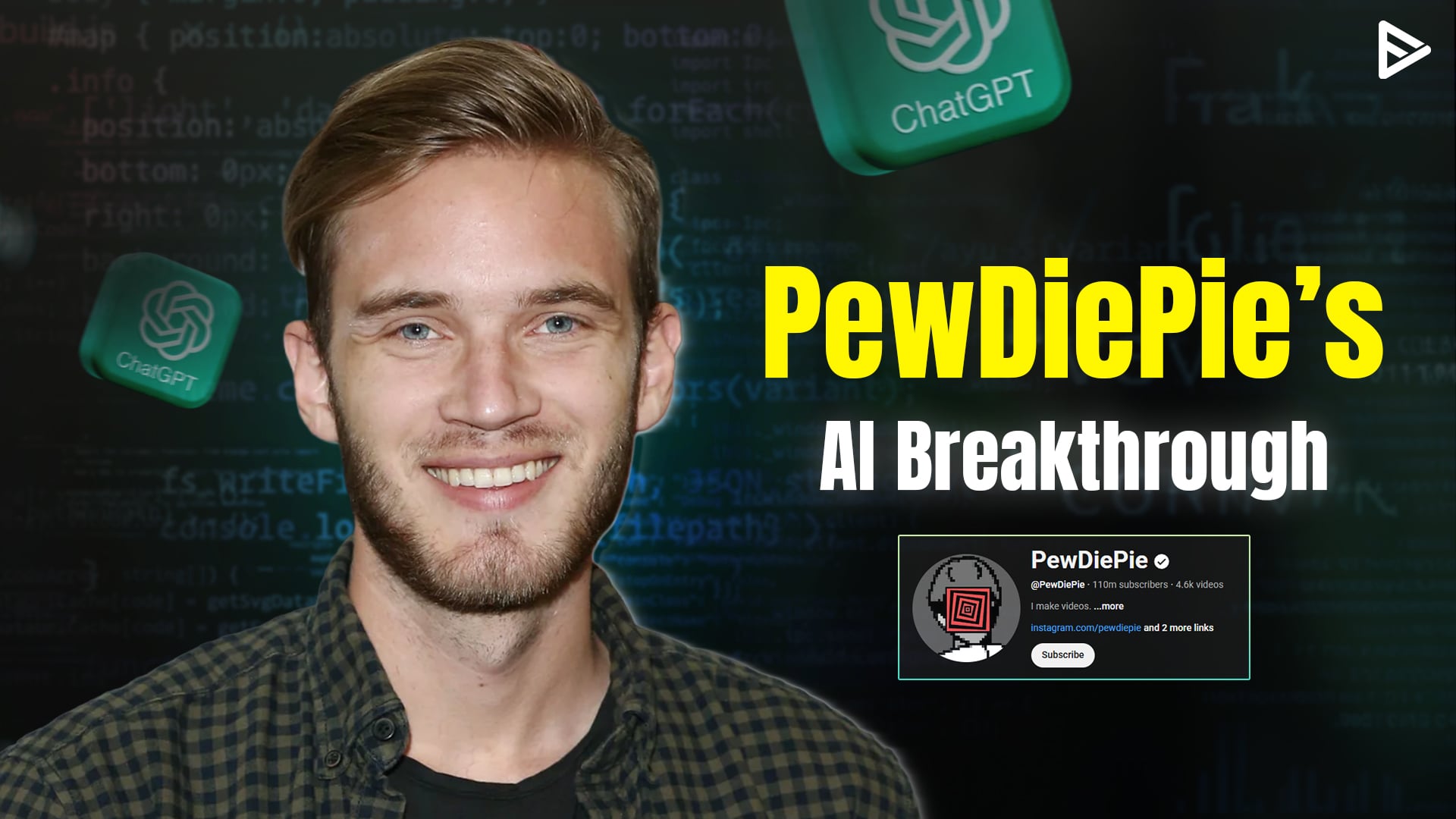
- Popular YouTube creator PewDiePie has revealed details of a year-long project that allegedly outperformed ChatGPT on a specific benchmark.
- The announcement shared in his recent video, ‘I Trained My Own AI… It beat ChatGPT’ has sparked discussion across tech and creator communities.
- The model improved from roughly 8% to over 39% on the coding test through targeted improvement.
While it appears to be a tall claim, the experiment clearly shows how YouTube creators are evolving beyond content production, signaling a shift from entertainers to tech innovators.
PewDiePie AI Experiment Explained
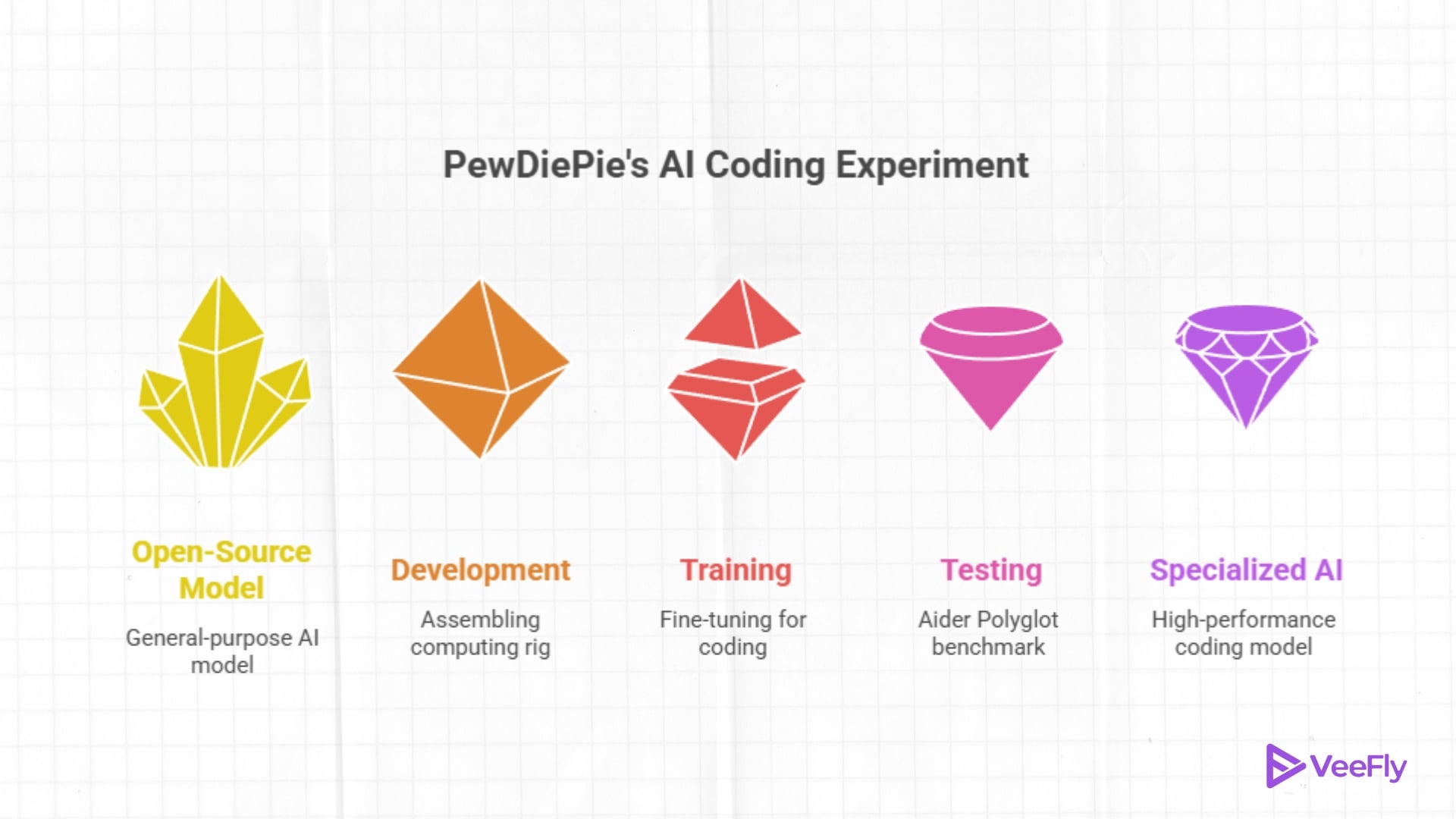
PewDiePie is a master of creating viral videos, and it’s no surprise that his latest video alluded to outperforming ChatGPT on a particular test. According to the YouTuber, the project involved fine-tuning an existing open-source model to improve coding performance. Several tests were conducted to check the performance, including the Aider Polyglot coding benchmark, which achieved higher scores than ChatGPT.
Beating a benchmark score does not automatically mean that one AI system is superior to another, however, it does highlight the scope for evolving the AI space. Large-scale models like ChatGPT are optimized for general-purpose use across diverse domains, while fine-tuned models like the one PewDiePie designed can perform specialized tasks much more effectively.
Here’s the timeline of the events
- Late 2025: The project begins, spanning several months.
- Development Phase: PewDiePie assembled a high-performance local computing rig at his home in Tokyo
- Interactive Training: the model was built from an open-source large language model, and PewDiePie progressively improved its performance.
- February 27th, 2026: A YouTube video related to that explained his goals and results.
What Does This Mean for YouTube Creators?
PewDiePie’s impact is unparalleled across the platform. The recent experiment highlights that advanced AI development is no longer limited to tech companies. With the right tools and resources, creators can fine-tune open source to meet their specific needs. This influence is not just limited to tech, but to any content production tool. Custom AI systems to niche requirements may become more common within the creator economy.
The experiment also helps spot a larger industry trend, the increasing availability of open-source AI models that enable customization at scale. While large companies continue to lead in general-purpose AI development, even creators can fine-tune language models.
Final Thoughts
PewDiePie’s YouTube video essay on AI experiment does not signal the arrival of a competitor to ChatGPT. Instead, it serves as a case study showing how targeted improvements to open-source models can improve performance. For YouTube creators, it shows that one AI beating another is not a competition but the evolving accessibility of advanced tools.