


Key Takeaways:
- The future of music industry is powered by a “twin engine” model, with ads and subscriptions driving growth.
- Artist-first strategies are essential for building long-term, sustainable careers.
- YouTube enables multi-format engagement (shorts, long-form, live) to deepen fan connection.
- Global scale and discoverability are helping artists reach wider audiences than ever before.
Music has been an integral part of audiences’ lives, almost like a personal soundtrack. From daily routines to life-changing moments, people connect deeply with songs that reflect their emotions and experiences.
How is Music Evolving Today?
At a global level, music’s cultural impact is more visible than ever. Major stages like the Grammy Awards, BRIT Awards, and the Super Bowl Halftime Show bring together millions of fans worldwide. From iconic performances by global superstars to breakthrough moments for emerging artists, these events highlight how deeply music is embedded in cultural milestones.
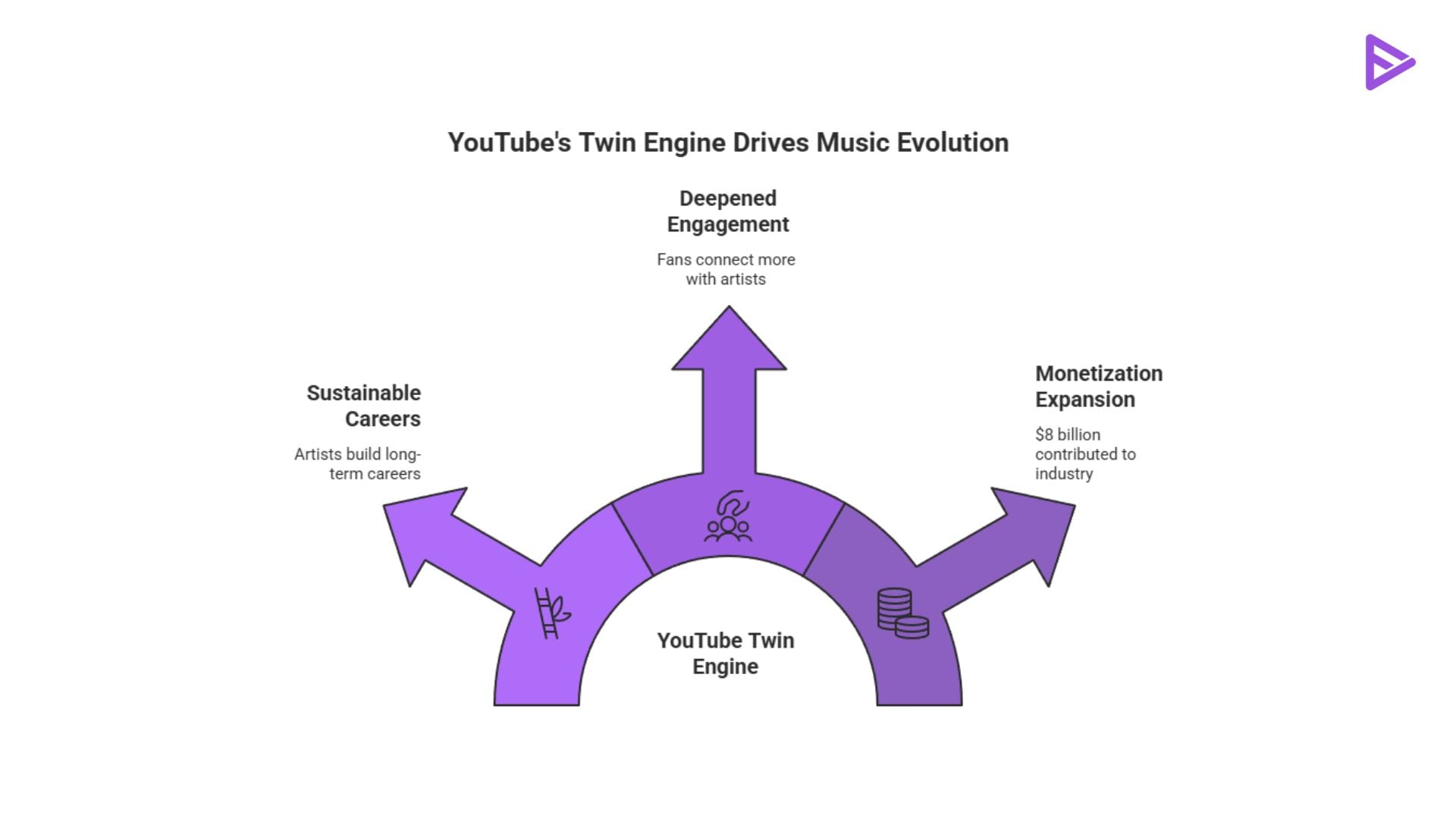
According to Lyor Cohen, the evolution of music is no longer just about streaming songs; it’s about building sustainable careers for artists while deepening fan engagement. Platforms like YouTube are leading this transformation with a “twin engine” approach: combining ad-supported discovery with subscription-based experiences.
Between July 2024 and June 2025, YouTube contributed over $8 billion to the music industry through these combined revenue streams. This model not only expands reach but also ensures consistent monetization, allowing artists to build long-term careers rather than rely on one-off success.
At the same time, technology is playing a transformative role. Neal Mohan reinforced this vision by stating, “AI will remain a tool for expression, not a replacement.” This reflects a balanced approach embracing innovation while protecting creativity.
YouTube continues to invest in this balance by enhancing tools like Content ID and developing AI likeness technologies to safeguard artists’ identities and rights. Alongside these advancements, the platform is actively working to curb the spread of low-quality AI-generated content, ensuring that originality and authenticity remain at the forefront.
Final Thoughts
Ultimately, the future of music industry is evolving toward a deeper connection between artists and fans. It’s no longer just about listening; it’s about engagement, participation, and shared experiences. Artists aren’t just creating music; they’re building communities. And fans aren’t just consuming, they’re shaping culture.
