


YouTube AI updates 2026: Roundup of Announcements
- AI Search, which goes from Keywords to conversations, was introduced at the Google I/O conference in May.
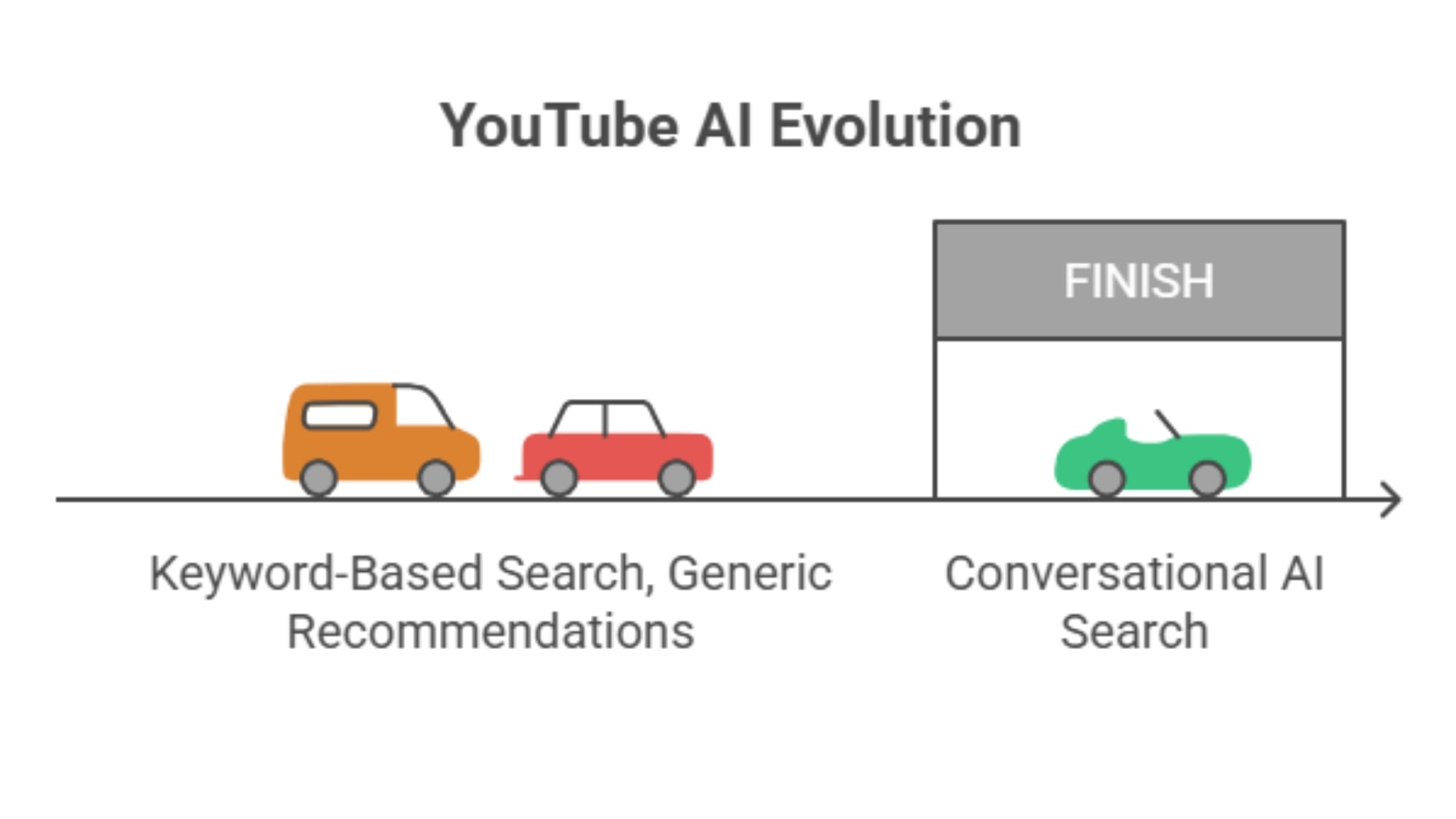
- One of the most significant updates is the introduction of conversational AI search, often referred to as “Ask YouTube.”
- Instead of relying on traditional keyword-based queries, users can now interact with YouTube using natural language.
- Beyond search, YouTube is integrating AI more deeply into its recommendation system. The platform has long relied on algorithms, but the new generation of AI models aims to better understand viewer behavior, preferences, and satisfaction.
- AI-Driven discovery and recommendations will become increasingly personalized. Two users searching for the same topic could see entirely different results based on their viewing history, interests, and engagement patterns.
- Another major theme from the announcements is the expansion of AI-powered tools for creators. These tools are designed to simplify and accelerate the production process, enabling users to generate or edit content using text, images, or voice prompts.
- AI tools for content creation mean YouTube is moving toward a future in which technical barriers to content creation are significantly reduced.
- A broader concept introduced during the announcements is that of agentic AI systems capable of performing tasks, making decisions, and assisting users in more proactive ways.
New Opportunities for YouTube Creators
For creators who understand how AI interprets content, this can position them more effectively. Videos that are clear, structured, and aligned with user intent are more likely to perform well. Second, AI tools can streamline production workflows, allowing creators to focus more on ideas and storytelling rather than technical execution.
Third, personalized discovery means even smaller creators can reach the right audience without relying solely on mass appeal. This shift has major implications; creators have optimized titles, tags, and descriptions around keywords. With AI-driven search, the focus moves toward contextual relevance and content depth. Videos that clearly answer specific questions or provide structured, informative content are more likely to surface.
In practical terms, creators may need to rethink how they package their content. Titles and thumbnails still matter, but the substance of the video is important. Further, how directly it addresses user intent, becomes even more critical. For creators, this raises both opportunities and challenges. On one hand, highly targeted content can find the right audience more efficiently.