

WELCOME OFFER! Get 50% Extra Views On Your First Campaign with VeeFly. Use Promo Code - FIRST50 Get Started
Home » YouTube Marketing » Real vs Fake YouTube Views: How to Tell the Difference

Real vs Fake YouTube Views: How to Tell the Difference

Real vs fake YouTube views can impact your channel growth, retention, and monetization.

Key Takeaways:

  • Real YouTube views come from genuine users who intentionally watch and engage with your content.
  • Fake YouTube views are usually generated using bots, click farms, incentivized traffic, or artificial systems.
  • YouTube actively detects invalid traffic and may remove fake views, limit monetization, or suspend accounts.
  • Real views improve watch time, retention, and long-term channel growth.
  • The safest growth strategy combines YouTube SEO, content quality, and legitimate promotion methods.

What Are Real YouTube Views?

Real YouTube views come from actual users who choose to watch your content because they are interested in it.
These viewers usually discover videos through:
  • YouTube search
  • Suggested videos
  • Shorts feed
  • External sharing
  • YouTube ads
  • Creator collaborations
Because the traffic is genuine:
  • Watch time is higher.
  • Engagement feels natural.
  • Audience retention improves.
  • Subscribers are more likely to return.
Real views also help YouTube understand which audiences enjoy your content. This increases your chances of getting recommended to more viewers over time.
Legitimate promotional methods such as YouTube Ads are considered valid traffic by YouTube and do not violate platform policies.

What Are Fake YouTube Views?

Fake YouTube views are artificially generated views that do not come from genuine audience interest.
These views are commonly created using:
  • Bots
  • Automated scripts
  • Click farms
  • Incentivized traffic
  • Traffic exchange networks
Their main purpose is usually to inflate video numbers quickly.
However, fake views rarely create meaningful engagement. Most artificial viewers:
  • Leave within seconds
  • Do not interact naturally
  • Do not subscribe genuinely
  • Do not watch future videos
YouTube’s fake engagement policy specifically prohibits artificially increasing views, likes, comments, or subscribers through automated systems or deceptive methods.

Why Does Real vs Fake YouTube Views Matter?

The difference between real and fake YouTube views can directly affect your channel’s growth, monetization, and recommendation performance.
Real traffic helps improve:
  • Watch time
  • Audience retention
  • Viewer satisfaction signals
  • Subscriber quality
Fake traffic often creates the opposite effect.
For example, a video with 100,000 views but very low retention sends poor quality signals to YouTube’s recommendation system.
According to YouTube, invalid traffic can lead to:
  • Removed views
  • Adjusted earnings
  • Limited ads
  • Monetization restrictions
  • AdSense suspension in severe cases
This is why creators increasingly focus on audience quality instead of raw view counts alone.

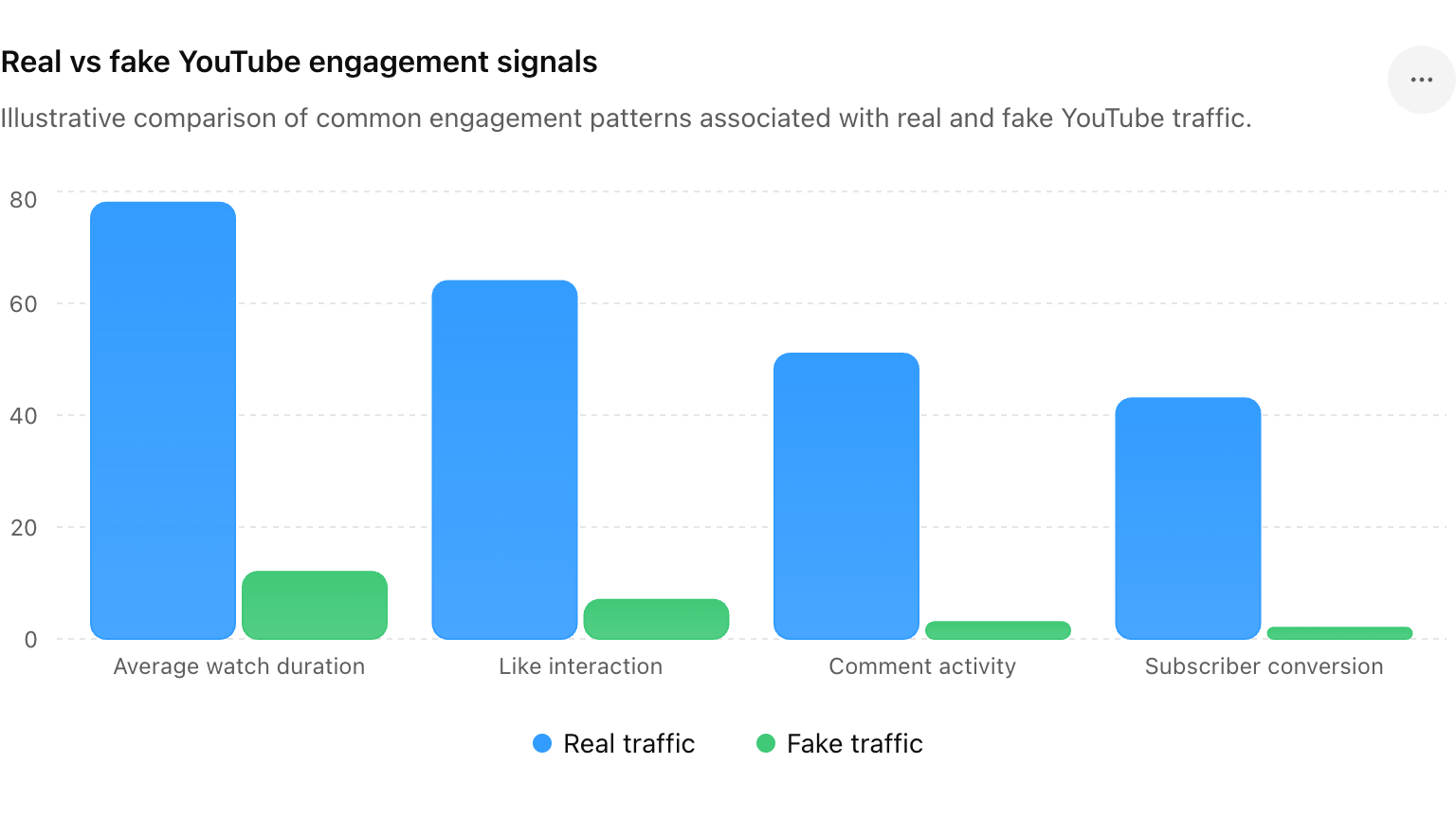
Key Differences Between Real and Fake YouTube Views

Factor Real Views Fake Views
Source Genuine users Bots or artificial systems
Watch time Higher Usually very low
Engagement Natural likes/comments Minimal interaction
Audience retention Stronger Weak
Subscriber conversion Higher Very low
Algorithm impact Positive Risky
Monetization safety Safe Can trigger invalid traffic
Traffic quality Targeted Random or automated
Long-term growth Sustainable Temporary spikes

How Does YouTube Detect Fake Views?

YouTube uses automated systems to identify invalid traffic patterns and artificial engagement.
The platform analyzes signals such as:
  • Watch duration
  • Viewing patterns
  • Repeated IP activity
  • Sudden traffic spikes
  • Engagement authenticity
  • Audience behavior anomalies
YouTube states that its systems evaluate traffic “regardless of where or how the traffic originated.”
This is why some fake views may initially appear on a video before later disappearing during audits.
Research studying video fraud detection also found that YouTube’s detection systems are generally more advanced than many other video platforms, although fraudulent traffic can still temporarily bypass filters.

How to Tell if YouTube Views Are Fake?

There are several warning signs that may indicate fake YouTube views.
You should be cautious if you notice:
  • Sudden unnatural spikes in views
  • Thousands of views with almost no likes or comments
  • Extremely low average view duration
  • Large traffic volumes from unrelated regions
  • High views but poor subscriber growth
A healthy channel usually shows balanced engagement patterns.
For example, videos with genuine traffic tend to maintain stronger retention and interaction rates.
This is why creators should monitor analytics quality, not just total view counts.

Which Services Usually Provide Real Views?

Some promotion services focus on legitimate audience acquisition instead of artificial traffic.
These methods often include:
  • YouTube Ads campaigns
  • Influencer collaborations
  • SEO-based video promotion
  • Social media distribution
  • Newsletter promotion
  • Creator shoutouts
These services usually attract viewers who intentionally choose to watch your content.
Legitimate providers typically:
  • Explain traffic sources clearly
  • Use audience targeting
  • Focus on retention and engagement
  • Avoid unrealistic promises
Growth may happen more slowly, but it is usually safer and more sustainable.

Which Services Usually Use Fake Views?

Services promising instant viral growth or extremely cheap bulk views often rely on low-quality traffic systems.
Common warning signs include:
  • “1 million views overnight”
  • Guaranteed algorithm boosts
  • Extremely low prices
  • No transparency about traffic sources
  • Automated delivery claims
These services frequently use:
  • Bot networks
  • Scripted traffic
  • Click farms
  • Incentivized viewing exchanges
YouTube’s policies prohibit services that artificially inflate engagement metrics.
In many cases, artificially generated views are eventually removed during invalid traffic audits.

Real vs Fake YouTube Views: Which is Better?

Real YouTube views are significantly better for long-term channel growth.
Fake views may temporarily increase vanity metrics, but they rarely improve:
  • audience loyalty
  • watch time
  • monetization stability
  • recommendation performance
For example:
  • Real viewers improve engagement quality.
  • Fake viewers hurt retention metrics.
  • Real audiences build communities.
  • Fake traffic inflates numbers without creating value.
Creators focusing on genuine audience growth are more likely to build stable monetization and long-term visibility.

How to Grow YouTube Views Safely?

The safest way to grow YouTube views is to combine content quality with legitimate promotion methods.
You can improve growth by focusing on:
  • YouTube SEO
  • Strong thumbnails
  • Better hooks
  • Audience retention
  • Shorts content
  • Consistent uploads
  • Community engagement
  • YouTube advertising
The goal should not be getting the highest number of views quickly.
Instead, creators should focus on building a real audience that repeatedly watches and engages with content over time.
This creates stronger long-term algorithm signals and reduces the risk of invalid traffic issues.

Final Thoughts

When comparing real vs fake YouTube views, the biggest difference is audience quality.
Real views help channels grow sustainably through stronger watch time, retention, and engagement. Fake views may temporarily increase numbers, but they often damage analytics quality and create monetization risks.
YouTube’s systems continue becoming more advanced at identifying artificial engagement. This is why long-term creators increasingly prioritize genuine audience growth over inflated metrics.
If you want sustainable YouTube success, focus on attracting real viewers instead of chasing artificial numbers.

Frequently Asked Questions

Q1. Can YouTube detect fake views?

Yes. YouTube uses automated systems to detect invalid traffic, bots, and artificial engagement patterns. Fake views may later be removed during audits.

Q2. Do fake YouTube views help videos rank?

Usually not. YouTube’s recommendation system relies heavily on watch time, retention, and viewer satisfaction signals rather than view counts alone.

Q3. Are YouTube Ads considered real views?

Yes. Views generated through legitimate YouTube advertising campaigns come from real users and comply with YouTube’s policies.

Q4. What is the safest way to increase YouTube views?

The safest approach combines SEO optimization, quality content, strong retention strategies, Shorts, collaborations, and legitimate YouTube promotion methods targeting real audiences.

Q5. What is the difference between fake views and real views on YouTube?

Real views come from genuine human users who watch your content through search, recommendations, or shares and generate watch time, retention, and engagement signals. Fake views are artificially produced by bots or click farms with no real engagement.