


Key Takeaways
- YouTube does not ban AI-generated videos, but it can restrict monetization for fully automated videos.
- YouTube AI monetization policy is keen on bringing out creativity and value-based content from human YouTube creators.
- Avoid high-risk formats like faceless channels, mass-produced shorts, content consisting solely of stock footage, and auto-generated news.
- YouTube creators who add their originality to content and avoid repetitive formats are safe from demonetization in 2026
- The best way to have AI content for YouTube monetization is to be efficient, add editorial value and monitor engagement signals.
What Is YouTube AI Monetization Policy?
The YouTube AI monetization policy governs how the platform evaluates a channel’s content for monetization. Under the YouTube Partner program, AI-assisted videos must include human insights and elicit a positive response from viewers.
Many creators mistake it for a total ban. In reality, YouTube regulates content by providing a safe space for creativity to thrive and sustainable growth for YouTubers.
Can YouTube Detect AI Content for Monetization?
YouTube focuses on patterns that signal fully AI content. The most obvious is the repeated use of video structures with similar scripts and synthetic voices. It triggers a review as overused content, lacks human editing, and is of poor quality.
The monetization system monitor focuses on upload frequency, since AI-heavy content tends to have a higher frequency in channels with near-identical content. Further, it leads to low watch time with high bounce rates.
5 Types of AI-Generated Videos at Risk of Demonetization
YouTube AI monetization policy doesn’t treat AI-generated videos equally. The highest-risk content shares common traits with automation and lacks human-added value. Here are the video types likely to face demonetization:
1. Faceless Channels
Fully automated channels use AI for scripting, voiceover, technical aspects, and publishing; in other words, AI is at every step of production, with no human input.
Why are they risky:
- Lack of editorial decision conflicts with YouTube Partner Program quality standards.
- YouTube views it as mass-produced content.
2. Stock Footage Videos
YouTube videos using stock footage images with the most generic text-to-speech narration have a low ranking on YouTube.
Why are they risky:
- Reusing visuals across many channels.
- AI voices lack natural variation when edited.
- Content feels generic and bland.
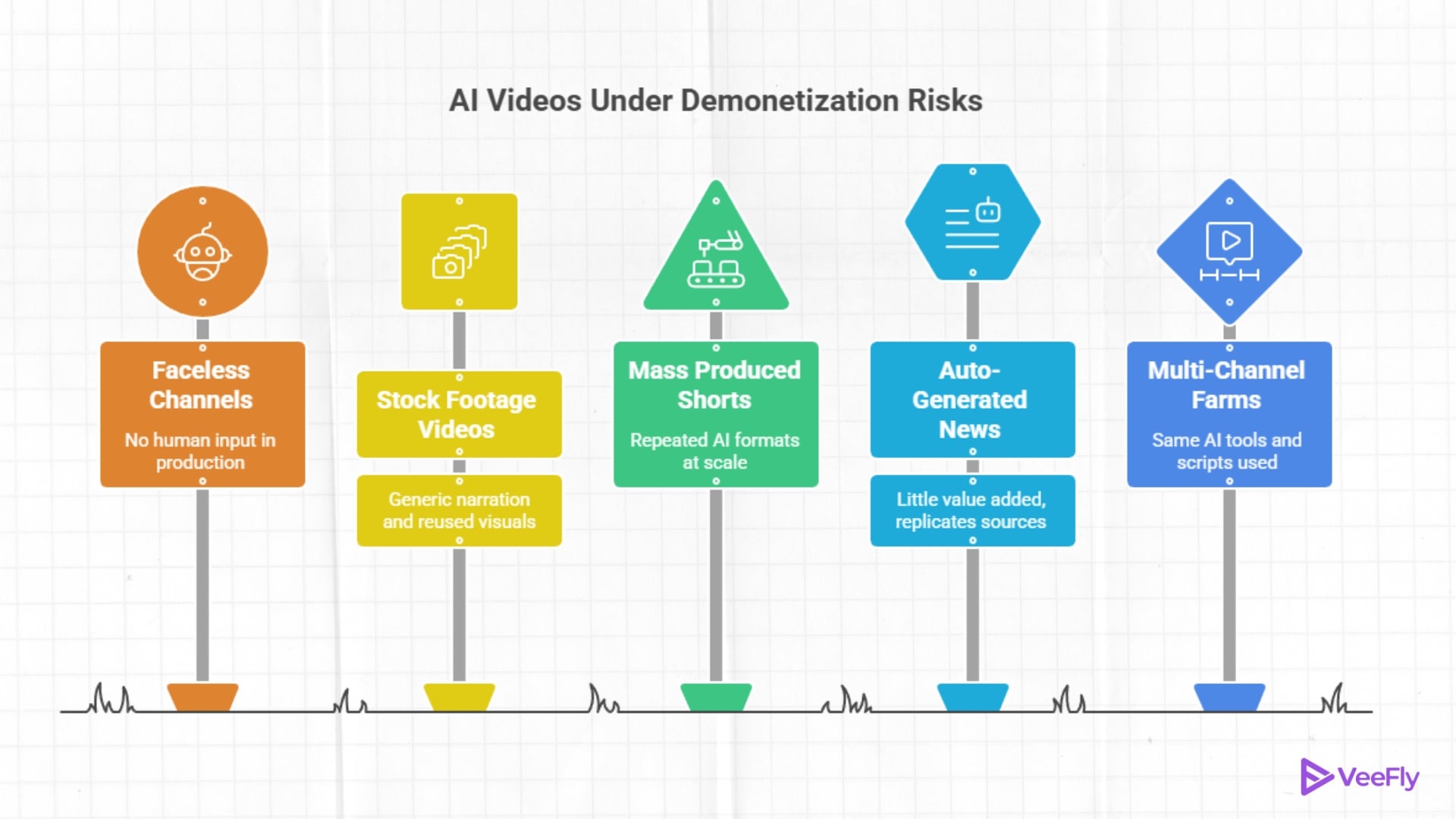
3. Mass Produced
YouTube creators prefer AI-generated Shorts because they can be produced quickly. However, YouTube evaluates YouTube Shorts at scale and promptly flags repeated AI formats.
Why are they risky:
- Low average watch time and retention.
- Recurring patterns since it’s from the same material
4. Auto-Generated News
AI-generated news summaries and trivia videos fail to meet monetization standards since they add little value. Even when they are factually correct, audiences often see these videos as slop rather than actual news reporting.
Why are they risky:
- YouTube content that replicates the available sources
- No original insights or analysis
5. Multi-Channel AI Content Farms
Some YouTube creators run multiple channels using the same AI tools and scripts. Viewers are quick to notice that the videos share the same voice and lack a unique visual style. Since YouTube actively monitors content, these channels are at risk of demonetization.
Why are they risky:
- Triggers manual monetization reviews
- Cross-channel similarity becomes easy to detect.
Best Practices to Stay Monetized Under YouTube’s AI Policy
YouTube creators don’t need to stop using AI to stay monetized. Still, they need to change how they use it: the YouTube monetization system rewards originality, human judgment, and viewer satisfaction.
- Privatize Human Involvement: AI and human collaboration can support workflows without substituting for creativity, opinions, and insights. It helps stay monetized instead of the YouTube video being fully automated and likely flagged.
- Avoid Focusing on Output Value: Monetization favors impact over scale. YouTube creators publish fewer, higher-quality videos.
- Improve Viewer Experience: Optimize for YouTube watch time and retention to send stronger monetization signals. Ensure to use natural pacing and varied visuals. Strong engagement can offset concerns about AI use.
- Be Strategic With AI Voices: AI-generated voices and images are allowed, but mix them with other visuals and edit the AI voices to create natural variation.
Final Thoughts
While YouTube isn’t banning AI-generated videos, it’s regulating them through a stricter monetization system. Under the YouTube AI monetization policy, the deciding factor is no longer whether AI is used but how much original human value a creator adds. The next step is to review your current AI workflow and identify where you can add more human insight.
Frequently Asked Questions
Q1)Can You Monetize AI Generated Videos on YouTube?
Yes, AI-generated videos are allowed on YouTube. YouTube permits AI-assisted and AI-generated videos as long as they follow YouTube content guidelines.
Q2)Is YouTube going to stop monetizing AI?
No, YouTube is not planning to stop monetizing AI content entirely. However, YouTube is introducing stricter reforms that will help human creators use AI safely.
Q3)Can YouTube tell if a video was made with AI?
YouTube doesn’t rely on a single AI detection tool; it uses patterns and engagement metrics to evaluate AI-generated content.
Q4)Are AI voiceovers allowed for monetization?
Yes, AI voiceovers are allowed, but they increase monetization risk when used without human editing.
Q5)Do I need to disclose that I use AI in my videos?
Disclosure is not required for standard AI assistance, such as script drafting or editing.
