


Key Takeaways:
- The format chosen for YouTube advertising determines marketing success.
- Advertisers fiercely debate skippable versus non-skippable ads to pinpoint which format sparks conversions without alienating viewers.
- A recent industry study reveals skippable in-stream ads on YouTube deliver an average conversion rate of 1.5%, compared to only 0.5% for non-skippable ads; however, non-skippable ads consistently produce up to 47% higher brand recall.
- For instance, a global retail brand’s case study demonstrated that its skippable ad campaign drove a 2.3% CTR and a 20% surge in online sales, while its non-skippable ad campaign boosted ad recall by 52% but yielded fewer direct conversions.
What Are Skippable Ads on YouTube?
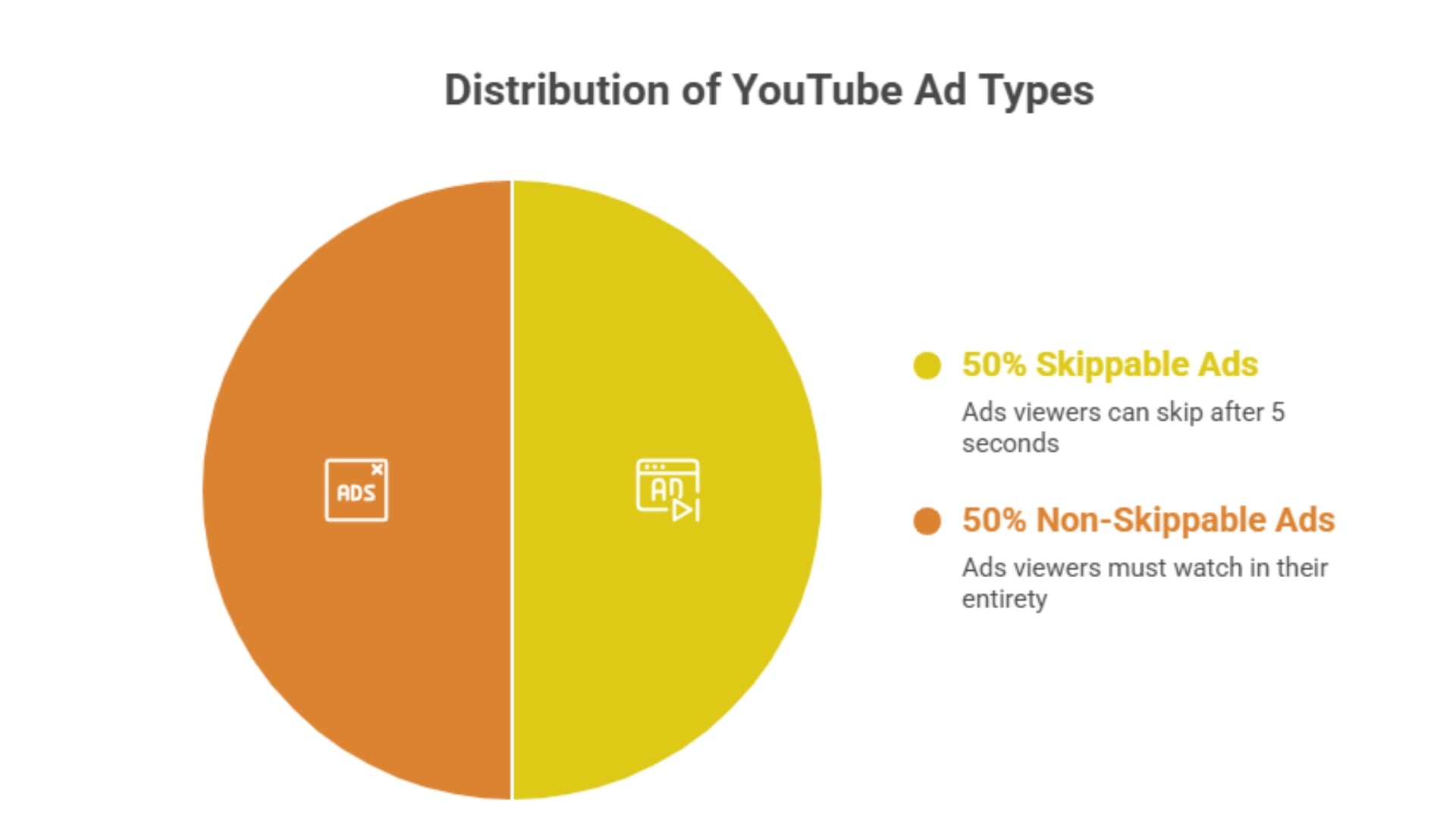
YouTube skippable ads are video advertisements that allow viewers to skip the message after 5 seconds. They can appear before, during, or after the main video content. These are often referred to as skippable in-stream ads. Here’s what worth knowing:
- Because users can opt out, these ads serve as a natural filter for audience interest.
- If a viewer chooses not to skip, they are demonstrating active engagement with your brand.
- Marketers can leverage this engagement data by identifying which viewers watched past the five-second mark and then retargeting these more interested users with follow-up ads.
- Additionally, this data can help segment audiences by engagement level, enabling more personalized and effective advertising strategies.
- This format requires an incredibly strong hook. If your core message is not delivered in the first five seconds, the vast majority of viewers will skip the ad before they even know what product you are selling.
- For example, effective hooks might include an attention-grabbing question or a bold promise.
- Some brands also use quick visual demonstrations or unexpected statements, like a surprising statistic or a visually striking image, to grab viewers before they can hit skip.
- Consider making your opening relatable, intriguing, or directly benefit-driven so viewers feel compelled to keep watching.
What Are Non-Skippable Ads?
YouTube non-skippable ads are video commercials that viewers are forced to watch in their entirety before their chosen video begins. Depending on regional standards, these ads typically run for 15-20 seconds. Here’s what YouTube creators need to know:
- The primary advantage of non-skippable in-stream ads is guaranteed message delivery.
- Because the skip button is removed, the advertiser knows the audience will hear the entire pitch, from the initial hook to the final call to action.
- However, this format requires high-quality, entertaining content.
- Forcing a viewer to watch a boring or irrelevant 20-second commercial can actively damage brand sentiment and lead to immediate bounce rates.
- To make non-skippable ads engaging, use creative strategies like storytelling or humor to capture viewers’ attention early and keep them interested.
- Incorporate a relatable narrative, present your message through a mini story arc, or use lighthearted elements and visual surprises to entertain while informing.
- Clear, concise messaging, strong visuals, and an upbeat tone will help turn a required ad into a positive experience for your audience.
Key Differences Between Skippable and Non-Skippable Ads
When comparing skippable vs. non-skippable ads, the differences between the two types of YouTube ads extend far beyond the presence of a skip button. They utilize completely different bidding strategies and serve different marketing objectives. Here is a clear comparison of the two formats:
| Feature | Skippable Ads | Non-Skippable Ads |
|
Video Length
|
Unlimited (Under 3 minutes recommended) | Strict 15 to 20 seconds maximum |
|
User Control
|
Can skip after 5 seconds | Must watch the entire ad |
|
Pricing Model
|
Cost Per View (CPV) | Target Cost Per Mille (CPM) |
|
Best Used For
|
YouTube Lead generation, website traffic, sales | Brand awareness, ad recall, product launches |
|
Viewer Intent
|
High intent (if they choose to watch) | Passive intent (forced to watch) |
When to Use Each Ad Format
Selecting the right YouTube advertising formats comes down to a simple decision framework mapping your goals to user behavior.
Use Skippable Ads When:
- You are focused on direct response marketing, such as generating leads or driving immediate e-commerce sales.
- You have a complex product that requires a longer, 2- to 3-minute explanation.
- You have a limited budget and only want to pay for highly engaged viewers.
Use Non-Skippable Ads When:
- For YouTube video advertising, you are running a massive brand awareness campaign to introduce a new company to the market.
- You are promoting a time-sensitive event, like a concert or a weekend sale.
- Your creative message is punchy, highly entertaining, and fits perfectly into a 15-second window.
Final Thoughts
While mastering ad formats is critical for traditional marketing, relying purely on in-stream advertising can be exhausting for content creators trying to build an organic subscriber base. If your goal is creator growth rather than direct product sales, consider alternative YouTube promotion strategies. Instead of interrupting viewers with commercials, focus on promoting your actual videos to high-intent audiences.
This is where YouTube promotional platforms provide immense value. They allow creators to run optimized promotional campaigns that place their videos in front of highly targeted, relevant audiences. This strategy drives genuine channel engagement and subscriber growth, offering a more organic approach than traditional interruptive advertising. By comparing these options, marketers can select the promotion platform that best aligns with their goals and budget.
Frequently Asked Questions
Q1)Are skippable ads better than non-skippable ads?
Skippable ads are better for driving direct conversions and protecting your budget, as you only pay for engaged views. Non-skippable ads are better for maximizing brand awareness and ensuring your entire message is heard.
Q2) How long should YouTube ads be for best results?
Ad length depends on your goal and format. 6–10 seconds is Best for quick brand recall, while 30+ seconds works well for skippable ads where you can build a narrative. The key is to deliver your main message within the first 5 seconds, especially for skippable formats.
Q3) What makes a YouTube ad effective?
High-performing YouTube ads usually follow a few core principles. Hook attention immediately. Keep visuals dynamic to prevent drop-offs. Further, include a clear call to action (CTA). Match the ad message to the audience’s intent. Optimize for mobile viewing, and strong creatives often outperform even highly optimized targeting, so focus on both.
Q4)Which YouTube ad format is best for beginners?
Skippable in-stream ads are best for beginners. Because they operate on a Cost Per View (CPV) model, beginners are protected from paying for impressions when viewers skip the ad immediately.
Q5)How to Improve YouTube Ad Performance
Refine your YouTube ad targeting. Do not target broad demographics. Instead, use custom intent audiences to target users who have recently searched for your specific competitors on Google.
