



Key Takeaways:
- Most YouTube creators optimize almost exclusively for what people hear, but viewers decide whether to watch based solely on what they see.
- To fix a sudden YouTube retention drop, you have to stop assuming your audience has their volume turned up.
- 80-85% of YouTube videos are viewed without sound on mobile devices, and since YouTube is built for mobile-first content, this widespread practice affects viewership.
- Most viewers never hear the YouTube creators’ intros; hence, the visual presentation must do 100% of the heavy lifting.
Why Do YouTube Videos Play Without Sound?
YouTube is keen on protecting the mobile user experience; hence, from the platform’s perspective, most viewers often watch videos in environments where sound isn’t practical. This automatic muting prevents unexpected audio blasts while they browse in public spaces.
Similarly, when videos without audio come in picture for the short-form video feed, it becomes clear that it relies on rapid, non-stop vertical scrolling. The second a user swipes on Short, they take 1-3 seconds to decide whether to watch it or scroll past it. However, because it plays completely on mute by default, creators do not have a traditional timeline to ease viewers into the premise.
Whether the viewer clicks on long-form videos or YouTube Shorts, this split-second rejection signals to the recommendation engine that the clip lacks value, inevitably hampering its organic reach before the video ever receives a fair evaluation.
Why Do YouTube Videos Lose Views Before They Even Start?
YouTube Creators need to see their own videos from their audience’s perspective. While they rightly review their rough cuts with high-end studio monitors and turn up their videos to maximum volume, they remain completely detached from how a mobile user interacts with the feed. Viewers see your video before they hear what you have to say.
When a viewer encounters your video on their homepage, they perform a quick visual assessment using indicators of value, entertainment, or any search query. Your videos are not theatrical films; they don’t require a slow cinematic pan with a winding brand logo. In a fast-paced digital environment, no viewer will wait for your audio track to catch and explain the premise finally.
There is an intriguing conceptual framework that explains it the best. The Silent-First Performance Model is designed to guide a completely muted viewer from passive scrolling to active, intentional audio engagement. Here’s what to keep in mind:
- Visual Hook: An immediate, high-motion visual disruption within the first 1.5 seconds.
- Instant Clarity: Large, bold text that overlays the center of the frame immediately states the video’s core premise.
- Silent Engagement: Create a rhythm of visual updates that keeps the eyes locked on the screen while muted.
- Audio Reinforcement: The visual storytelling sparks curiosity, prompting the viewer to tap the screen manually.
5 Silent YouTube Video Mistakes That Are Killing Your Views
If you want to understand why your channel’s analytics are suffering, here are some mistakes you might be creating:
1)Sluggish Visual Pacing: Letting a single, unedited shot run for 6 seconds without a camera crop, text overlay, or graphic asset will cause your retention to carter.
2)Complete Lack of Visual Context: Filming a video where your surroundings have absolutely nothing to do with your topic. If you are discussing tech but filming against a blank bedroom wall with no text overlays and visual cues, why will the user want to invest their time?
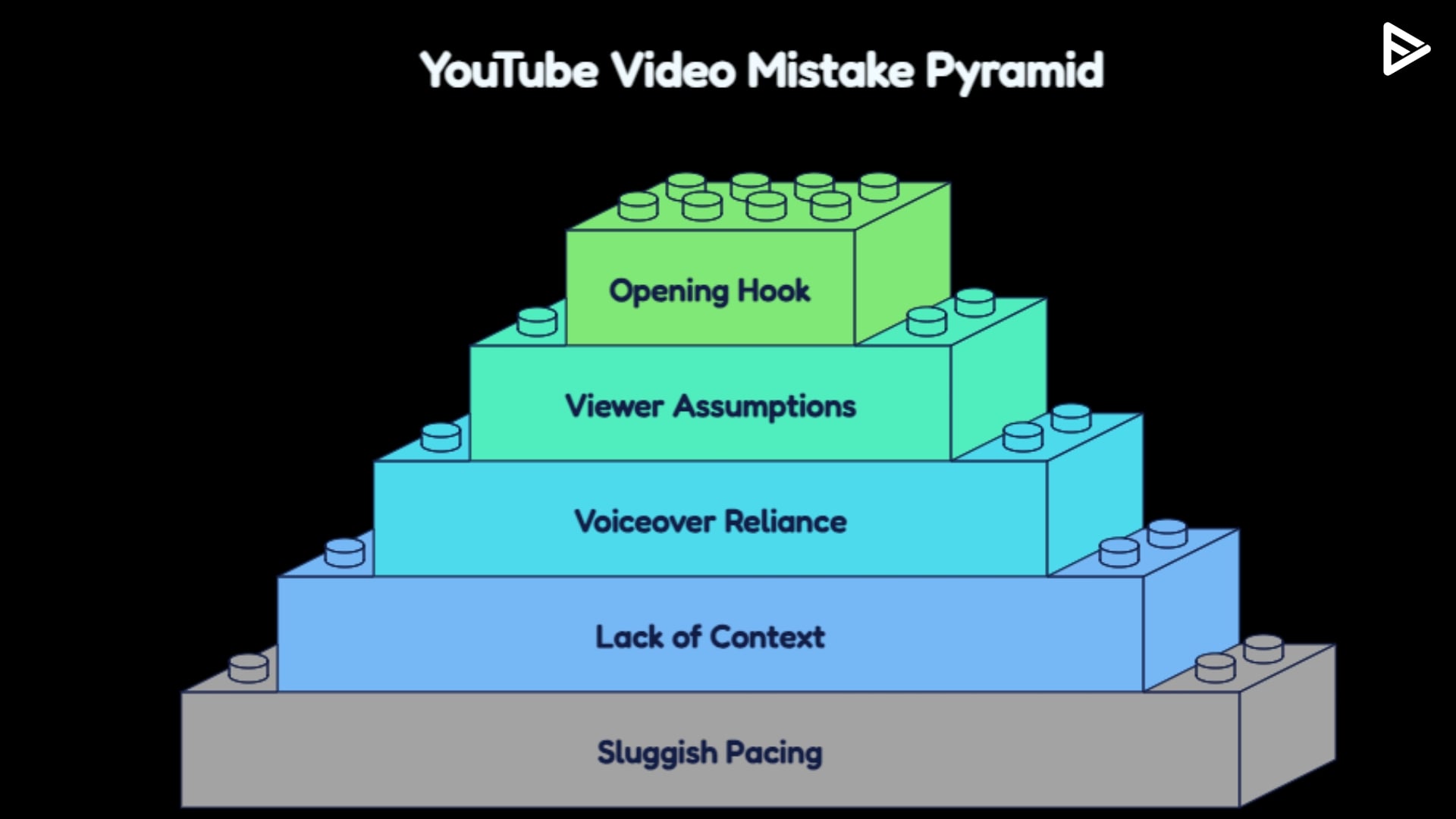
3)Over-Reliance on Voiceover: Writing a script that functions perfectly as a radio show or podcast but fails as a visual story, if your video requires a viewer to hear your voice to understand the underlying plot, it will not survive a muted home screen.
4)Assuming Viewers Watching Patterns: Operating under the assumption that your content is important, that users will automatically adjust their physical environment, put on headphones, or tap the volume button just to hear you speak, you must earn the sound.
5)Omitting the Opening Hook: If your thumbnail creates massive expectations but your video’s opening frames don’t immediately validate that promise visually, the user will click away in frustration.
How to Fix YouTube Videos Without Sound?
Transitioning your channel to look professional on a muted feed requires a structured approach. Use these practical strategies to implement a complete silent video strategy. Here are easy steps to fix it:
- Step 1: Use Bold Visual Hooks: To capture the viewer’s attention during an autoplay sequence, place strong visuals in the first frame of the video. For example, if you are producing a tech review, open the video with the product directly held against the camera lens.
- Step 2: Prioritize Video Captions: Transform your spoken dialogue into a highly scannable, visually engaging graphic asset by adding single-word or two-word YouTube captions blocks that animate word by word.
- Step 3: Accelerate Your Pacing: To reset the silent viewer’s attention span, continuously explain a concept with a subtle 10% digital zoom or cut away to a clean b-roll graphic.
- Step 4: Maximize Text Overlays: To ensure that even if a viewer completely ignores the subtitles, they can still grasp the entire narrative structure of your video.
Final Thoughts
To maintain an edge over your competition, YouTube creators need to just look at video production from the other side of the seat. On YouTube, your video doesn’t compete on audio; it competes on attention. The channels that dominate the platform do not rely on loud vocals or complicated mixing to hold a user’s focus. In the end, when you learn the art of visual storytelling, you win the attention economy.
Frequently Asked Questions
Q1. Why do videos play without sound?
Most digital platforms set their feeds to auto-play videos with the sound muted by default to protect the overall user experience. This design parameter prevents loud, unexpected audio from accidentally disrupting users while they scroll through a shared or public environment.
Q2. Do captions improve retention?
Yes, because up to 85% of mobile viewers navigate their feeds entirely on mute, adding large, highly readable kinetic captions ensures your dialogue is easily processed visually, preventing early drop-offs and dramatically increasing your average YouTube view duration.
Q3. Should YouTube videos be designed for silent viewing?
Yes, absolutely. Every modern video project should follow a silent-first design methodology. Creators must structure their content using bold visual hooks, prominent text cards, and clear graphical framing within the first three seconds to lock in attention before assuming the user will enable their audio track.
Q4. Do videos without sound perform better on YouTube?
Videos without sound don’t necessarily perform better overall, but they often perform better in discovery. Content that communicates clearly without audio tends to retain viewers longer in the first few seconds, which improves visibility on platforms like YouTube.
Q5. What type of videos work best without sound?
Videos that rely on strong visuals, quick pacing, and clear on-screen context perform best without sound. It includes tutorials, transformations, storytelling clips, and content that uses text overlays or captions effectively.