



- A competitive analysis for YouTube eliminates speculation by providing data that reveals which formats and topics your audience desires most.
- Examining rivals lets you pinpoint unanswered questions, creating opportunities to develop comprehensive guides.
- The best signal is an “outlier”, a video that exceeds a channel’s average view count by 3x to 5x.
- Competitor comment sections reveal audience pain points, content requests, and actionable feedback.
Why Competitor Analysis Matters on YouTube in 2026
- Identify Content Trends Faster: YouTube trends move incredibly fast. A deep YouTube channel competitor analysis helps you spot a breakout topic the moment it gains traction. If you notice three competitors suddenly posting listicles about a new software update, you can jump on the trend before the market becomes oversaturated.
- Improve Video Performance: Your click-through rate (CTR) and audience retention are heavily influenced by market expectations. By studying the thumbnail designs and pacing styles of top-performing channels in your niche, you can align your packaging with what viewers are already primed to click on.
- Discover Content Gaps: A content gap occurs when there is high search demand for a topic, but the existing videos are low quality, outdated, or incomplete. Competitor analysis reveals these exact blind spots. If a competitor’s video leaves viewers confused, you can step in and create the ultimate, comprehensive tutorial.
- Benchmark Channel Growth: Without a point of reference, it is impossible to know if your channel is actually performing well. Benchmarking your subscriber growth velocity against a direct competitor gives you realistic expectations. If your niche as a whole is experiencing a slow season, you will know not to panic about a temporary dip in your own views.
- Structured Process: A YouTube competitor analysis is the systematic process of evaluating rival channels to understand their content strategies, traffic sources, and audience engagement levels. By studying what works (and what fails) for your peers, you uncover actionable opportunities for your own channel.
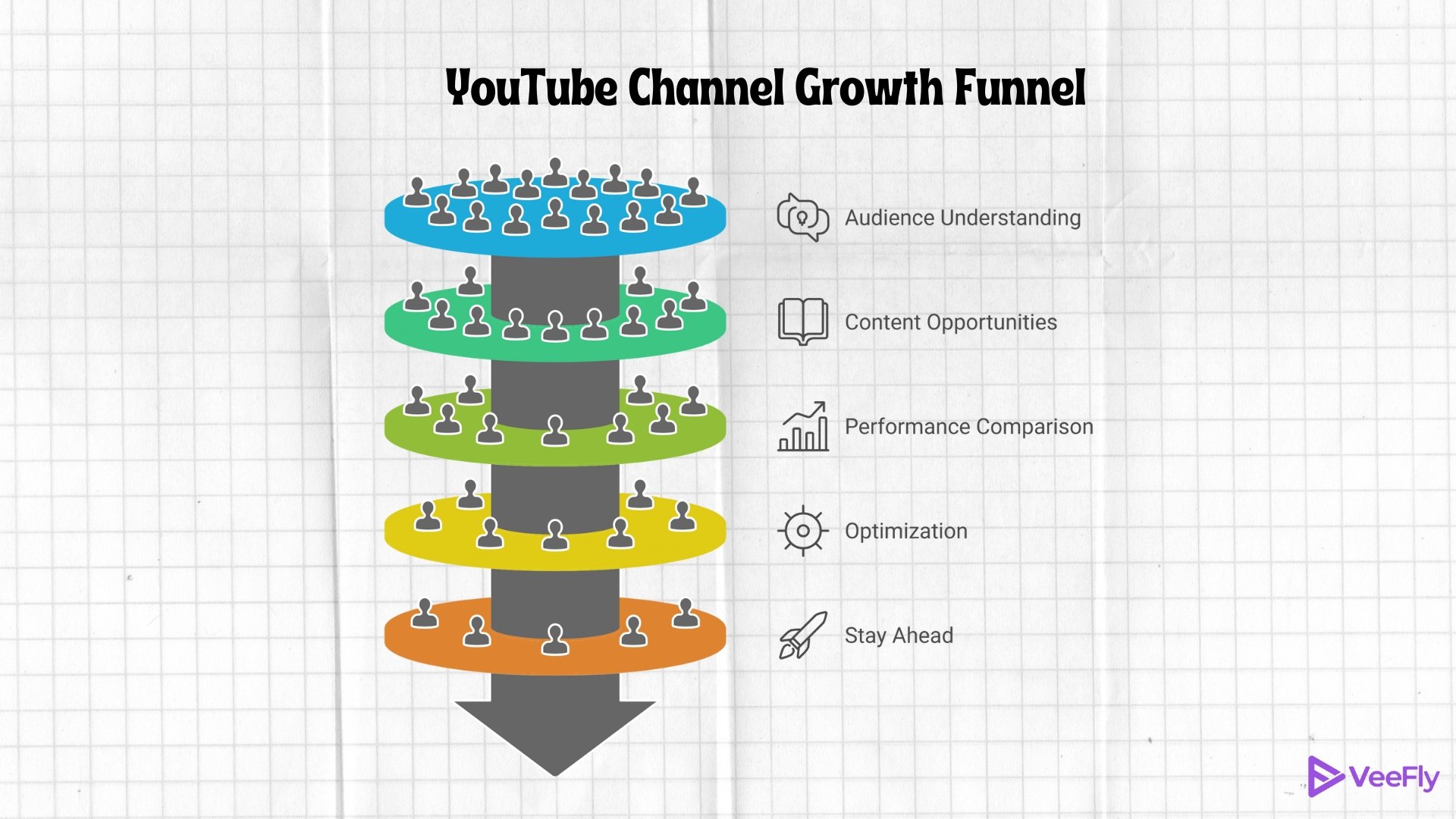
How To Do Competitor Analysis in 10 Steps?
Here’s a step-by-step guide to doing practical YouTube competitor analysis:
Step 1: Identify Your YouTube Competitors
Begin by identifying 5–10 channels within your niche that cater to the same target audience. You can do this by searching your primary keywords on YouTube and checking who appears in the suggested videos next to yours. Analyzing YouTube’s “Related Channels ” section to make a list of these channels for in-depth evaluation.
Step 2: Analyze Their Content Strategy
Use various web competitor analysis tools to analyze the competitors’ content strategy. Examine the type of content they produce and how it is structured. Look for the most viewed videos, as well as the posting frequency and consistency. Use of playlists and series. Lastly, video length and pacing
Step 3: Evaluate Audience Engagement
This data will help you gauge how well the audience connects with their content. Some essential metrics to track are Likes, comments, and shares. Further, the community tab shows the Average Number of views on their videos. It will help you determine the number of subscribers and the Like-to-dislike ratio.
Step 4: Observe Performance and Retention Cues
Competitor analysis isn’t a one-time task. Set up monthly reviews to monitor Changes in upload frequency. Growth in subscribers and views. Shifts in content themes and Engagement trends can be effectively managed by maintaining a competitor tracking spreadsheet, which helps you visualize changes and respond proactively to trends.
Step 5: Specify Monetization Potential
Understanding competitors’ financial potential in your niche is crucial. Look for their ad placements, sponsorship deals, and the kind of brands they work with. Identify gaps to estimate their future earnings.
Step 6: Review Channel Branding
Your brand identity determines how viewers perceive and remember your content. Make sure to learn from the visual styles and tonal styles that work best.
Step 7: Track Growth
The success of a video often lies in how well it’s optimized. Use a YouTube competitor analysis tool like TubeBuddy, VidIQ, or Social Blade to uncover: Titles and keyword usage, Tags and metadata, Description strategies, Thumbnail designs. Identify patterns in their optimization techniques, and see how you can implement (or improve upon) them.
Step 8: Examine Social Media Presence
Studying your competitors’ social media activity helps you understand how they amplify reach beyond YouTube. Identify the social media channels that drive the most views for YouTube videos. Since videos are promoted through other channels too, you can see how they are performing.
Step 9: Identify Collaboration Opportunities
Collaborations are one of the fastest ways to grow your channel. Check for guest appearances in competitors’ videos and scan who might be willing to work for you.
Step 10: Keep a Competitor Dashboard
A competitor analysis will help you keep the analysis organized and actionable. Highlight spikes and dips to ensure you have a clear overview. These are your core competitors.
How to Break Down a Competitor’s Content Strategy
A successful competitor analysis requires you to review and restructure your content based on how other competitors strategize their content. A content strategy analysis is a step ahead in understanding a channel’s framework. You can easily do it in 7 steps:
- Step 1: Identify the types of videos your competitors create to understand what works best with your audience.
- Step 2: Review the posting schedule of your competitors, it will help you get a better hold of the situation.
- Step 3: Analyze the key metrics with a view to the engagement, mainly how the audience engages with their content
- Step 4: Measure the video’s length to determine the duration that hooks the audience.
- Step 5: Analyze the keywords used in the video to optimize and rank your video
- Step 6: Review the visual elements that are incorporated in their content
- Step 7: Identify content gaps to create the unaddressed topics.
How to Turn Competitor Analysis to Grow Your Channel?
Only analyzing the content isn’t enough; you need to apply its insights to your channel to improve it. Here are 5 ways to do it effectively:
- Content Ideas – Use your competitor’s top-performing videos to focus on audience trends.
- Metadata – Incorporate high-performing keywords to rank your videos better.
- Adjust Video Schedule – Experiment with the timing of your video to optimize viewer attention.
- Engagement – Spark interaction and drive deeper discussion with the audience.
- Brand Appeal – Balance inspiration with originality, instead of only copying your competitor’s strategy.
Final Thoughts
Conducting a thoughtful YouTube competitor analysis allows you to learn from others’ success, refine your content strategy, and ultimately outperform your YouTube rivals. Improving your channel includes identifying your competitors, analyzing their performance, and optimizing your own channel. Powerful YouTube competitor analysis tools can help you gain insights faster and with greater accuracy.
Frequently Asked Questions
Q1. How do I find my YouTube competitors?
To identify your competitors, look for successful content creators in your niche and analyze their videos. You can also use relevant niche keywords in the YouTube search bar and observe which channels appear in the top search results.
Q2. What is more important in YouTube views or subscribers?
Viewership and engagement are crucial on YouTube for driving revenue and helping the algorithm display your content to more viewers seeking similar channels. Although subscribers are essential, it doesn’t always translate to revenue.
Q3. What makes YouTube different from its competitors?
YouTube stands out from its competitors for several reasons, including a massive user base, integration with Google Search, robust monetization options for creators, and a detailed analytics section that helps creators optimize their channel. With all of this in one place, YouTube becomes the second-largest search platform after Google.
Q4. Can competitor analysis help me get more subscribers?
Yes, competitor analysis will help you identify what content resonates with your audience, which in turn enables you to reach your target audience.
