


Key Takeaways
- As a YouTube creator, aim for viewer retention in the first 30 seconds to get a boost in the YouTube algorithm.
- Increase watch time by using the YouTube playlist and end-screen options.
- Publish 8-12-minute videos, as they will have higher watch time.
- YouTube displays a video audience retention graph with key time points. So if 90% of viewers remain on the video for four minutes, while 70% do so after ten minutes, comparing these insights can improve video performance.
What is Watch Time on YouTube?
Watch time is the total number of minutes viewers spend watching a YouTube channel’s videos. It comprises channel videos, curated playlists, and entire viewing sessions. Watch time is considered a key performance indicator. Since the more viewers willingly spend watching your videos, the more likely YouTube is to push them to the algorithm.
How is Watch Time Calculated?
Watch time is calculated by adding up the total minutes watched by all viewers. YouTube tracks watch time per video and across viewing sessions. It implies that if 1000 viewers watch 4-minute content, the total watch time is 4000 minutes.
What is Audience Retention on YouTube?
Audience retention measures the percentage of a video that viewers watch before leaving. It shows how well a video holds attention from start to finish and highlights exactly where viewers drop off.
Audience retention is an early ranking signal that helps creators understand. YouTube videos that keep viewers for a longer time rank higher in search results.
How Audience Retention Is Measured
Audience retention is displayed as a percentage and a line graph inside YouTube Analytics. For instance, if a 10-minute video retains 70% of viewers at the 5-minute mark, the average view duration will be 7 minutes.
Watch Time vs Audience Retention: Comparison Table
| Metric | Watch Time | Audience Retention |
| Use | To measure total minutes viewers spend watching channel videos | To know the percentage of viewers who watch the videos. |
| Scope | Channel-Level and session level | Individual video level |
| Purpose | Overall viewing value | Engagement and attention |
| Calculation Formula | Minutes watched X number of viewers | Average view duration/Video length |
| Ideal For | Channel Visibility Growth | Individual video performance |
Which YouTube Metric Matters More in 2026?
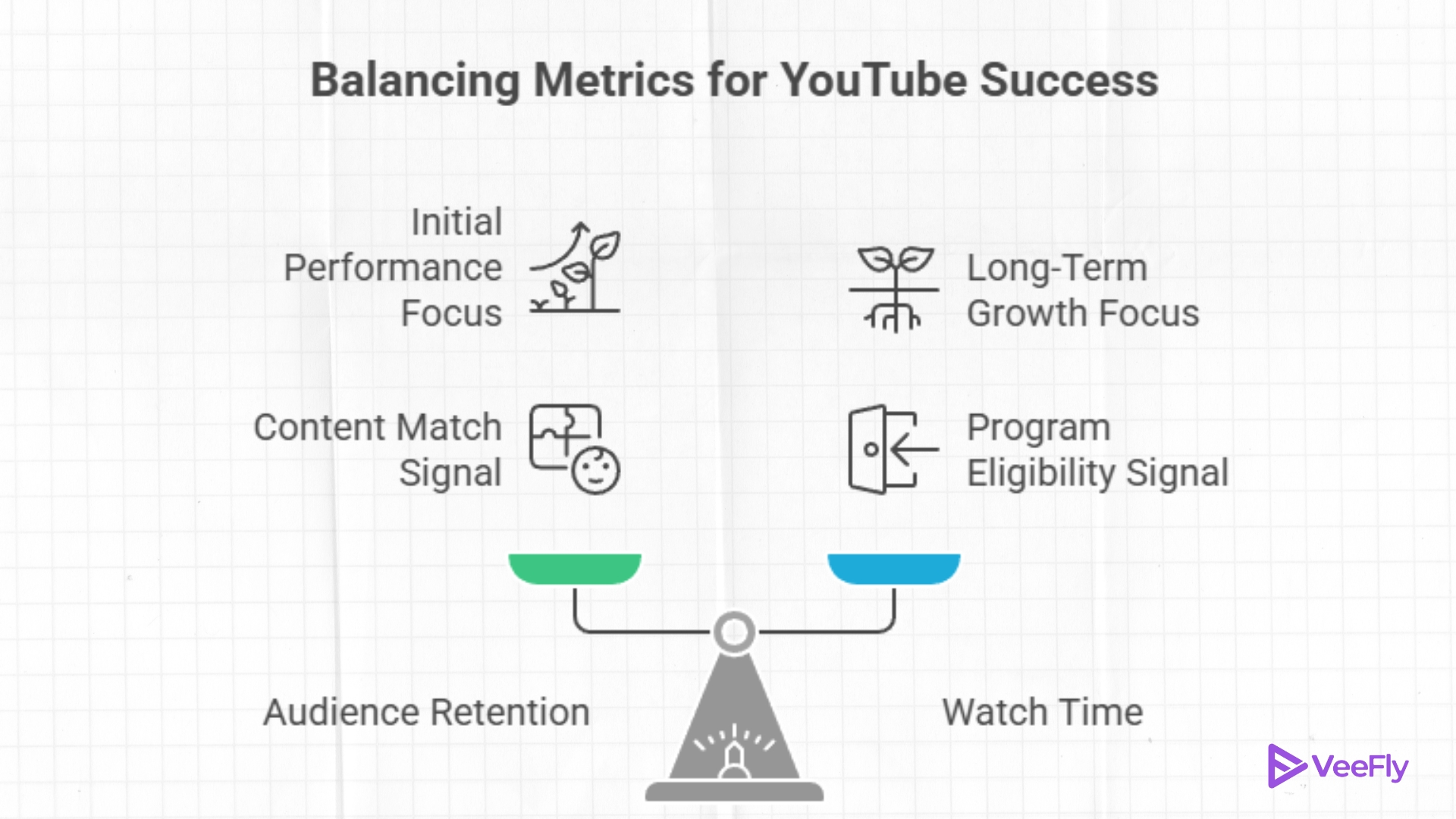
In 2026, YouTube does not prioritize watch time or audience retention separately. One depends on the other to improve video performance and give early signals. Hence, understanding when each metric matters more becomes crucial:
Audience Retention: Essential during the initial video performance phase. Strong retention signals that the content matches viewer expectations and delivers value.
Watch Time: Watch Time becomes important to creators when they are evaluating how much total viewing time the video and channel generate across viewing sessions. Depending on your watch time, you become eligible for the YouTube Partner Program. Further, it builds long-term channel authority.
How to Improve YouTube Metrics?
Improving YouTube performance in 2026 requires a focused approach to both audience retention and watch time. Here’s how you can enhance YouTube evaluation:
- Hook the viewers within the first 10 seconds for early engagement and improving audience retention.
- Use pattern breaks to maintain the viewer’s attention. For instance, you can summarize your content, change the visual language, or add chapters.
- Gently nudge viewers to a new video using a YouTube playlist and end screen.
- Analyze average view duration alongside retention together, not individually, to identify whether viewers are leaving early or staying engaged.
- Monitor weekly performance to adjust content based on real viewer behavior.
Final Thoughts
Watch time and audience retention are not competing metrics; they are interrelated performance signals that together influence YouTube’s recommendation system. Audience retention reflects your content, especially if it can hold viewers’ attention for a long time. Watch time is a consistent metric for your content, measuring the total time spent watching across videos.
In 2026, successful creators focus on both: they design engaging openings to sustain retention and structure videos strategically to boost watch time. Some creators also explore services to boost YouTube views to gain momentum in YouTube’s competitive algorithm. In the end, channels that deliver value and keep viewers watching for a long time build stronger algorithm trust for YouTube growth.
Frequently Asked Questions
Q1)Is watch time more important than audience retention in 2026?
Watch time and audience retention work together to drive overall channel growth, monetization, and algorithmic promotion.
Q2)What is considered a good audience retention rate on YouTube?
A good audience retention rate for long-form content falls between 50% and 60%.
Q3)How can I increase watch time without making longer videos?
To increase watch time without making the video longer, include stronger hooks, tighter pacing, and optimized metadata to reach the right audience.
Q4) Does audience retention affect YouTube search rankings?
Yes, audience retention is critical because it signals to YouTube the authority of the content.
Q5) Average view duration vs audience retention for monetization?
Yes, watch time and audience retention are important for YouTube monetization. For the YouTube Partner Program, a channel must have 4,000 public hours to qualify. However, strong retention helps generate that watch time more efficiently.
