


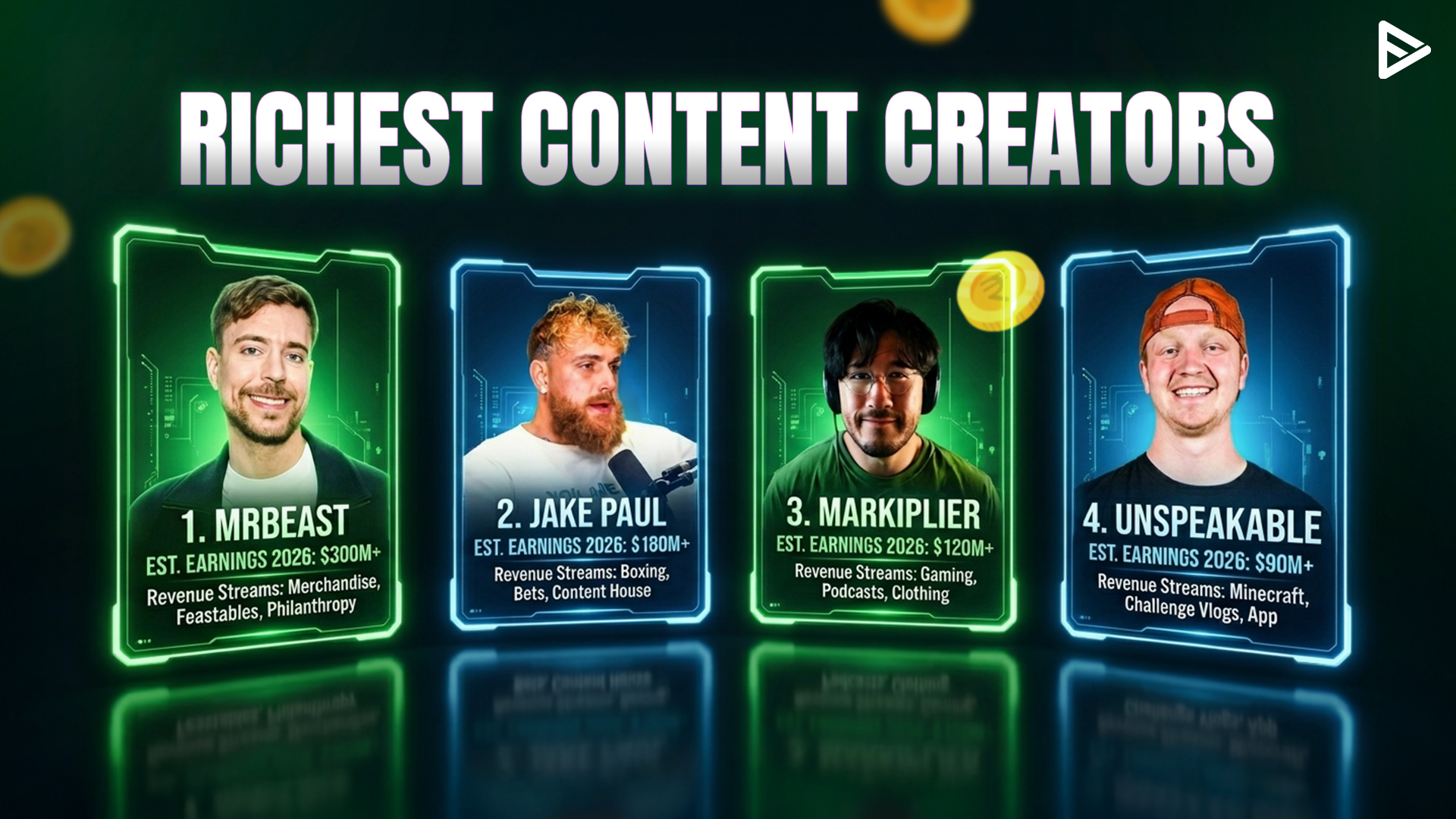
Key Takeaways:
- Top creators earn through diversified revenue streams including AdSense, brand deals, merchandise lines, external businesses, and content licensing.
- The creator economy grew 18% year over year among the top 50 earners, proving YouTube remains a powerful business platform.
- Successful creators transition from content makers to entrepreneurs, building teams and reinvesting revenue into larger productions.
- Earnings rankings shift based on business launches, sponsorship deals, and market changes throughout the year.
The highest earning youtuber today operates more like a CEO than a content creator. YouTube has transformed from a platform for viral videos into a launchpad for multi-million dollar media companies. The top YouTube earners in 2026 represent a new class of digital entrepreneurs who build brands, launch product lines, and scale teams just like traditional businesses.
Top 10 Highest Earning YouTubers In 2026
The top 10 YouTube earners represent a combined gross income of hundreds of millions of dollars. Here is YouTube channels that make the most money made the list, based on Forbes’ most recent Top Creators ranking from April 2024 to April 2025, which serves as the best available indicator for highest earners heading into 2026.
1)MrBeast
- Main Revenue Sources: High-production challenge videos, Feastables chocolate brand, MrBeast Burger restaurant chain, merchandise, brand sponsorships, and content licensing deals help him secure the spot of highest earning YouTuber in 2026.
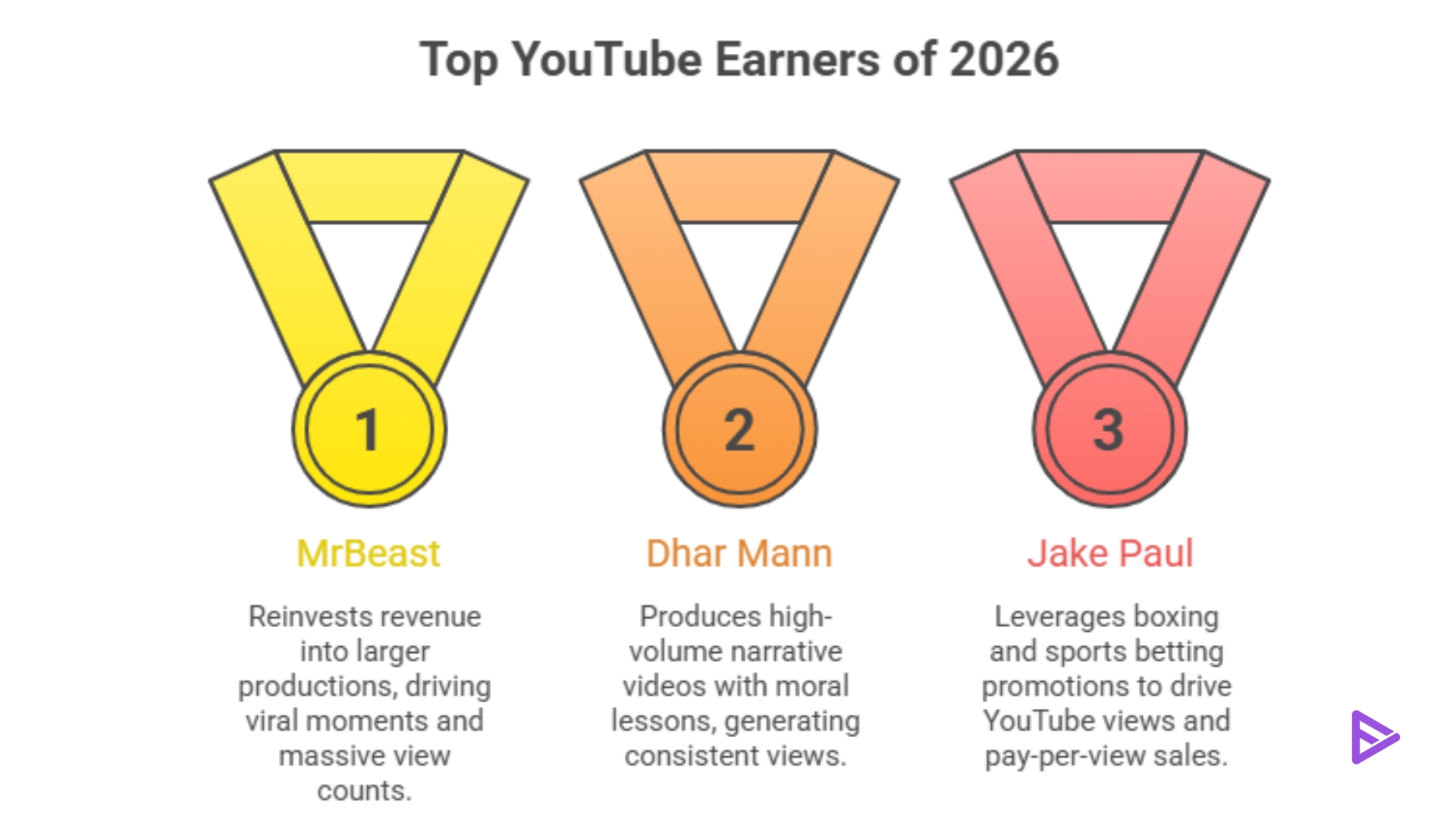
- Content Strategy: MrBeast reinvests nearly all revenue back into larger productions. Each video features higher stakes, bigger giveaways, and more elaborate setups than the last. His content focuses on spectacle and generosity, creating viral moments that drive massive view counts. He operates a full production company with dedicated teams for filming, editing, logistics, and business operations.
- What This Means For Aspiring Creators: Scale requires reinvestment. MrBeast proves that putting earnings back into content quality compounds growth. Start small but plan for scale from day one.
2)Dhar Mann
- Main Revenue Sources: Short-form narrative videos with high production volume, brand integrations, merchandise, and licensing of content to streaming platforms and international markets.
- Content Strategy: Dhar Mann Studios produces multiple videos per week using a scripted narrative format focused on moral lessons. The volume-based approach generates consistent views across a catalog of hundreds of videos. Each piece follows a proven formula that appeals to family audiences globally.
- What This Means For Aspiring Creators: Volume and consistency matter. Building a large content library creates compounding views and revenue over time.
3)Jake Paul
- Main Revenue Sources: Boxing pay-per-view events, sports betting promotions, brand deals, YouTube ad revenue, and merchandise tied to fight events.
- Content Strategy: Jake Paul pivoted from daily vlogs to boxing, using YouTube to promote fights and document training. His content blends entertainment with professional sports, creating crossover appeal that drives both YouTube views and pay-per-view sales.
- What This Means For Aspiring Creators: Platform transitions work when you bring your audience with you. Use YouTube to build authority in adjacent industries.
4)Rhett & Link
- Main Revenue Sources: Daily talk show content, Mythical Kitchen spinoff channel, product lines (seasonings, cookware), podcasts, touring, and brand partnerships has led her to become one of the highest earning YouTuber.
- Content Strategy: Rhett & Link built a content empire through consistency and diversification. Good Mythical Morning airs daily, creating reliable audience habits. They expanded into multiple channels, each targeting different audience segments within their fanbase.
- What This Means For Aspiring Creators: Daily or weekly consistency builds audience habit. Spin off successful content segments into dedicated channels.
5)Markiplier
- Main Revenue Sources: Gaming videos, live shows and tours, podcast (Distractible), merchandise, and brand sponsorships from gaming and tech companies.
- Content Strategy: Markiplier combines gaming content with personality-driven commentary. His brand extends beyond YouTube through live touring and podcasting, allowing him to monetize the same fanbase across multiple formats.
- What This Means For Aspiring Creators: Your personality is the product. Gaming is the format. Build a personal brand that can expand beyond one platform or content type.
6)Alex Cooper
- Main Revenue Sources: Podcast sponsorships, exclusive content deals, YouTube ad revenue from video podcasts, merchandise, and live events.
- Content Strategy: Alex Cooper transitioned her podcast to video format on YouTube, tapping into a broader audience while maintaining her core audio listeners. High-profile guest interviews drive viral moments and social media sharing.
- What This Means For Aspiring Creators: Video podcasts perform well on YouTube. If you have an existing audio show, adding video unlocks a second revenue stream and discovery channel.
7)Charli D’Amelio
- Main Revenue Sources: Brand partnerships with major consumer companies, reality TV show, merchandise, social media content across TikTok and YouTube, and product collaborations.
- Content Strategy: Charli D’Amelio uses YouTube for longer-form content that complements her short-form TikTok videos. Her family-based reality content and behind-the-scenes access give fans deeper connection points.
- What This Means For Aspiring Creators: Multi-platform presence works when each platform serves a different purpose. Use YouTube for depth, short-form for discovery.
8)Logan Paul
- Main Revenue Sources: Prime energy drink sales, Impaulsive podcast, WWE wrestling contracts, YouTube ad revenue, and merchandise.
- Content Strategy: Logan Paul uses YouTube content to promote his external businesses and podcast. His WWE involvement creates crossover content opportunities. Each venture feeds the others, creating a self-reinforcing media ecosystem.
- What This Means For Aspiring Creators: External businesses can outpace YouTube ad revenue. Use your channel to build demand for products you own.
9)Jeffree Star
- Main Revenue Sources: Jeffree Star Cosmetics product sales, YouTube ad revenue from beauty and lifestyle content, merchandise, and brand collaborations rank him in highest earning YouTuber since the start of the decade.
- Content Strategy: Jeffree Star built a cosmetics empire using YouTube as the primary marketing channel. Product launches, reviews, and tutorials serve dual purposes as content and sales drivers.
- What This Means For Aspiring Creators: Niche expertise translates to product credibility. If you review products, consider creating your own.
10)Ryan Kaji
- Main Revenue Sources: Ryan’s World toy and merchandise licensing across major retailers, YouTube ad revenue, TV shows, and brand partnerships.
- Content Strategy: Ryan’s family created a vertically integrated kids media brand. Their YouTube content drives demand for licensed products sold in retail stores, creating a feedback loop between content and commerce, making him rank in the highest earning YouTuber category.
- What This Means For Aspiring Creators: Licensing and retail distribution create revenue beyond digital platforms. Family-friendly content has strong merchandising potential.
Final Thoughts
The highest earning YouTuber started with zero subscribers and learned through trial, failure, and iteration. The creator economy has grown 18% year over year among top earners, proving the platform supports sustainable business building.
Success at scale requires strategy beyond content quality. You need systems for production, diversified revenue, and business infrastructure. The top YouTube earners all made the transition from content creator to entrepreneur. That shift unlocks earning potential beyond what YouTube ad revenue alone can provide.
The opportunity remains open, YouTube continues expanding monetization features, creator tools, and audience growth mechanisms. Creators who treat their channel as a business from day one position themselves for long-term success whether they reach top 10 status or build a sustainable full-time income at smaller scale.
Frequently Asked Questions
Q1)How Much Does The Highest Paid YouTuber Make Per Video?
Top creators do not earn consistent per-video amounts because revenue comes from multiple streams. A single MrBeast video might generate several hundred thousand dollars in ad revenue while simultaneously promoting his Feastables brand worth millions annually.
Q2)What Percentage Of Top YouTuber Earnings Come From AdSense?
Most top earners derive 20 to 40% of total income from YouTube AdSense. The majority comes from brand deals, merchandise, external businesses, and licensing agreements that exist beyond the YouTube Partner Program.
Q3)How Do YouTubers Get Paid Monthly?
YouTube pays AdSense earnings monthly through the YouTube Partner Program once creators meet minimum payment thresholds. Brand deals and YouTube sponsorships follow contract terms, which might be lump sum on delivery or split payments. Product sales generate revenue as transactions occur.
Q4)Can Small Channels Earn Like Top YouTubers?
Small channels cannot immediately replicate top earner income, but they can adopt the same business strategies at smaller scale. Diversify revenue early, build systems for consistency, and focus on audience retention rather than viral moments.
Q5)What Tools Do Top Earning Creators Use?
Top creators use YouTube Studio for analytics, dedicated editing software, project management platforms for teams, and promotion tools like VeeFly to drive targeted growth. They also employ thumbnail designers, SEO specialists, and business managers as they scale.
