


- Accordingly YouTube Reports, 70% of YouTube views now come from mobile devices worldwide. Hence, creators should optimise videos for mobile and also use a quicker pace to keep viewers engaged.
- YouTube Shorts receives over 200 billion daily views in 2026(Official YouTube Blog Post), it makes them the main way Gen Z and younger users find new content.
- The 2026 YouTube algorithm now prefers videos with relevant keywords and focused topics over broad, trending content.
- Creating content for specific audience search needs brings better long-term results than chasing viral trends.
YouTube Users at a Glance: Who Uses The Platform?
As of 2026, YouTube reaches about 46% of all active internet users globally, from casual viewers to active learners. For creators, focusing on a specific audience is more effective than trying to appeal to everyone. Here’s the breakdown creators need to understand:
- Age Distribution: YouTube’s audience covers all age groups. The demographic of YouTube users is ages 25 to 34, making up about 21% of users. US teens are also highly active, with 92% using YouTube regularly.(DataReportal & Statista)
- Gender Split: Globally, YouTube has a slightly higher number of male users (54%) than female (46%). But in the US, women make up 51% of users. These local differences affect how content is consumed.
- Top Countries: Most YouTube users are in fast-growing digital markets and Western countries. India is the biggest market, with over 518 million users in 2026, followed by the US (259 million) and Indonesia (151 million).
- Device Usage: Mobile devices get the most visits, but large screens like TVs see longer watch times. By late 2025, Connected TV was the top viewing surface in the US. Creators should design videos to look good on both small and large screens.
How YouTube Users Consume Content & Why It Matters
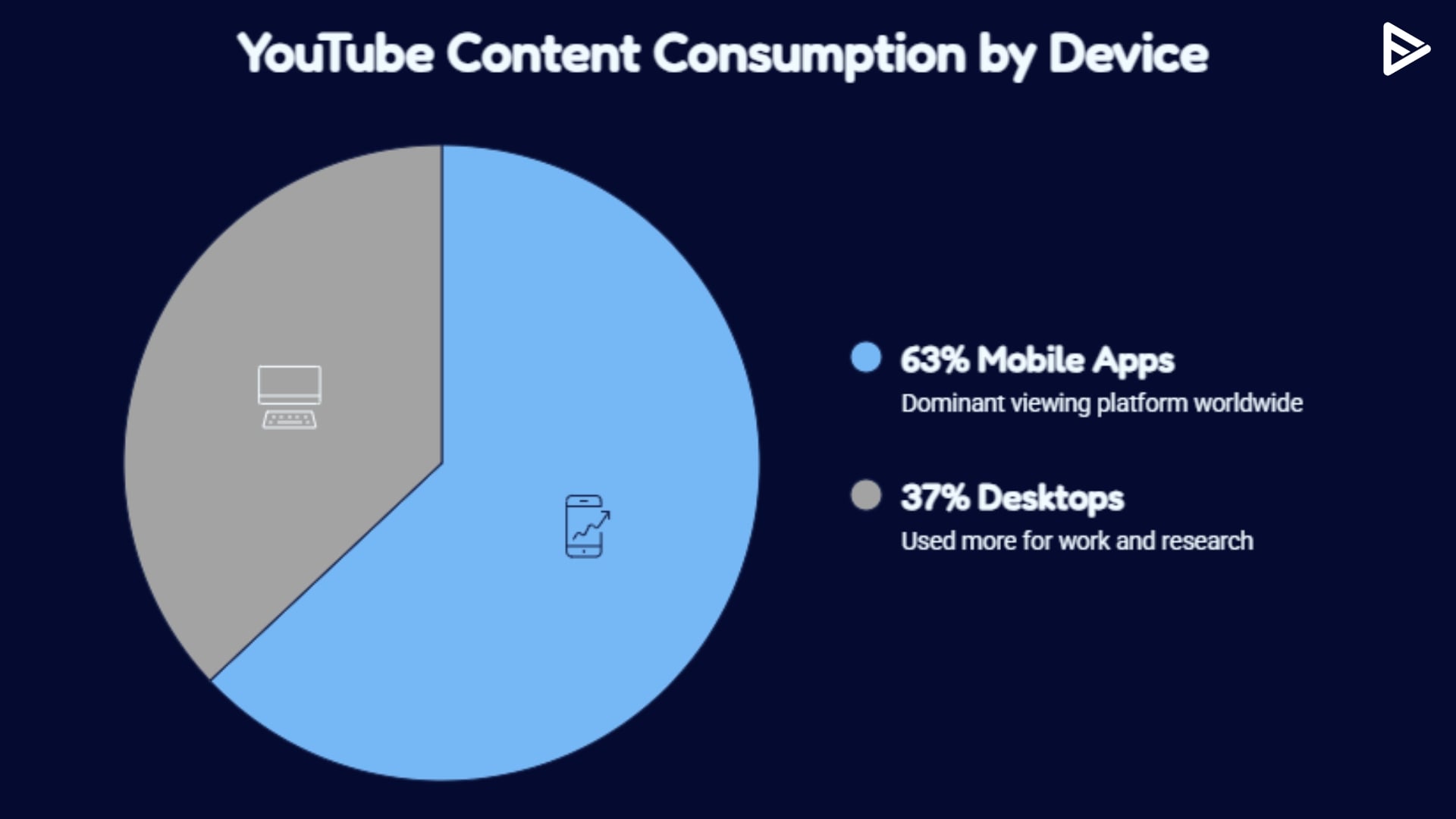
1)Mobile vs Desktop: Worldwide, 63% of YouTube views happen in mobile apps, while desktops are used more for work and research. Creators should use mobile-friendly thumbnails and clear text. Since mobile sessions are short, grab attention in the first three seconds.
2)Shorts vs Long Form: YouTube Shorts changed what viewers expect; short videos under 60 seconds are now popular for quick entertainment. Still, long-form videos are key for monetisation, building communities, and detailed tutorials.
3)Search vs Recommendations: YouTube works as both an entertainment feed and a search engine. Recommendations help with passive browsing, while search rewards videos that answer specific questions with clear metadata and chapters.
4)Watch Time Patterns: People now spend an average of 49 minutes per day on YouTube. Viewing peaks in the evenings and during commutes. Creators can use their audience analytics to post videos at the best times.
5)Cross-Device Viewing: People often switch between devices, starting a video on their phone and finishing it on a TV. Consistent titles, playlists, audio, and visuals help keep viewers engaged.
What Different YouTube Audiences Watch?
1)Gen Z: Gen Z uses YouTube for both entertainment and creativity. About 74% create videos themselves. They mostly watch short videos, gaming, pop culture, and behind-the-scenes vlogs.
2)Millennials: Millennials use YouTube for product research, learning new skills, and nostalgia. They want detailed reviews and honest opinions, plus well-made, informative videos.
3)Parents: Parents use YouTube to help their kids learn and to find parenting advice. Family shows, nursery rhymes, and learning channels are popular, especially on TV. Parents also watch vlogs, product reviews, and home tips in their spare time.
4)Professionals: Professionals use YouTube for ongoing learning, software tutorials, and industry insights. They want concise, direct videos with clear chapters and practical advice.
5)Gamers: Gamers are among the most engaged YouTube users. They watch live streams, esports, guides, and deep-dive game videos. Gamers value loyal creators, frequent uploads, and real-time community interaction.
6)Music Fans: Music fans use YouTube as their main music platform for videos, live concerts, and covers. About 20% of top searches are for music. Creators can use trending songs to make their videos more appealing.
7)Educational Viewers: Educational viewers come to YouTube to solve problems and learn new skills. They search for how-to videos, documentaries, science topics, and coding. Clear structure and visuals help with YouTube audience retention.