


YouTube has released a change to mobile video sharing. Timestamps now make sharing specific moments easier, but creators lose the ability to spread content through clips. This marks a shift in how videos circulate. YouTube shifts control from passive audience interactions to deliberate creator-driven strategies.
This means there are fewer shortcuts to virality, but creators gain greater control over how their content is presented and distributed. Creators who adapt can find opportunities. Those who rely heavily on audience-driven clipping may see a decline in organic reach unless they adjust their approach. Here’s what we know so far:
YouTube Clips Removed: Key Updates At Glance
- YouTube finally introduced a long-requested feature for mobile users: the ability to share a video starting at a specific timestamp.
- YouTube users can now send a link that opens a video at a specific time, instead of asking viewers to manually skip to a certain point.
- At first glance, this feature improves usability. It simplifies sharing and lets viewers highlight specific moments in longer videos.
- YouTube scaled back the Clips feature. The tool lets users create short segments from videos, with defined start and end points, acting like mini videos.
- Viewers could extract and share 15-60 second highlights. This eased the spread of moments across platforms.
- Now, viewers start at a key moment, but the rest of the video plays uninterrupted. This change removes the ability to isolate and share only the most impactful portion.
New Update Impact on YouTube Creators
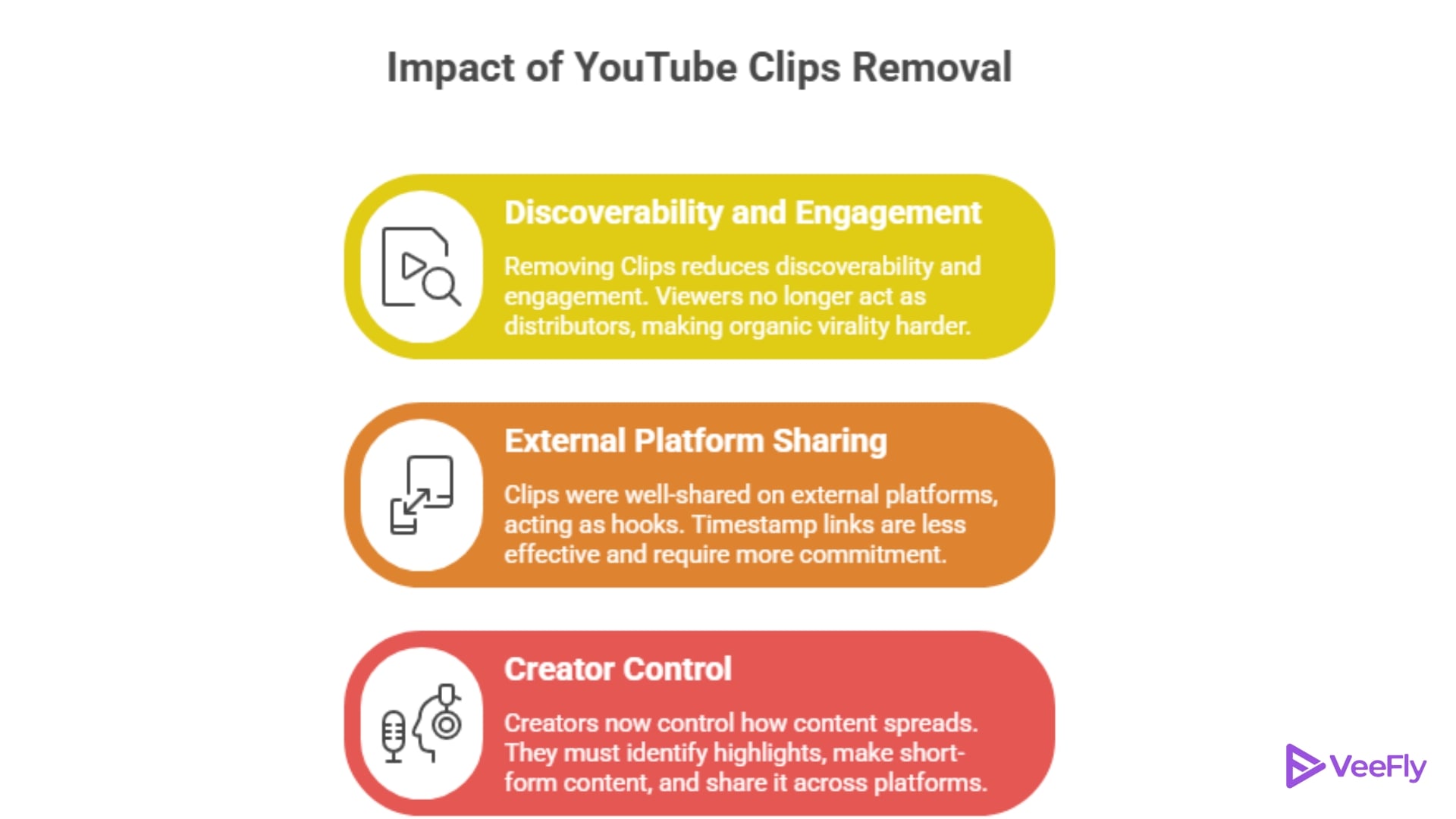
YouTube Clips removed has affected creators’ discoverability and engagement. Clips turned viewers into distributors, making organic virality easier for certain niches. Without Clips, audience participation has dropped. Viewers can still share videos, but don’t create micro-content. This means fewer entry points for new audiences.
Clips were well-shared on external platforms. Short segments acted as hooks, drawing viewers to full videos. Timestamp links are less effective and require more commitment. Viewers now enter a full video, not a snippet. This may lower click-through rates and sharing. Without viewer-generated clips, creators control how content spreads. Creators must now identify highlights, make short-form content, and share it across platforms. The workload rises, but creators gain control.
Industry Insight on YouTube Timestamp Update
Industry experts see advantages in timestamp sharing. Timestamps lead viewers into main videos, boosting longer viewing sessions if the content is engaging. Longer watch times matter for monetization and algorithm performance. Clips often lose context, misrepresenting creators.
YouTube invests in short-form content with YouTube Shorts. By reducing reliance on Clips, the platform encourages creators to use dedicated tools for short-form distribution rather than viewer-generated segments. This approach aligns with YouTube’s broader strategy of centralized, creator-controlled content.
Removing Clips signals how YouTube expects creators to distribute content. Creators who adapt early can make a significant impact and should stop assuming viewers will extract and share the best parts of a video. Creators should structure content intentionally, placing shareable moments throughout. Add strong hooks every 30-60 seconds and clear statements. Segments must be repurposable. With clipping reduced, creators should make their own short-form content. Key moments should be turned into Shorts and shared across platforms.
Without Clips, timestamps aid navigation and discoverability. Well-structured chapters help viewers find relevant sections quickly, especially in long-form or educational content. As viewers watch full videos instead of clips, creators must focus more on retention. Engagement beyond the timestamp directly affects performance. Removing Clips is part of YouTube’s bigger trend.
