


Key Takeaways:
- The platform has shifted to a content-first discovery model. A zero-subscriber channel can outperform a macro channel when its individual video metrics align.
- Every upload in the first 72 hours is sent to a small test audience. If that group responds with strong engagement, the system widens the circle.
- The platform tests content before it trusts creators. Channels do not need past authority; they need strong performance from each video.
- Vertical content functions as a fast testing ground, introducing your brand to new consumer groups faster than traditional long-form publishing.
Why New Creators Are Being Pushed on YouTube in 2026
The platform-wide push to promote emerging channels is a strategic business decision made by engineers to protect ecosystem health. If a platform only features established creators, the user experience can become stale, consumer satisfaction may drop, and viewers may migrate to other apps. To prevent this standstill, the system uses an approach that penalizes high-subscriber channels while rewarding new talent.
This systematic change means YouTube’s promotion of new creators has changed. The system now uses a distributed testing framework. When a brand-new channel publishes a video, the algorithm doesn’t isolate it; it actively seeks a similar audience group based on the video’s metadata. YouTube now tests content before it trusts creators. Your lack of a historical digital footprint is no longer a competitive disadvantage; it is a clean slate that lets the system evaluate your execution without historical audience bias.
How the YouTube Algorithm Now Discovers Content
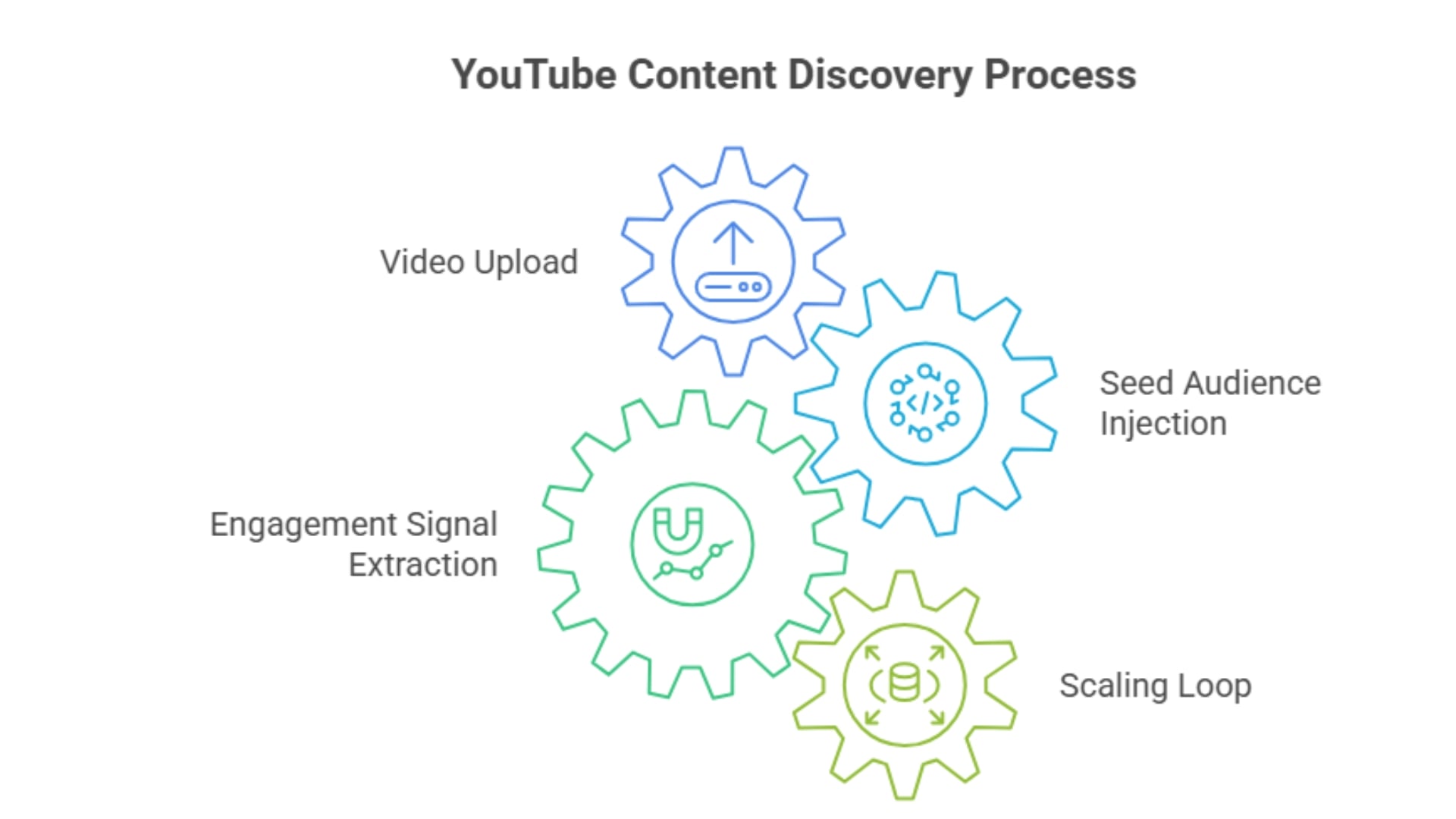
To design a highly reliable YouTube discovery strategy, you must understand the multi-stage system that influences home feed placement. The recommendation engine no longer works like a rigid search index; it functions as a real-time audience matching system that rolls out across three clear phases:
Phase 1: The Seed Audience Injection
The moment you upload a video, the algorithm instantly isolates a focused sample audience whose watch history corresponds to the tags and title keywords of your video. This happens whether or not those users are subscribed to your channel.
Phase 2: Engagement Signal Isolation
As the seed group interacts with your video on their homepage feeds, the system closely tracks their behavior. The engine looks for immediate, high-value satisfaction markers, such as how fast the user paused scrolling to click your thumbnail and whether the viewer watched past the first 30 seconds.
Phase 3: The Scaling Loop
If your video scores highly in the initial seed pool, the system recognizes a strong-satisfaction match. The algorithm automatically expands distribution, serving your video to a wider group of similar viewers. This loop can repeat, scaling impressions as long as your performance benchmarks hold steady.
What Getting Discovered Actually Means Today
Many emerging video producers monitor metrics with little impact on financial or prominence growth. They judge channel success by basic measures such as total subscriber counts or channel art polish. True platform discovery means mastering three key performance indicators:
- Impressions Velocity: The number of chances the algorithm gives your thumbnail across homepage feeds, subscription tabs, and recommended video sidebars.
- Click-Through Rate (CTR): The percentage of users who stopped scrolling and clicked your thumbnail every 100 times it was shown.
- Average View Duration (AVD): The retention metric measuring how long you held a user’s attention before they clicked away.
Why Most New YouTube Creators Still Don’t Get Noticed
Despite the platform offering unusual reach to new channels, most new uploads still struggle to secure views. This failure is frequently due to platform bias, but it also stems from simple execution mistakes that signal low value to the algorithm.
The primary point of failure frequently lies within the first three seconds of the video. Several creators structure their openings like slow, old-school television broadcasts. They start with a long intro, a logo animation, or an unedited greeting where they talk about their day. On a modern, highly competitive feed, this slow pacing might cause an instant retention cliff.
Additionally while figuring out how to get your YouTube channel noticed, creators commonly struggle with a lack of visual and topical clarity. If your thumbnail delivers a dramatic experiment but your opening frames show a low-energy talking head in a dark bedroom with no text, the viewer may feel immediate friction. They click away, your seed audience metrics can drop, and the algorithm may flag your video as a low-satisfaction asset, pulling it from the recommendation pool.
How to Get Discovered on YouTube
To follow a blueprint for getting discovered on YouTube, here’s how to get noticed on YouTube:
1. Reconstruct Your First 3 Seconds: Your video must open mid-action. Remove greetings, introductions, and background setup. If your title is about fixing a product, show the broken object in frame one.
2. Design for Single-Idea Clarity: Do not try to make one video cover your entire industry. A strong concept should take a passing viewer less than a second to understand.
3. Edit Around a High-Retention Framework: A silent or relaxed viewer will leave the moment your pacing slows down. To preserve your average view duration, add visual changes every 2 to 3 seconds. Use crop zooms, relevant b-roll, and word-by-word captions to keep the viewers tracking your story.
4. Commit to a Strict Niche: The algorithm relies on clear data points to build your target seed audiences. Pick one focused topic, solve specific problems for that audience, and stick to it until the system maps your core market.
5. Develop a repeatable video format: Look at the top channels in your niche; they do not reinvent their production design with every upload. They use the same framing, matching typography, and signature editing patterns.
6. The Role of YouTube Shorts in Discovery: Treat your Shorts as a fast testing ground for your ideas, monitor which concepts score the highest completion and loop rates, and then convert those successful concepts into long-form masterclasses to capture and keep new audience segments.
5 Mistakes That Kill YouTube Creator Discovery With Fixes
Many emerging digital creators unknowingly hurt their channel reach by making a few classic technical and structural errors. Fix these issues to keep your discovery path strong and your final results clear:
- Slow, Low-Energy Introductions: Start your video with a short, clear opening instead of a long wind-up or a lengthy explanation of who you are before delivering the promised value.
- Mismatched Title and Thumbnail Hooks: Creating an amazing thumbnail graphic that has nothing to do with your video’s actual plot or visual context flags your upload as low-satisfaction clickbait.
- Copying Massive Trends Blindly: Replicating a viral format without adding a unique personal perspective, a contrarian data layer, or a custom creative twist.
- Hyper-Restricting Your Audience Potential: Making your topics so narrow that the algorithm cannot build a sustainable seed audience pool for your metadata.
- Avoiding YouTube Promotions: The organic testing ecosystem is often crowded, so if your channel lacks in-depth historical viewer data, your videos can struggle to break out of those initial seed-audience loops. To bypass this frustrating initial validation phase, smart media managers pair organic optimization with professional YouTube promotional platforms to run highly targeted, budget-controlled campaigns that place your videos directly in front of audiences in your specific niche.
Final Thoughts
The 2026 YouTube algorithm changes mark a lucrative era in digital media history for independent creators. Reconstruct your timelines around rapid visual hooks, focus your concepts on single-idea clarity, use vertical assets to accelerate discovery, and back up your content engine with smart distribution networks. When you align your creative passion with precise strategic packaging, the discovery engine will handle your growth automatically.
Frequently Asked Questions
Q1. How long does it take to get noticed on YouTube?
Under the content-first distribution model, there is no set timeline. Because the system dynamically tests every video, a channel with zero subscribers can get noticed on its very first upload if its thumbnail CTR, early retention hooks, and satisfaction scores outperform the niche average.
Q2. Does YouTube promote new creators actively?
Yes, the platform systematically tests fresh uploads against similar seed audiences to guarantee high-quality new talent rises to the top quickly.
Q3. How many views do you need to get discovered?
Discovery is evaluated by speed and engagement percentages rather than raw view metrics. Hitting a consistent 8% to 10% click-through rate, combined with a stable 50% audience retention slope across your initial view tiers, signals high satisfaction with the system and prompts the algorithm to scale your content.
Q4. Are Shorts better for discovery than long-form content?
Shorts provide a much faster lane for rapid top-of-funnel reach and raw impression velocity, thanks to the ease of scrolling in vertical feeds. However, long-form content remains the essential engine for developing lasting community loyalty, brand authority, and stable monetization.
Q5. What is the most important metric for YouTube growth tips?
The single highest-leverage metric is your early audience retention curve. If your video’s visual pacing keeps over 60% of your viewers locked to the timeline past the critical 30-second milestone, the platform will reward your channel with a larger pool of homepage impressions.
