


Key Takeaways
- A video distribution strategy starts with audience research, not uploading
- YouTube rewards watch time, click-through rate, and session duration above raw views
- Playlists extend viewing sessions and signal topical authority to the algorithm
- Shorts and long-form content serve different purposes and feed different recommendation systems
- Cross-platform repurposing multiplies the value of every piece of footage you create
- Regular analytics review cycles separate growing channels from stagnant ones
- Most distribution failures stem from inconsistency and metadata neglect
What is a Video Distribution Strategy?
A video distribution strategy is a plan for getting content in front of the right people, through the right channels, at the right time. On YouTube, this means thinking beyond the upload button and mapping every touchpoint where your audience might encounter your work.
Too many YouTube creators mistake publishing with distributing, when uploading a video is step one. Distribution covers everything that happens afterward, how the algorithm surfaces your content, how you promote it externally, and how viewers share it organically. Most video distribution management frameworks break channels into three categories:
- Owned channels: Your YouTube channel, playlists, Community tab, E-mail list, and Website embeds
- Paid channels: YouTube ads, influencer sponsorships, and promoted placements
- Earned channels: Organic shares, playlist placements by other creators, press coverage, and word-of-mouth
Why Proper Video Distribution Matters on YouTube?
Properly distributing your videos ensures they get indexed correctly by YouTube’s algorithm. It means your content is more likely to appear in search results and be recommended alongside related videos. By optimizing titles, descriptions, tags, and thumbnails, you boost the chances that new viewers will discover your videos organically.
1)Drives Higher Watch Time and Audience Retention: When your videos reach an interested audience through targeted sharing and promotion, watch time increases. Higher watch time signals to YouTube that your content is valuable, which can further improve its ranking in recommendations.
2)Expands Reach Beyond Your Existing Subscriber Base: Distribution strategies like sharing on social media, embedding videos on websites, collaborating with creators, or using email marketing help expose your content to audiences beyond your current subscribers. It broadens your channel’s reach and introduces fresh viewers who might become loyal followers over time.
3)Strengthens Channel Authority and Algorithmic Trust: Consistently distributing quality content signals to YouTube’s algorithm that your channel is active and authoritative within your niche. The more engagement your videos receive through proper distribution channels, the more the platform trusts your content, leading to better overall performance across all your uploads.
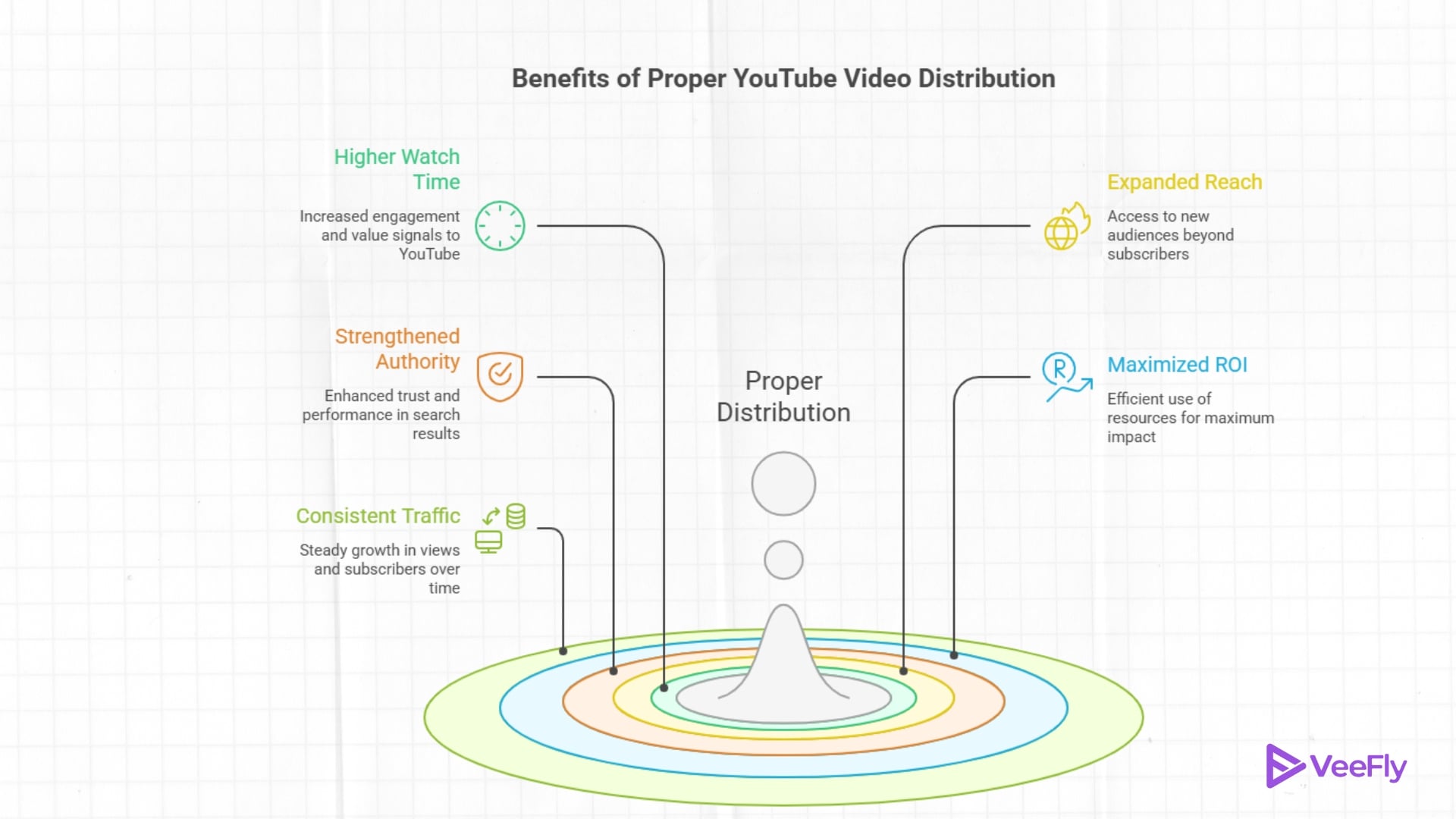
4)Maximizes ROI on Video: Creating videos requires time, effort, and resources. Without strategic distribution, even great content can go unnoticed. Proper video distribution maximizes the return on investment by ensuring each video reaches its full potential audience, generating views, engagement, and potential revenue.
5)Builds Consistent Traffic That Compounds Over Time: A solid distribution plan doesn’t just create short-term spikes in views; it builds steady streams of traffic that grow cumulatively. Over time, this consistent exposure helps build a loyal audience. It drives long-term channel growth through sustained watch time and subscriber growth.
How to Optimize Videos for Maximum Reach?
Once your video goes live, the optimization determines how far it distributes.
1) Metadata and SEO: Place your primary keyword near the beginning of your title. Use 3-5 relevant hashtags in your description. Add video chapters with timestamps for longer content. Write descriptions of at least 200 words with natural keyword placement
2) Thumbnails: High contrast colors that pop against YouTube’s white background. Large, expressive faces when relevant. Text limited to 3-4 words maximum. Consistent visual branding so subscribers recognize your content instantly. Further, conduct A/B testing YouTube’s built-in thumbnail test feature.
3) Playlist Strategy: Group videos by theme, series, or viewer intent. Order playlists strategically. Enable autoplay to carry viewers from one video to the next. Cross-link playlists in video descriptions and YouTube end screens.
4)Accessibility: Accurate captions improve watch time (viewers can watch with sound off) and reach international audiences. Multi-language subtitles open your content to non-English speakers without additional production work.
5)Embedding: Encourage embedding on external websites. When viewers watch your content on a blog or news site, YouTube still credits that watch time, and the embed drives backlink signals.
How to Promote Cross-Platform Repurposing?
A single long-form video can fuel weeks of content across multiple platforms. You can structure your video content distribution strategy for maximum return, for instance from one 15-minute YouTube video, you can extract, 3-5 vertical clips for YouTube Shorts, animated GIFs and highlight key moments, here are some cross-promotion tactics:
- Email list: Send subscribers a personal note when new videos drop.
- LinkedIn: Share professional insights with native video teasers linking to full YouTube upload.
- Instagram Reels: Reformat clips for vertical audiences with platform-specific hooks.
- Twitter/X: Post thread breakdowns with embedded clips.
- Clips feature: Let viewers create and share bite-sized moments.
- Community tab: Poll your audience, share behind-the-scenes content, and announce uploads.
- Stories: Available for channels with over 10K subscribers; use for ephemeral engagement.
- Collaboration: Partner with complementary creators for playlist swaps, guest appearances, or co-produced content. Earned placements on popular playlists can drive substantial discovery.
What Are Common Mistakes to Avoid?
Most video distribution plan failures share common root causes:
- Cross-posting without adaptation: Uploading the same landscape video to YouTube, TikTok, and Instagram Stories wastes potential. Tailor aspect ratios, lengths, and hooks for each platform.
- Neglecting metadata: Titles, tags, and descriptions aren’t optional fields to rush through. Budget dedicated time for optimization on every upload.
- Inconsistent publishing: Erratic upload schedules confuse your audience and train the algorithm to deprioritize your channel. Set a realistic goal and communicate it to subscribers.
- Missing calls to action: If you don’t ask viewers to subscribe, watch another video, or visit your website, they won’t. Script CTAs into your content and pin them in descriptions.
- Skipping analytics review: Guessing what works wastes time. Schedule weekly or bi-weekly performance check-ins to identify patterns and test adjustments.
Final Thoughts
A video distribution strategy follows a continuous loop of planning your approach, optimizing every upload, promoting it across channels, measuring results, and refining it based on what the data reveals. Build your first 3-month distribution roadmap using the frameworks in this guide. Commit to one upload that you can sustain, and review your analytics every two weeks. The creators who grow aren’t necessarily the ones with the best cameras or the biggest budgets. They’re the ones who treat distribution as seriously as production.
Frequently Asked Questions
Q1)What’s the ideal posting frequency on YouTube?
Consistency matters more than volume, find a schedule that matches your production capacity and audience expectations, then stick to it.
Q2)How long should YouTube descriptions be?
The ideal YouTube descriptions should be between 200-500 words, insert the primary keyword, core value proposition, and key links in the first two lines, since YouTube values descriptions in search results.
Q3) Do YouTube Shorts cannibalize long-form video reach?
No, YouTube Shorts and long-form content feed separate recommendation systems. Many successful channels use Shorts to attract new viewers, then convert them into long-form subscribers. The formats complement each other when used strategically.
Q4) What’s the best time of day to publish videos?
There’s no universal answer, Use YouTube Analytics to identify when your specific audience is most active, then test publishing 1-2 hours before those peak windows. Patterns vary by niche, geography, and YouTube audience demographics.
Q5) How should I budget for paid YouTube promotion?
Start with 10-20% of your content production budget for promotion testing. Run small experiments across different video types and audience segments before committing larger amounts. Track cost-per-view and cost-per-subscriber to identify what delivers returns worth scaling.
