


Key Takeaways
- Utilize Multilingual Audio (MLA) to increase global watch time rather than relying solely on subtitles.
- Adapt to local gaming culture rather than literally translating terms.
- 25% of total watch time can come from non-primary languages, hence enabling language accessibility can result in better reach
- Use 1-2 lines per scene for clarity and to prevent drops in engagement due to viewing fatigue.
Why Poor Localization Hurts Your YouTube Channel?
Poor localization does more harm than just confusion; it directly impacts retention, discoverability, and long-term growth. According to YouTube’s data, 70% of watch time on the platform comes from mobile devices, where viewers are less likely to tolerate cluttered subtitles; hence, if your localization isn’t clear, mobile viewers will drop off.
It’s not just about creating confusing subtitles; it’s more about how the audience understands your content. Since YouTube rewards watch time, poorly timed subtitles can leave viewers no reason to keep watching your channel. In a niche like Gaming, if they struggle to follow the commentary or understand key moments, they won’t engage with your content, no matter how good the gameplay.
The reduced engagement from the global audience weakens your competitive advantage. Over time, your YouTube channel as a brand fails to build an international audience. Missed opportunities, especially with games like NineCraft and Fortnite, lead to fewer sponsorship opportunities and slower growth than quality video game localisation.
5 Video Game Localisations That YouTubers Can Fix
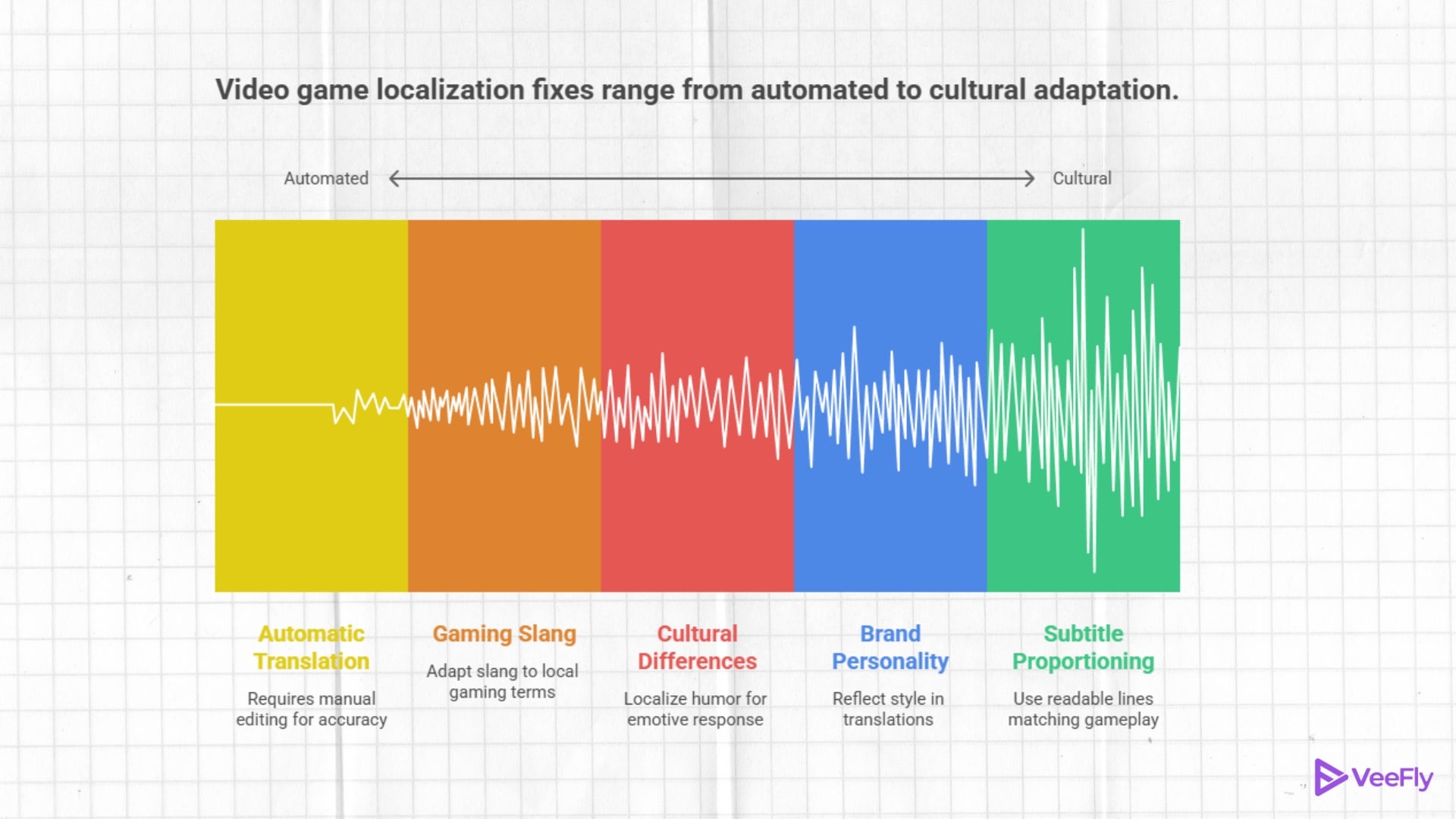
Video game localisation isn’t just about translating words; it’s about finding the most effective way to tell a story that connects with the audience. If you are struggling to communicate with the audience because of localisation, here’s how you can fix it:
1)Relying Only on Automatic Translation Tools
Automatic translation tools are inexpensive and might give you results quickly. However, they tend to produce subtitles that are awkward and often misrepresent the slang. An easy fix is to revert and manually edit subtitles, even after using translation tools. It’s best to leverage your knowledge to translate gaming culture into AI to achieve faster results.
2)Translating Gaming Slang Literally
Gaming slang rarely has a direct equivalent in other contexts; literal translations of terms like ‘AFK’, ‘Buff’, or ‘Throwing’ are not proper translations. Adapt slang to local gaming terms to convey intent rather than exact wording. Even infusing English words into localised translations can help popularise the term in video game localisation.
3)Ignoring Cultural Differences
Every language emerges from a culture that has its own references. You can write the most entertaining script; however, it will only pay off in a select language. Learn about other cultures so you can localize the humor and simplify the message for an emotive response. You can come up with top gaming niche ideas by infusing them with cultural context.
4)Losing YouTube Brand Personality
Localizing content should never mean producing entirely different content. Your tone and energy set your channel apart. If mismatched localization is taking that away from you, ensure that the translations reflect your style. Any language has an abundance of words; all you need to do is find the ones that fit it perfectly, and then proceed with the translation of gaming slang.
5)Not Proportioning the Subtitles Properly
Subtitles that are way too long or appear too quickly can make your viewers uneasy. The best way to fix this is to use short, readable lines that match the gameplay flow. Similarly, using inconsistent terminology doesn’t help you get far. The whole point is to use YouTube localization for a global audience. Hence, conducting the A/B Testing for Subtitles is essential.
6)Ignoring Multi-Language Audio (MLA)
Many creators still rely on outdated subtitle-based localization. Multilingual audio tracks, meaning you can add fully dubbed versions of your video without a separate YouTube channel. Dubbing allows interanal viewers to naturally follow without splitting attention. Popular creators like MrBeast use MLA to dub their videos in over 16 languages, including Hindi and Spanish.
Final Thoughts
Reaching a global audience takes more than just simple gameplay. You need to be smart with video game localisation; misused slang can easily hold back your channel’s growth. The good news is that you can fix these issues, improve your translation, and preserve your brand personality. For enhanced performance, pair it with structured approaches, such as promoting your Gaming Channel to reach the right audience in different regions. Fix these common mistakes, and your gaming videos won’t just be watched globally, but they will be understood.
Frequently Asked Questions
Q1)Does YouTube auto-translate gaming titles and descriptions?
Yes, YouTube auto-translates gaming titles and descriptions using AI systems. The platform translates it to the preferred local language.
Q2)How does gaming slang affect video localization?
Gaming slang plays a significant role in how entertaining and authentic a video feels; poor handling of slang is one of the main reasons why the gaming niche fails. YouTube creators need to better understand the context to translate.
Q3)What is the best AI tool for translating gaming videos?
As of 2026, Synthesia AI is considered the best tool for translating gaming videos, thanks to its user-friendly interface and support for 130+ languages.
Q4)Is localization important for small gaming YouTubers?
Yes, localization is highly important for small creators in the gaming niche, as it increases discoverability, viewer retention, and audience loyalty.
Q5)What are the problems with localization in video games?
Video game localization gets difficult due to technical barriers with tools, translating cultural content, and inadequate like-for-like words in other languages.
