



Key Takeaways
-
Understanding YouTube video promotion costs is challenging due to variable pricing, bidding systems, and targeting.
-
Many creators struggle to estimate costs before campaigns, often wasting budget and missing engagement.
-
When organic reach slows, paid promotion is the best way to kickstart channel growth. Not all methods are equal. Some creators navigate complex ad dashboards, while others use streamlined, creator-focused ecosystems.
-
If you are trying to decide where to invest your marketing capital to get the highest return on investment, this comparison breaks down the actual costs, hidden inefficiencies, and performance metrics of traditional promotion systems versus specialized platforms like VeeFly.
YouTube Video Promotion Cost: What You Actually Pay
When analyzing the baseline YouTube paid promotion price, you will not find a one-size-fits-all package. Instead, the cost to promote a video natively depends on audience demand, your industry niche, and geographic targeting. To set a financial base, look at the standard industry cost ranges for 2026. A low cost per view may seem affordable, but your final expense is shaped by the specific delivery mechanics you choose for your ads:
- Average Cost Per View (CPV): $0.01 to $0.10.
- Competitive Niches CPV: $0.10 to $0.30+ (highly common in finance, tech, business, and B2B software).
- Average Cost Per Mille (CPM – Price per 1,000 impressions): $6.00 to $15.00+.
Cost Breakdown of Traditional YouTube Promotions
Traditional native video promotion uses an auction-based pricing model. You do not buy views directly; you bid for placements against other creators and brands targeting the same audience.
Because of this auction dynamic, traditional methods come with inherent financial volatility. Your CPV fluctuates based on the time of day, seasonal competition and demographic demand.
If your targeting is even slightly misaligned, or if a larger brand outbids you, your ad spend will either skyrocket or fail to deliver entirely. To prevent budget losses, traditional methods require continuous manual optimization. You must adjust bids, monitor watch time, and remove underperforming demographics. The main challenge is cost unpredictability, not cost itself.
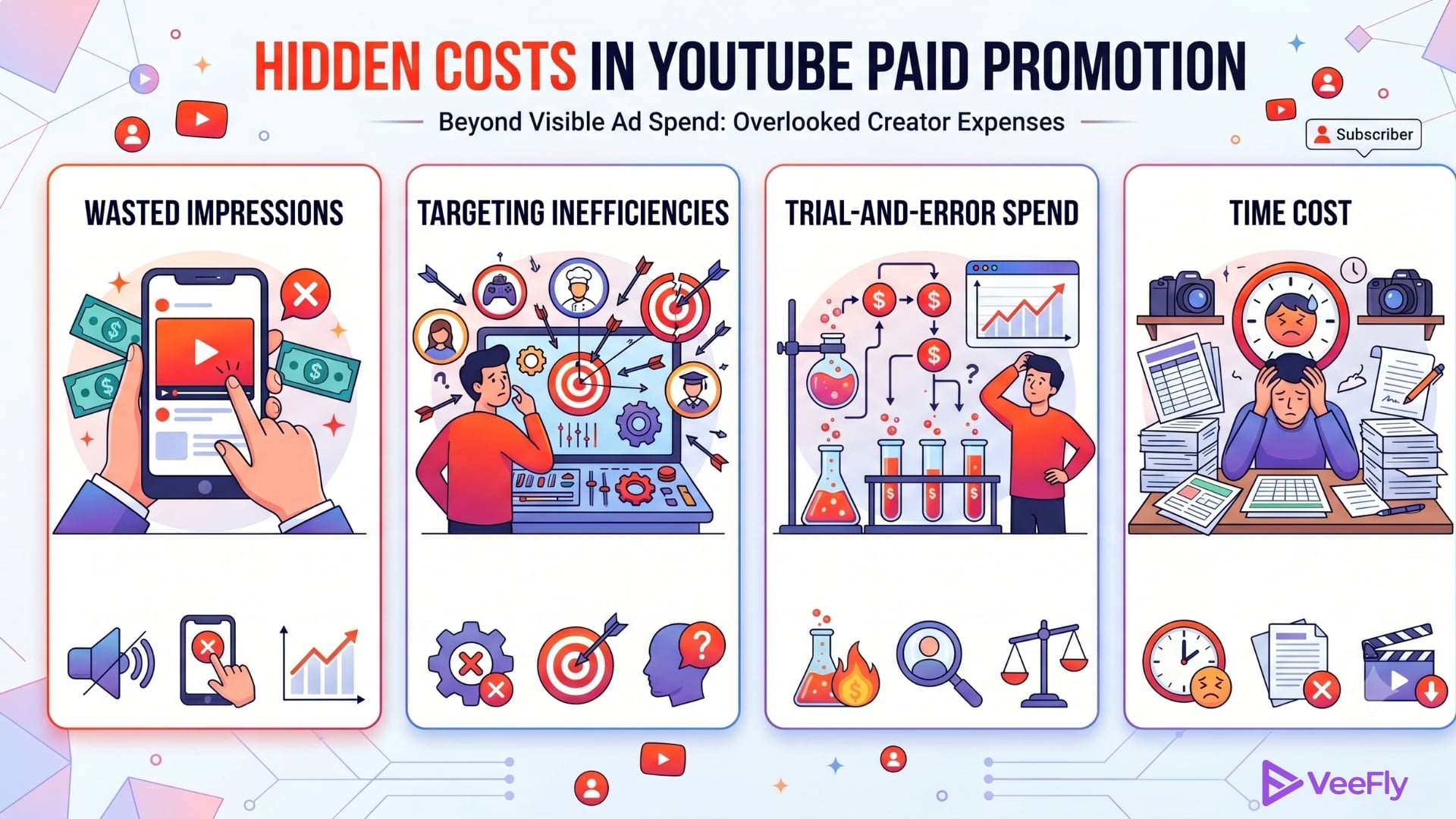
Hidden Costs in YouTube Paid Promotion
Many creators calculate their budget based strictly on visible ad spend, completely ignoring the hidden costs built into traditional, complex promotional systems:
- Wasted Impressions: In native ad managers, a view counts if a user accidentally clicks or watches your video with the sound off. You pay for the click, whether or not it grows your channel.
- Targeting Inefficiencies: Setting up campaigns manually requires media-buying expertise. Choosing the wrong audience or missing exclusions can show your video to irrelevant users.
- Trial-and-Error Spend: Finding your target audience with traditional tools often requires costly testing. Creators may spend hundreds during “learning phases” to see what doesn’t work.
- Time Cost: Hours spent on tutorials, spreadsheets, and tweaking ad dashboards are lost from scriptwriting, filming, and production.
The clear friction points of traditional advertising have made simplified, managed alternatives highly attractive to independent creators. This is where VeeFly provides an entirely different approach. As a Google Partner, VeeFly builds campaigns directly on YouTube’s ad network, removing the complex bidding environment.
It uses a transparent, budget-based system. Instead of manual bidding or fluctuating CPVs, enter your YouTube video link, define your audience, and set a fixed budget of $10 or more. VeeFly handles optimization and provides an accurate upfront view estimate, removing the risk of unpredictable spend.
VeeFly vs YouTube Promotions: Cost Comparison
Comparing key structural differences shows why dedicated creator platforms are often a wiser financial choice.
| Factor | Traditional YouTube Promotions | VeeFly |
|
Pricing Model
|
Auction-based (Unpredictable bids) | Fixed budget-based (Transparent spend) |
|
Cost Predictability
|
Low (Fluctuates daily based on competition)
|
High (Upfront view estimates provided)
|
|
Ease of Use
|
Complex (Requires digital marketing experience)
|
Simple (Clean, intuitive dashboard)
|
|
Setup Time
|
High (Hours of audience research required)
|
Low (Campaign live in minutes)
|
|
Risk of Wasted Spend
|
High (Vulnerable to setup errors)
|
Lower (Managed backend protections)
|
Which Option Is Better for Different Creators
To choose where to spend marketing dollars, match your channel’s current stage to the tool:
- For Beginners: VeeFly is the clear choice. If you lack digital ad experience, manual campaigns often result in wasted money on poor targeting.
- For Small Channels: VeeFly offers a low-risk platform. Launch targeted campaigns for just $10 to test new content angles without financial pressure.
- For Quick Growth: If you want to build social proof, boost watch hours, and test thumbnails, VeeFly’s optimization delivers targeted traffic quickly with less effort.
- For Advanced Corporate Advertisers: If you are a dedicated digital marketing agency running multi-tiered retargeting funnels to capture leads for an external e-commerce store, the exhaustive, raw data panels in native Google Ads remain a viable option.
-
Cost Per View: VeeFly is designed for YouTube growth, not corporate web conversions. Its system prioritizes engagement, finding high-retention viewers likely to subscribe. A stable CPV ensures each dollar drives authentic channel engagement.
Final Thoughts
While traditional YouTube promotion methods offer flexibility and advanced controls suited for enterprise media buyers, platforms like VeeFly offer content creators a more accessible, cost-effective, and predictable way to run campaigns. It stands out for creators who prioritize clarity, ease of use, and budget certainty, especially compared to the often complex and unpredictable nature of native ad managers.
Managing live ad auctions demands time and expertise that many creators do not have, leading to both burnout and wasted budget. This makes VeeFly a better choice for most creators who value predictability and efficiency over customizable but complex options.
Frequently Asked Questions
Q1. How much does YouTube video promotion cost?
YouTube video promotion services cost depends on bidding, targeting, and competition. On native auction networks, creators typically see a CPV of $0.01 to $0.10. However, using budget-based promotion models like VeeFly lets you bypass the auction entirely, offering more predictable results than auction-based systems for as little as a $10 fixed spend.
Q2. Why do YouTube promotion costs vary?
Because traditional ad platforms use a real-time bidding auction. Costs shift continuously based on how many other brands are competing for the exact same audience, your target location, your niche, and how engaging your video creative is.
Q3. What is the most cost-effective way to promote videos?
The most cost-effective method is eliminating targeting errors that lead to wasted clicks. For creators without advanced ad training, using an optimized partner platform like VeeFly is the most efficient route, as it automates targeting and ensures your budget is spent on real channel engagement.
Q4. Is YouTube paid promotion worth it?
Yes, Cost predictability plays a key role in improving return on investment for video campaigns. Paid promotion is highly worth it if you use a stable platform to bypass organic algorithm restrictions, placing your content directly in front of active users who match your ideal viewer profile.
Q5. Does Predictability Matter More Than Just Cost?
Yes, A budget-based model brings financial clarity, letting you plan content and manage business revenue with confidence.