



- The average YouTube ad cost per view ranges from $0.01 to $0.10, making it highly cost-effective for direct-response and engagement campaigns.
- If you are optimizing for brand awareness, expect to pay between $6.00 and $15.00 per 1,000 impressions.
- YouTube Shorts ads currently offer some of the lowest CPMs on the platform ($2 to $5), providing massive top-of-funnel reach.
- You do not need thousands of dollars to start. A daily budget of $10 to $20 is enough to exit the algorithm’s learning phase and test your ad creatives.
- The YouTube ad auction rewards highly engaging videos. Nailing your first 5-second hook increases viewer retention, thereby lowering your overall ad costs.
What Is the Cost of YouTube Ads?
How Much Do YouTube Ads Cost in 2026
- Standard CPV (Cost Per View): $0.01 – $0.10 per view.
- High Competition CPV: $0.10 – $0.30+ per view (common in finance, B2B software, and real estate).
- Standard CPM (Cost Per 1,000 Impressions): $6.00 – $15.00.
- Non-Skippable CPM: $10.00 – $25.00 (premium placement guarantees full message delivery).
YouTube Ads Pricing Models Explained
- Cost Per View (CPV): With the CPV model, you set the maximum amount you are willing to pay for a single engaged view. A view is officially counted when a user watches 30 seconds of your skippable ad or clicks a link. If they skip the ad at second 5, you are not charged.
- Cost Per Mille (CPM): Mille means one thousand. With CPM bidding, you pay a flat rate for every 1,000 times your ad is shown to a viewer, regardless of whether they click, skip, or watch the whole thing.
YouTube Ads Cost Per View vs CPM
Factors That Affect YouTube Advertising Cost
- Audience Targeting: Broad demographic targeting is cheap. Hyper-specific targeting is highly competitive and expensive.
- Geography: Views in Tier 1 countries cost significantly more than views in Tier 2 or Tier 3 regions.
- Competition: The ad auction system means you pay more during peak retail seasons like Q4 when big brands flood the market with cash.
- Ad Quality and CTR: If your ad has a high Click-Through Rate and strong YouTube watch time, Google categorizes it as highly relevant and actively lowers your YouTube ads CPV.
- Industry: B2B, finance, and legal niches command premium prices, while broad lifestyle and gaming niches are generally much cheaper.
Budget Examples for Different Campaign Types
- Beginner Creator/Tester ($50 – $100): A micro-budget designed purely to exit the algorithm’s learning phase. You run a low-stakes CPV campaign for 5 days at $10 to $20 a day just to test which thumbnail gets a higher CTR.
- Small Business/Local Service ($500 – $1,500): A localized campaign aimed at generating leads. Spending $30 to $50 a day over a month allows local businesses to saturate their zip code with non-skippable brand awareness ads and retargeting campaigns.
- Scaling Brand/E-Commerce ($2,000+): Brands actively driving revenue need sufficient data. A budget of $2,000+ per month allows for aggressive A/B testing across multiple video creatives, optimizing for direct ROAS (Return on Ad Spend).
How Much Does It Cost to Promote a YouTube Video
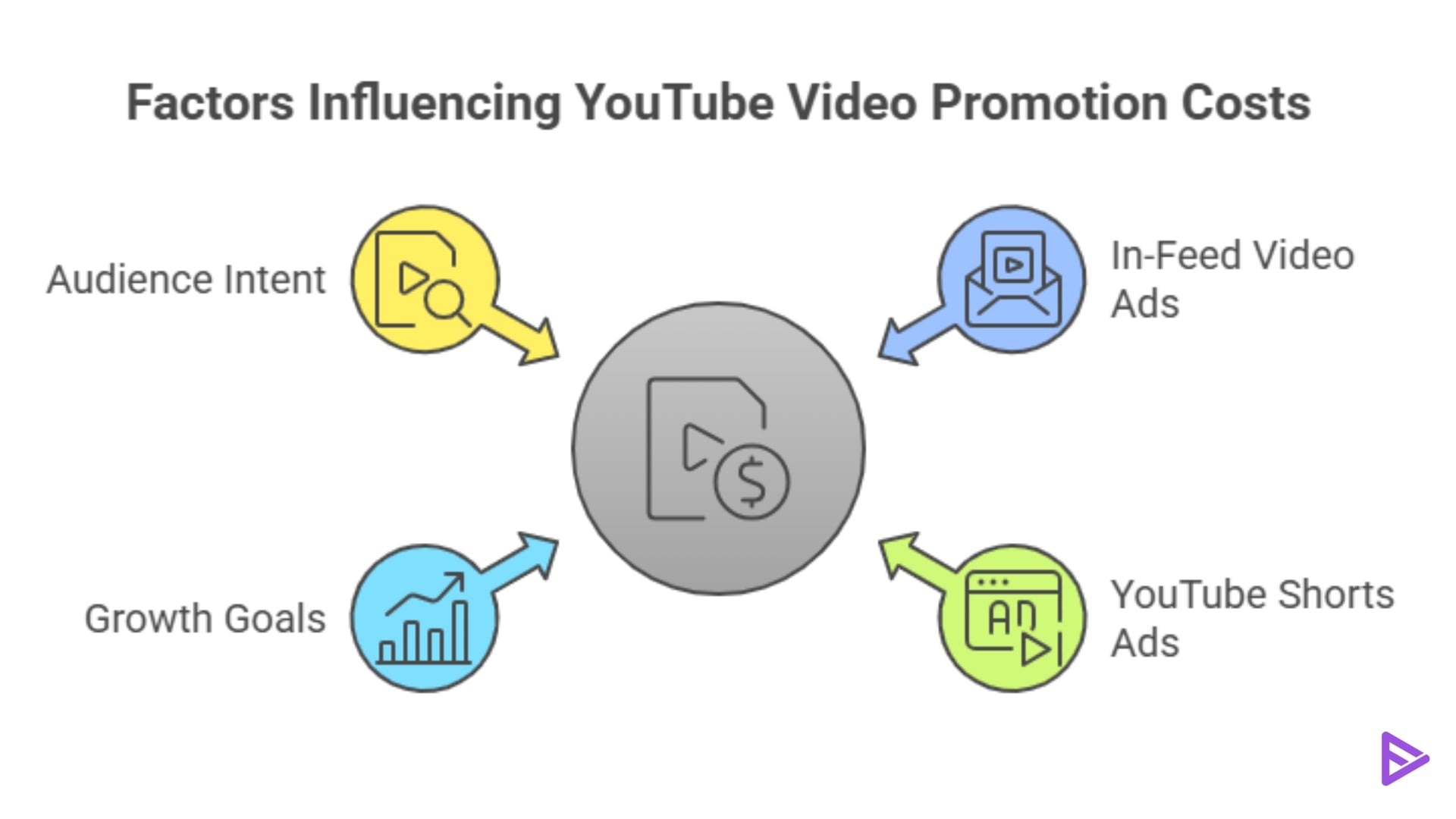
If you are a content creator asking “how much does it cost to promote a YouTube video,” the answer depends entirely on your growth goals. Using In-Feed video ads, you can expect to pay around $0.02 to $0.05 per click. This means for a modest YouTube promotion cost of $100, you can drive roughly 2,000 to 5,000 highly targeted, organic-feeling views directly to your latest upload.
Because these viewers actively chose to click your thumbnail, they are highly likely to subscribe.
With vertical video dominating the platform, YouTube Shorts ads cost has become a major topic for 2026 marketers. Currently, Shorts ads offer a significantly lower CPM (often between $2 to $5) compared to traditional long-form in-stream ads.
This provides incredible reach and cost-efficiency. However, because users are swiping rapidly, audience intent is lower. While Shorts are cheap for brand awareness, driving direct, high-ticket conversions from them remains challenging.
How to Reduce YouTube Advertising Costs?
- Refine Your Targeting: Exclude irrelevant audiences. Use negative keywords to ensure your ads do not show up on unrelated videos, preventing wasted clicks.
- Optimize the First 5 Seconds: If your hook fails, viewers will skip. A stronger hook increases retention, which improves your ad relevance score and lowers your CPV.
- Cap Your Frequency: Set a frequency cap so the same user doesn’t see your ad 10 times a day. This reduces ad fatigue and stretches your budget to reach new, YouTube unique viewers.
- Promotional Services: Managing Google Ads Manager can be complex, hence some creators use YouTube promotional platforms to promote videos with controlled budgets and targeted reach, it simplifies the promotion process.
- Avoid Weak Creatives: Repurposing a slow-paced television commercial for YouTube will lead to high skip rates and algorithmic penalties.
- Avoid Ignoring Analytics: Launching a campaign and ignoring it for a week is dangerous. You must monitor your dashboard daily to pause underperforming creatives and reallocate budget to winners.
Final Thoughts
Frequently Asked Questions
Q1. How much do YouTube ads cost per view?
Q2. What is the minimum budget for YouTube ads?
Q3. Are YouTube ads worth it in 2026?
Q4. How can I reduce YouTube ad costs?
Q5. What Is YouTube Demand Gen Campaigns and Cost Impact?
In 2026, The YouTube demand gen campaigns cost impact is notable. Because Google’s AI dynamically allocates your budget to the best-performing surface, your blended CPA often drops, making cross-surface advertising much more cost-effective for performance marketers.