


Key Takeaways:
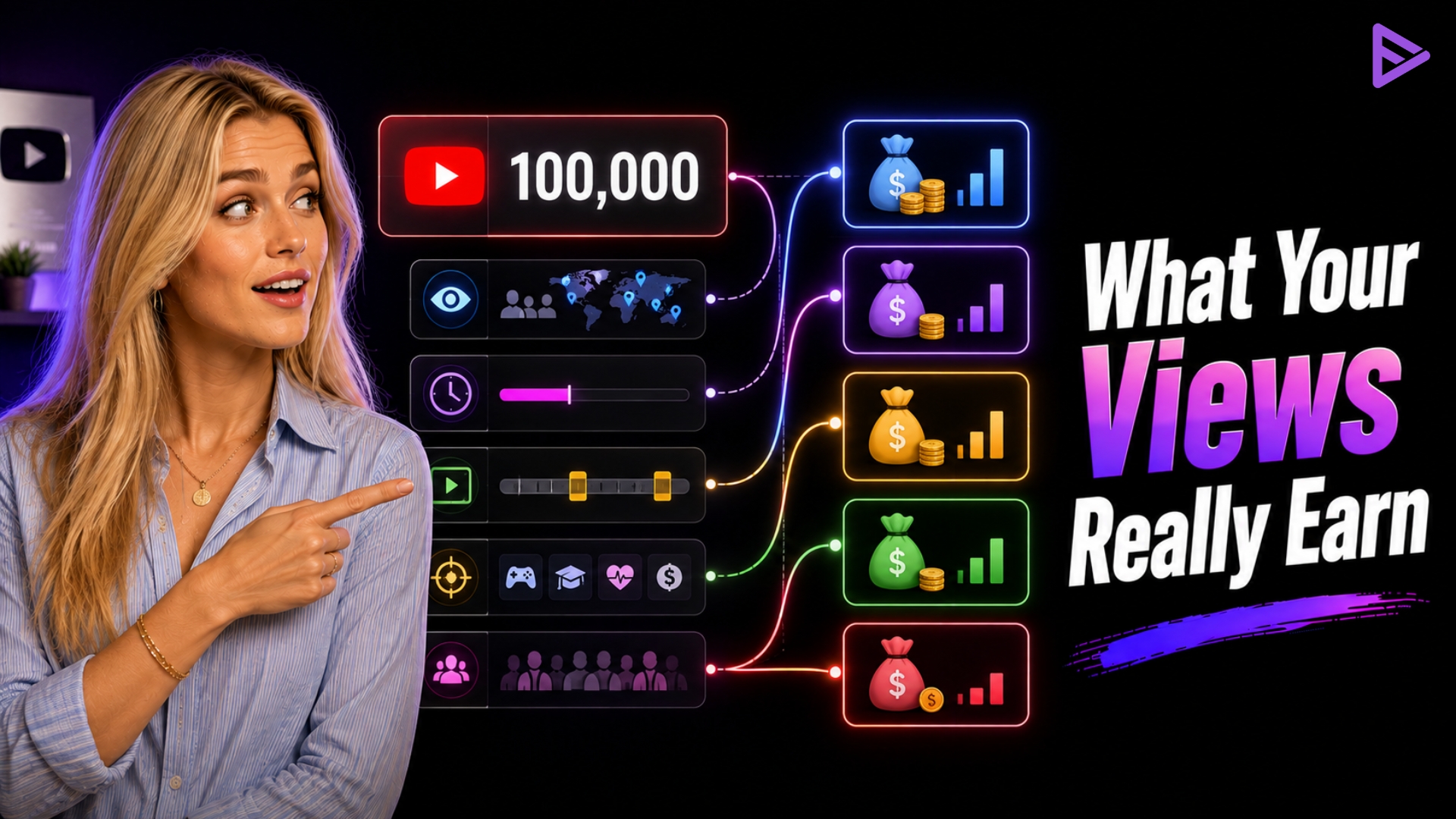
- YouTube doesn’t compensate for raw video views; income comes solely from monetised ad views and watch time on YouTube Premium.
- While CPM is what an advertiser pays, a creator’s RPM is what they actually earn per 1,000 views (typically between $2 and $12 for long-form content).
- High-intent topics (such as finance and tech) and long-form videos with mid-roll ads pay much more than general entertainment or Shorts.
Creators asking how much YouTube pays per view are often surprised to learn that standard YouTube pay-per-view earnings don’t exist; revenue depends on ad engagement rather than raw playbacks. Understanding pay per view on YouTube means looking at ad impressions, where rates depend on niche, audience geography, and video length.
To maximise income, creators must look beyond basic AdSense by using mid-roll ads, shifting to high-CPM topics, and diversifying into sponsorships, affiliate links, channel memberships, and digital products.
Does YouTube Pay Per View?
The answer is absolutely not! YouTube doesn’t directly pay you per video view. When creators ask about YouTube pay per view, they are often surprised to learn they earn money through ads placed before, during, or after their video. A YouTube video view is a critical metric for YouTubers that indicates a video’s popularity and can attract viewers across different niches.
However, to make money on YouTube from ads, you must be eligible for the YouTube Partner Program(YPP). Understanding pay per view on YouTube requires looking at ad placements rather than raw view counts. Ad revenue can vary based on factors like your target audience, ad types, and advertisers’ budgets.
Difference between Video Views and Ad Views on YT Videos
Many creators mistakenly believe that YouTube pays creators based on the number of video views. The reality is far from this. To understand how much YouTubers make per view, you must look at how ad monetisation works behind the scenes. Google-owned YouTube pays creators when viewers watch the ads on their videos. There’s a world of difference between video views and ad views.
Video views
The number of YouTube views your videos get when your audience watches your content. Not every video view makes money, because some viewers use ad blockers, others skip ads before 30 seconds, and a few watch non-monetised playback.
Ad views
Refers to the number of views the ads placed in your YouTube videos get. When we talk about how much YouTube pays per view, we mean ad views that appear on your videos.
CPM vs. RPM: What Are the Important Revenue Numbers?
In order to properly calculate your earnings from YouTube, you need to be aware of two important metrics from the industry:
- CPM (Cost Per Mille): The total cost advertisers pay to YouTube for every 1,000 advertisement impressions. CPM varies widely from $2 to $30+, depending on the advertiser’s budget, the audience’s country, and competition.
- RPM (Revenue Per Mille): How much money the creator makes per 1,000 total video views after YouTube’s 45% platform cut is removed. RPM includes all revenue from ads, YouTube Premium views, Channel Memberships, and Super Chats.
- The simple math to calculate this would be, for each of your videos, to determine your real YouTube earnings: Estimated Earnings =RPM X (Total Video Views/1000)
How much money does YouTube pay per ad view?
This still remains the most asked question among YouTubers: How much does YouTube pay per ad view? Well, YT doesn’t offer a fixed rate for ad views. Ad revenue from your YouTube videos depends on audience demographics, ad placements, engagement metrics, and ad-blocker usage. On average, YouTube pays around $0.01 to $0.03 per view. This translates to $0.002 to $0.012 per overall video view when factoring in unmonetized playbacks.
| Total Video Views | Estimated RPM Range (USD) | Estimated Creator Payout (USD) |
| 1,000 views | $2.00 – $12.00 | $2 – $12 |
| 10,000 views | $2.00 – $12.00 | $20 – $120 |
| 100,000 views | $2.00 – $12.00 | $200 – $1,200 |
| 1,000,000 views | $2.00 – $12.00 | $2,000 – $12,000 |
For example, if your YouTube video attracts 1000 views, you can expect to earn between $10 and $30. Videos with higher engagement rates, such as more likes, active comments, and higher watch times, tend to demand more payout from sponsors. Therefore, focus on creating content that resonates with your audience and promote video on YouTube that can lead to better engagement from your target audience.
How to get paid for ad revenue on YouTube?
You must fulfil the eligibility criteria to join the YPP to earn money from ads on YouTube. YouTube operates on a two-tier partner structure:
- YouTube Partner Program Tier 1 (Fan Funding).
- To access creator monetisation features such as Super Chat, Channel Memberships and YouTube Shopping, you need:
- 500 subscribers.
- 3 public uploads in the past 90 days.
- 3,000 public watch hours in the last 12 months OR 3 million public YouTube Shorts views in the last 90 days.
2. YouTube Partner Program Tier 2 (Full Ad Revenue)
To receive payment directly from ad revenue and YouTube Premium watching, you need to fulfil the complete criteria:
- Building a base of 1000 subscribers on your channel.
- Having 8000 public watch hours in the past 1 year.
- 20 million qualified public Shorts views in the last 90 days, instead of 10 million Shorts views.
- Content complying with YouTube community guidelines and advertiser-friendly policies.
- Linking your channel to a Google AdSense account to receive ad revenue payments.
- Owning your channel in an eligible location
These requirements will take effect on Feb 1, 2027. Once you fulfil the above requirements, you can apply for the YouTube Partner Program through YouTube Studio. YouTube will review your channel for compliance with community guidelines and policies. This process can take some time. However, once done, you will get a notification from YouTube and gain access to its monetisation features.
Other ways YouTubers can leverage to Make Money
Here are a few ways you can use to make money on YouTube apart from generating ad revenue;
- Brand Partnerships and Sponsorships
- Merchandise store
- Livestreams
- Affiliate Marketing
- Channel Memberships
- YouTube Shorts
- Digital Products & Online Courses
Remember, what might work for other creators might not necessarily work for you as well. Depending on your niche and content category, you can still explore these methods to make money on YouTube.
Brand Partnerships and Sponsorships
Brand partnerships include collaborating with brands relevant to your niche and promoting their products or services. You can earn a fixed fee or profit from a revenue-sharing model based on your channel’s metrics. Brand sponsorships for channels that garner between 10,000 and 100,000 views per video can pay $500 to $5,000+ per integrated segment.
For example, if you have a smartphone review channel, you can partner with smartphone brands to produce dedicated review videos. Remember, brands look for creators with an engaged fanbase that matches their target audience demographics.
Merchandise Store
Selling your merch is also a great way to earn money on YouTube in addition to ad revenue. You can capitalise on your creativity and expand your content’s reach beyond videos. As a creator, there are numerous YouTube merchandise products you can choose from to sell on your channel.
You don’t have to manage inventory to run a merchandise store on YouTube. Consider dropshipping: when you receive an order, you forward it to the product supplier, who handles delivery.
Livestreams
YouTube Super Chats are a great feature that helps you get paid for interacting with your audience through live streaming. Consistent live streaming also helps you build a loyal community and engage deeply with your audience.
Affiliate Marketing
This is another way to earn passive income from your YouTube videos. Based on your content niche, you can find relevant products that your audience may be looking for and promote them in your videos.
Paste the affiliate links in your channel profile or video descriptions. Let more people watch your videos and explore your affiliate products. However, ensure that you sell high-quality products at a reasonable price. The products should be something that your audience is actively looking for.
Channel Memberships
Want to generate a recurring income from your YouTube channel? Explore channel memberships that help you earn money from your most loyal subscribers. Deliver massive value, such as early access to your most recent videos, exclusive content not available anywhere, to your subscribers who regularly interact with your content. To grow your subscriber base faster, you can buy YouTube subscribers.
Also, YouTube takes a small percentage of the revenue generated from channel memberships. Head straight to YouTube Studio to manage your channel memberships.
YouTube Shorts
YT Shorts have been gaining popularity, as a large segment of YouTube viewers prefer short-form content. After the recent update, you can create Shorts up to 3 minutes long. Unlike traditional long-form videos, where creators receive 55% of ad revenue, YouTube Shorts pools all ad revenue on the platform. Creators receive 45% of total Shorts ad revenue, based on their share of total Shorts views.
Since Shorts are consumed quickly, the average pay-per-view in YouTube Shorts is significantly lower, between 3 cents and 20 cents per 1,000 views ($30 to $200 per million views). That said, Shorts are an amazing traffic driver for viral reach, growing subscribers, and funnelling people to your higher-paying long-form content.
Digital Products & Online Courses
One of the most lucrative income streams for modern content creators is selling digital products directly to their audience. These can be eBooks, software, templates, Lightroom presets, premium online courses, or anything that can be downloaded. Selling digital goods offers nearly a 100% profit margin and removes dependence on fluctuations in YouTube CPM rates.
8 Factors that Impact YouTube Earnings
Let’s suppose 10 ads run on both “A” & “B” videos. That doesn’t mean both creators will earn the same amount. Here are some factors that impact earnings and how much YouTube pay per view:
Niche
The niche significantly affects earnings.CPMs for high-intent niches such as Personal Finance, Real Estate, SaaS, Tech, and Digital Marketing can range from $12 to $35+. On the other hand, general entertainment, vlogs, and gaming channels usually have lower CPM rates, between $2 and $6. Because advertisers in these niches are willing to pay more.
Location
Your audience’s location matters for earnings. For example, if your viewers are from high-income countries, such as the USA, UK, or Australia, then your ad earnings will be higher. Advertisers are willing to pay more to reach that audience.
Ad Type
There are multiple types of YouTube ads, including skippable and non-skippable ads. All these ads serve different purposes. Some stay longer in front of the audience and some are short; these factors affect the Ad earnings.
Ad Placement
Some YouTube ads are placed at the start of the video, some in the middle, and some at the end. Some ads appear in the search results. Additionally, some ads appear directly on the YouTube App’s homepage, known as masthead ads. These placements offer different exposure, which affects earnings.
Length of video
Yes, YouTube Shorts are a great way to acquire an audience, but ad revenue from Shorts gets split. The maths is simple: the more ads run on your video, the more you earn. Videos over 8 minutes can also include manual mid-roll ads placed anywhere in the video. The longer the video, the more ad placement options it has. This makes video length a major driver of earnings.
Watch-Time Metric
Watch time is the most crucial engagement metric. Higher watch time means the algorithm pushes your videos. Indicating that the video is performing well. Then ads will be placed more since viewership is higher.
Ad Clicks
If ads running on your video get clicks, it means advertisers are getting good results. This makes your channel type an ideal place to run ads.
YouTube Premium
YouTube Premium doesn’t pay for ads, but if Premium users watch your videos for a long time and your watch time is higher, you can earn a significant amount. YouTube distributes a percentage of the subscription fee directly to creators based on watch time duration.
3 Expert Tips To Maximize Your YouTube Earnings
Now that you understand how much does YouTube pay per view, let explore some tips to maximize the earnings from YouTube.
Focus on Long Form Content
You might be great at creating Shorts, or you might have a huge following based on short-form creativity. However, long-format videos can generate revenue, so focus on that. Create a content strategy that brings your audience to your long-form videos.
YouTube Video Promotion
Advertisers bid for performing content. A video that brings more eyes to their content, as well as ads. Yes, you will spend on promotion using legitimate Google Ads or promotion tools like VeeFly, but it will increase engagement and grow your channel. Advertisers will try to match ads with content that performs well. This increases your chances of earning.
Choose Profitable Niche
As we have seen, some niches provide more ad revenue than others. Figure out profitable niches. Some niches remain static, while others stay on trend for a while. Analyze what works for the channel and adjust your content strategy to focus on a profitable niche.
Final Thoughts
You now have an answer to how much does YouTube pay per view. Ad revenue is important. However, creating the best possible content that meets your audience’s needs and building an authentic channel brand matter more. This approach opens doors to multiple ways to make money on YouTube without relying only on ad revenue. You can explore the idea to buy YouTube views to reach your audience faster.
Frequently Asked Questions
Q1. Do YouTubers Get Paid If You Skip The Ads?
YouTubers can earn money when viewers watch an ad in full, click on the ad, or watch it for at least 30 seconds (or its full duration if it is shorter). Therefore, if a viewer skips an ad before the 30-second mark, the advertiser may not be charged for that view, meaning the creator may not earn revenue from that particular ad impression.
Q2. How Much Do You Get For 1,000 Views On YouTube?
The average YouTube pay rate is between $0.01 and $0.03 for an ad view. So a YouTuber makes around $18 per 1,000 ad views and $3 to $5 per 1,000 video views. $0.002 to $0.012 per overall video view. On average, a YouTuber makes around $2 to $12 per 1,000 total video views, depending on niche and viewer location.
Q3. Do YouTubers Get Paid For Likes?
No, YouTubers do not get paid for the likes that they receive on their videos. But this is one of the metrics that the algorithm uses to make your channel popular.
Q4. How Much Do You Make With 1,000 Subscribers On YouTube?
Depending upon the ads run on the video, the YouTuber will earn something between $1,000 and $10,000 a year from the ad revenue.
Q5. How Much Does YouTube Pay For 1 Million Views?
According to industry estimates, YouTube pays between $3000 and $5000 for 1 Million views. However, the amount can vary further depending on the audience interaction, location, and ad placements.
Q6. What is the difference between CPM and RPM?
CPM (cost per mille) is how much advertisers pay YouTube to display their ads 1,000 times. RPM (Revenue Per Mille) is the amount of revenue that a creator makes per 1,000 total views of their videos, after YouTube’s 45% fee deduction.
Q7. Do YouTubers get paid for views on YouTube Shorts?
Yes, YouTubers make money from YouTube Shorts views via the YouTube Creator Pool revenue share. Creators retain 45% of the respective advertising revenue that is earned on their share of total Shorts views.
