


Key Takeaways
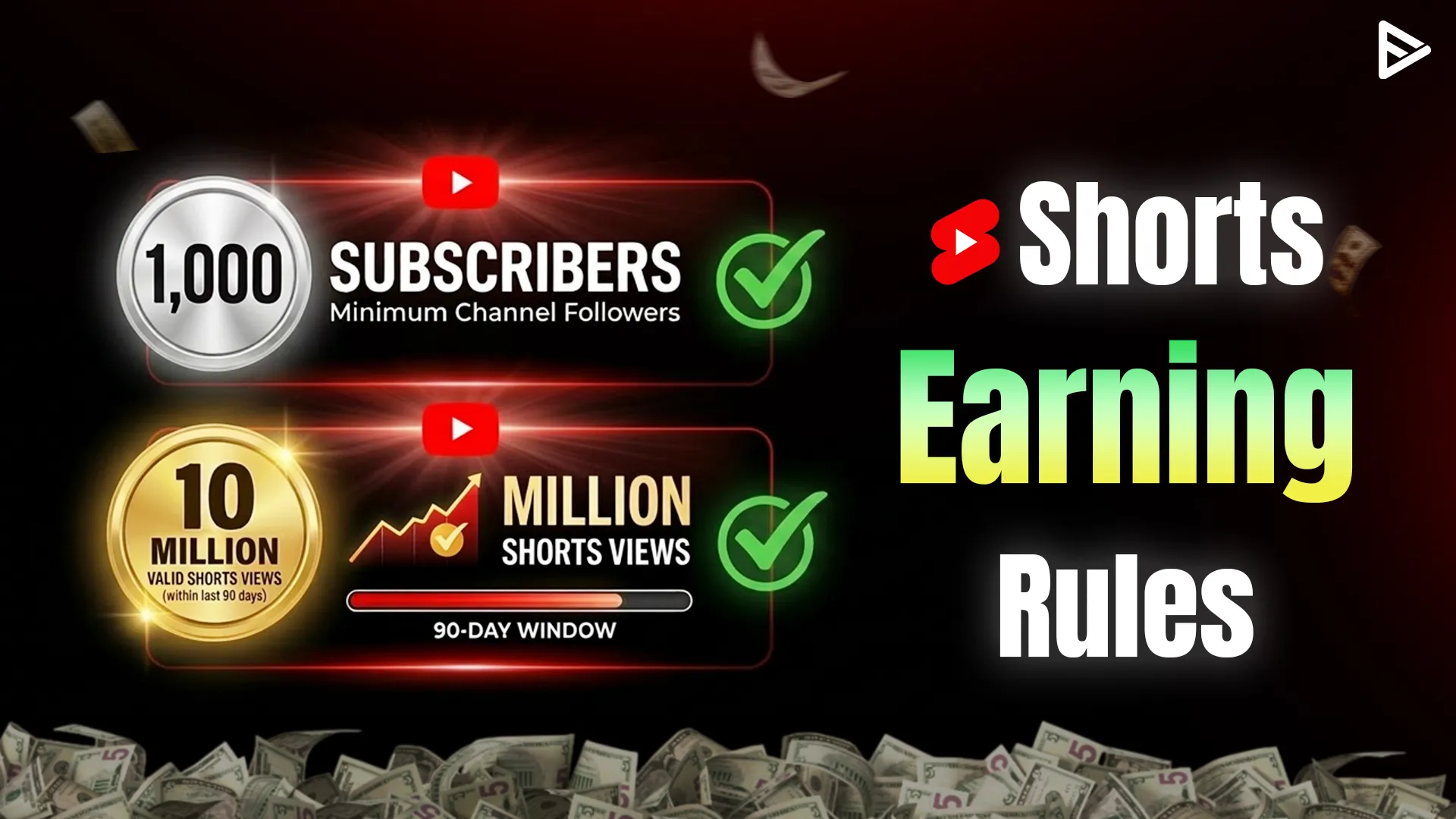
- To unlock ad revenue, you need 1,000 subscribers and 10 million valid Shorts views within a 90-day window.
- Access Super Thanks and Memberships earlier with just 500 subscribers and 3 million Shorts views.
- Expect an RPM between $0.03 and $0.10; Shorts are built for reach, while long-form is built for high revenue.
- Ad revenue is pooled and distributed based on your share of total platform views and your use of licensed music.
- Successful creators use Shorts as a “top-of-funnel” engine to drive viewers to high-paying long-form content.
If you’ve been scrolling through the Shorts feed lately, you’ve probably noticed two things: the views are in millions, and everyone is capitalizing on it. But does YouTube actually pay for this? The answer is a resounding yes, but the rules of the game have changed significantly as we head into 2026.
Meeting the YouTube shorts monetization requirements is no longer a mystery, but it does require a specific strategy. If you’re a creator looking to turn those vertical swipes into actual cash, you need to understand the milestones, the math behind the payouts, and how to build a “revenue stack” that actually pays the bills.
YouTube Monetization Requirements Explained in Simple Terms
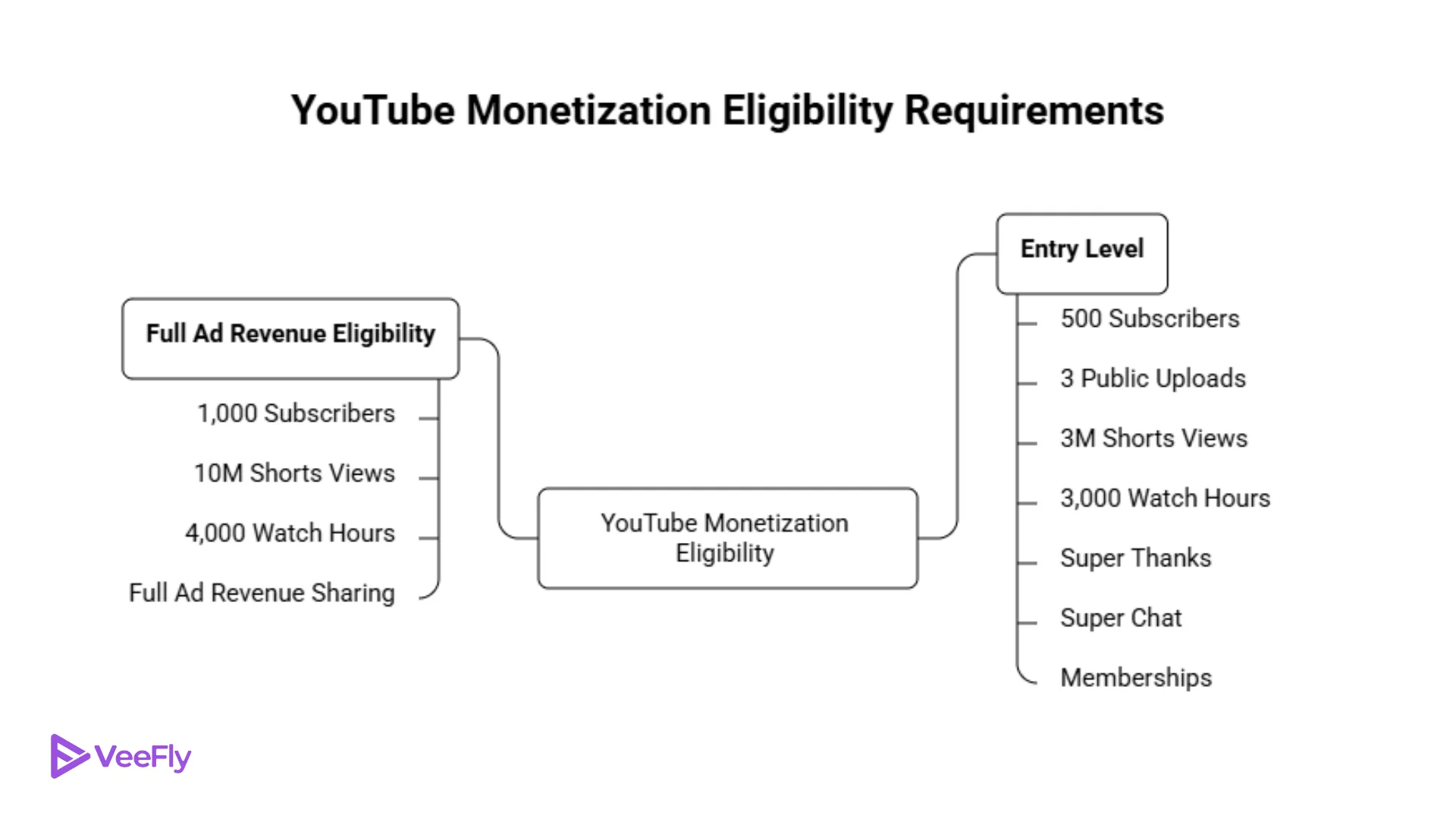
In 2026, YouTube offers creators two distinct paths to enter the YouTube Partner Program (YPP). You don’t need to meet both; you just need to clear one of these hurdles to start earning ad revenue.
1. Shorts Monetization Path
If your channel is 100% focused on vertical, short-form content, this is your primary target. The requirements to monetize YouTube Shorts through this path are:
- 1,000 Subscribers: This is the baseline for the full program.
- 10 Million Valid Shorts Views: These views must occur within the last 90 days.
2. Long-Form Monetization Path
Many creators use a “hybrid” model. You can still unlock Shorts ads if you qualify via traditional watch hours:
- 1,000 Subscribers for long-format videos.
- 4,000 Valid Public Watch Hours on long-form videos over the last 12 months.
Once you meet these YouTube shorts monetization criteria, you must manually enable the monetization module in your YouTube Studio. It is not an automatic “on” switch; you have to accept the new terms to start collecting your share.
What You Unlock at 500 Subscribers on YT Shorts
Are you struggling to hit that 10 million view mark? YouTube has introduced a “bridge” tier. If you have 500 subscribers, 3 public uploads in the last 90 days, and 3 million Shorts views, you can access fan-funding features.
While this doesn’t give you ad revenue, it unlocks:
- Super Thanks: Digital tips on your Shorts.
- Channel Memberships: Monthly recurring support from fans.
- YouTube Shopping: Tagging products directly in your videos.
This is a great way to start earning while you work toward the full requirements for YouTube Shorts monetization.
How YouTube Shorts Monetization Works?
The way you get paid for Shorts is fundamentally different from long-form videos. For a 10-minute video, an ad plays, and you get a direct cut. For Shorts, the process involves a four-step “Creator Pool” system:
1. Revenue Pooling: YouTube gathers all ad revenue generated from the Shorts feed across the entire platform.
2. Calculating the Creator Pool: YouTube determines how much of that money goes to creators versus music publishers. If you use licensed music, a portion of the revenue goes to the artists. If you use original audio, more stays in the creator pool.
3. Platform Share Distribution: YouTube looks at your total views compared to all other monetized views on the platform. If you account for 1% of the views, you get 1% of the pool.
4. The Final Cut: Creators keep 45% of their allocated share from the pool.
Because of this “share of the pie” model, your revenue is tied to platform-wide performance, which is why the criteria to monetize YouTube Shorts emphasize high-volume views.
Real Talk: What Is the RPM for YouTube Shorts?
Revenue Per Mille (RPM) represents how much you earn per 1,000 views. In 2026, most creators are seeing an RPM between $0.03 and $0.10.
To put this in perspective, look at the following comparison for 1 million views:
- YouTube Shorts: $30 – $100 total.
- Long-Form Videos: $1,000 – $30,000 total (depending on niche).
Why the RPM Varies
Even if you meet the YouTube Short video monetization criteria, your specific payout depends on:
- Viewer Location: High-CPM countries like the US or UK pay significantly more than other regions.
- Niche: Finance and B2B content attract higher-paying advertisers than general entertainment.
- Music Usage: Original audio typically results in a higher payout because you aren’t splitting revenue with music labels.
Build a Revenue Stack Instead of Relying on Shorts RPM
If you look at the $0.03 RPM and feel discouraged, you’re looking at it the wrong way. The most successful creators in 2026 don’t rely on Shorts ad revenue to pay their rent. Instead, they use Shorts as a growth engine to fuel other, more profitable streams.
1. The Long-Form Funnel
This is the highest-leverage move. Use Shorts to grab attention and gain subscribers, then “funnel” those viewers to your long-form content where the RPM is 50x higher. The YouTube clipping tool can help you turn your long videos into multiple Shorts effortlessly.
2. Brand Deals
Brands love Shorts because they are mobile-first and high-retention. Even with a smaller subscriber base, if you have consistent engagement that meets the YouTube Shorts monetization requirements, you can command flat fees that far exceed ad revenue.
3. Affiliate Marketing & Products
Shorts are incredible for driving “impulse traffic.” Whether it’s an Amazon link or your own digital templates, a viral Short can send thousands of people to a landing page in minutes.
AI-Generated Shorts Without AI Slop
Can you use AI to meet the YouTube Shorts monetization criteria? Yes, but with a warning. YouTube doesn’t care if you use AI; they care about YouTube authenticity and originality. Low-effort AI content, like a robotic voiceover on top of unedited stock footage, is often flagged as “Al Slop”. Affecting your revenue pool. However, if your AI-assisted workflow results in something unique and creative, it is treated the same as any other monetized video.
Final Thoughts
The YouTube Shorts monetization requirements in 2026 are a gateway, not a destination. While hitting 10 million views is a massive achievement, the real win is using that massive reach to build a loyal community.
Don’t just chase the RPM. Focus on creating high-retention content that meets the requirements to monetize YouTube Shorts, and then stack your revenue with brand deals, fan funding, and long-form content. When you treat Shorts as the “top” of your business funnel, the small ad payouts become a nice bonus rather than a primary concern.
Frequently Asked Questions
Q1. Is YouTube Shorts monetization worth it?
Yes, absolutely worth it. All you need is 1,000 subscribers and either 10 million valid Shorts views within the last 90 days or 4,000 watch hours on long-form videos in the last year.
Q2. Do you need original audio to monetize YouTube Shorts?
No, you don’t need original audio, but the tracks you are using must be copyright-free, or you have rights to them.
Q3. Do private or unlisted Shorts count toward monetization?
No. Private and unlisted Shorts don’t count towards monetization; only public Shorts do.
Q4. Can a new channel qualify for Shorts monetization?
The channels that qualify for the YouTube Partner Program are eligible to earn from YouTube monetization.