


Key Takeaways:
- Start creating a faceless YouTube channel with free and budget-friendly tools.
- YouTube monetization typically takes 6 to 12 months of consistent uploads and audience building before qualifying for ad revenue.
- AI voiceover tools and automation workflows reduce production time significantly while maintaining professional quality.
- Shorts provide a fast-track discovery method, with creators able to qualify for monetization through 10 million valid Shorts views in 90 days.
- Multiple revenue streams beyond AdSense open up once you build an engaged subscriber base and consistent view counts.
Why Faceless YouTube Channel Ideas Thrive In 2026?
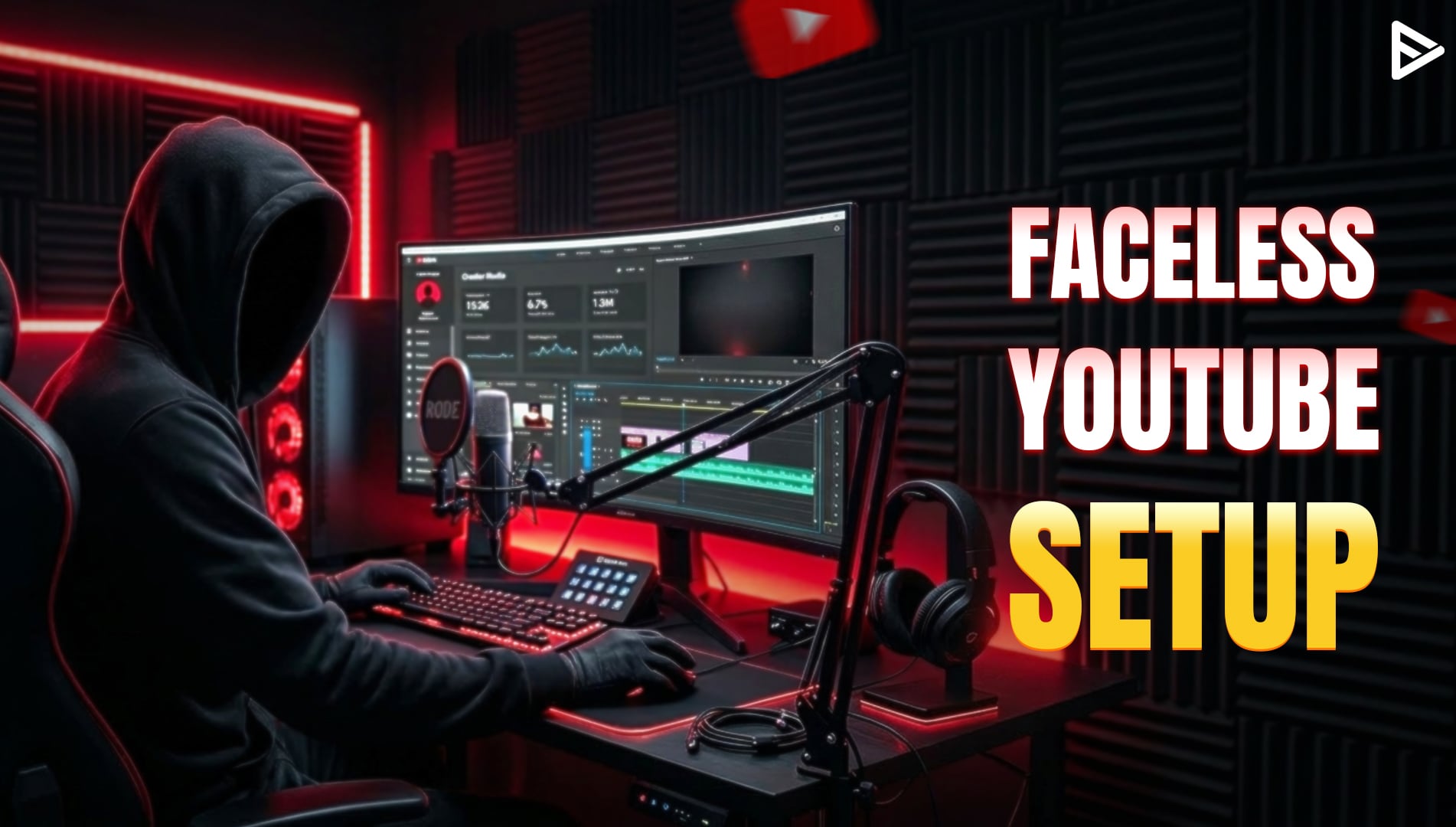
Faceless channels create content without showing the creator’s face, relying instead on voiceover, animation, stock clips, AI-generated voices, and screen recordings across educational, compilation, ambient, and narrative formats. Here is why faceless channels continue to attract new creators in 2026.
- Creators want income without public exposure. AI voice synthesis reached human-like quality in 2024 and became accessible to solo creators.
- YouTube formalized Shorts monetization, allowing channels to qualify with 1,000 subscribers and 10 million valid Shorts views in 90 days alongside the traditional 4,000 watch hours threshold.
- Faceless formats lower production barriers. Production costs for faceless formats are often lower than for on-camera setups.
- Micro-niches thrive in faceless formats, right from finance explainers to tech tutorials, productivity systems, ambient study content, and narrative storytelling.
Types Of Faceless YouTube Channels
The most successful faceless YouTube channel ideas fall into eight proven formats, each with distinct production requirements and monetization potential:
- Educational Explainer Videos: Break down complex topics using screen recordings, slides, and diagrams. High RPM potential in finance, tech, and business niches. Easiest format for beginners with subject expertise.
- AI Voiceover Storytelling: Narrative content using AI-generated voices paired with stock footage or animation. True crime, history, and mystery channels dominate this space. Moderate production complexity.
- Screen Recording Tutorials: Software walkthroughs, gaming guides, and productivity tool demos. Minimal equipment needed. Strong affiliate revenue potential when recommending tools.
- Stock Footage Compilations: Curated clips with voiceover or music. Travel, nature, and motivation channels fit this model: lower RPM but fast production turnaround.
- ASMR and Ambient Content: Soundscapes, nature sounds, study music. Minimal editing. Revenue comes from long watch sessions and memberships.
- Animation Channels: Whiteboard animations, motion graphics, or character-driven stories: the highest production time investment but premium RPM in educational niches.
- Top 10 and List Videos: Countdown formats with B-roll and narration. High CTR potential. Scales well with trending topics.
- Product Review Channels: Unboxing, testing, and comparing products without appearing on camera. Strong affiliate income. Requires product access or stock footage licensing.
How to Plan a Successful Faceless YouTube Channel?
Planning determines whether your channel gains traction or stalls after ten uploads. Here’s how to create a faceless YouTube channel:
1)Define your audience: Start by identifying the specific problem your content solves. Narrow your focus to one audience segment and one content promise.
2)Include a Pre-launch Checklist: Have a clear channel name, with a banner design of 2560 x 1440 pixels. Include your content promise and upload schedule. Set up a 30-second channel trailer. Show your best content style and set upload expectations.
3)Content Calendar Rule: Commit to two to three videos per week, minimum for the first 90 days. Consistency signals reliability to both the algorithm and subscribers. Batch-produce content to maintain this cadence without daily stress.
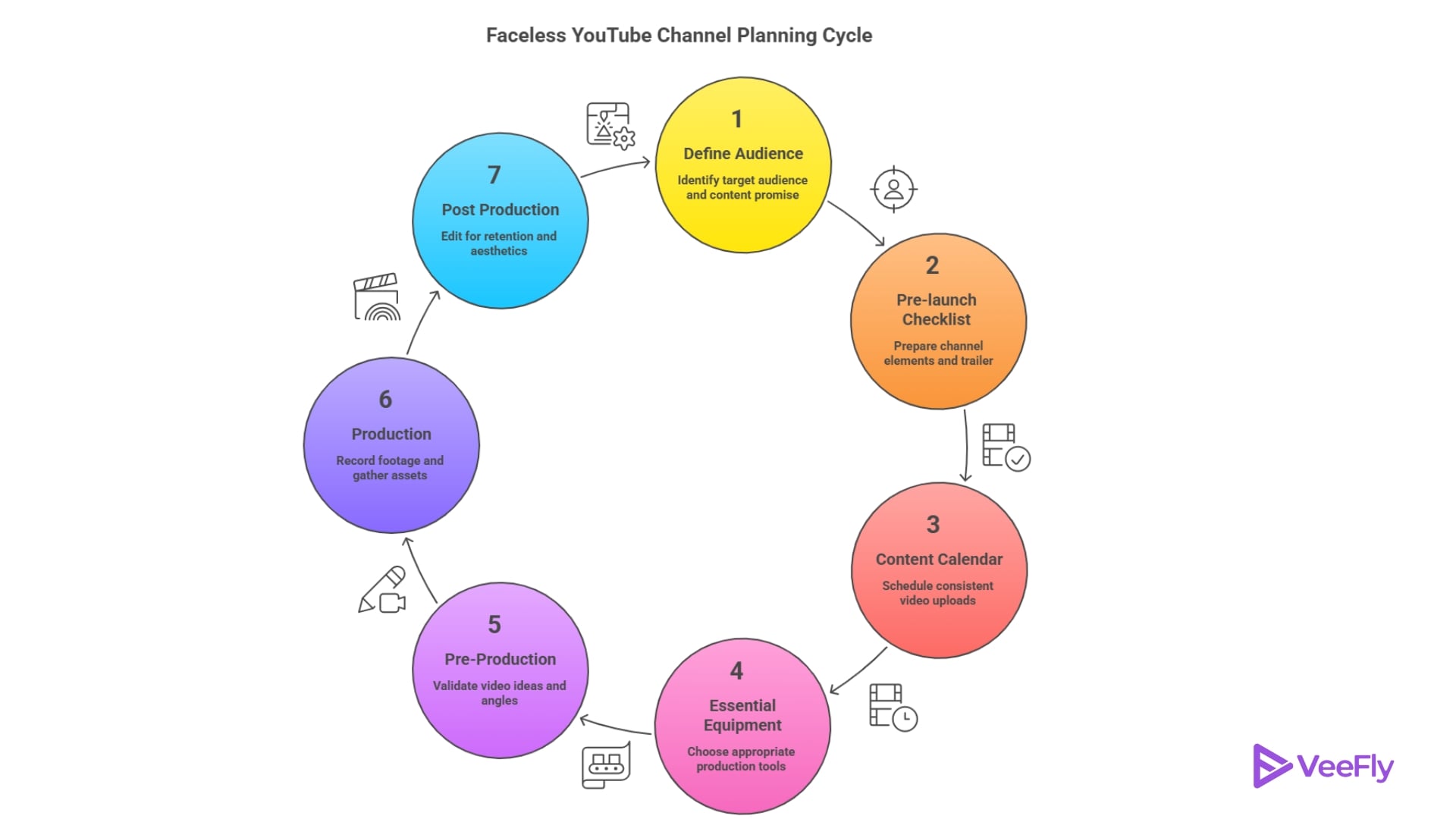
4)Essential Equipment and Software: Production quality matters, but expensive gear does not guarantee success. Start lean and upgrade as your channel proves traction. Under $50 USB microphones include Fifine and Tonor DaVinci Resolve. Free editing tools (DaVinci Resolve, CapCut) offer professional-grade features but come with steeper learning curves.
5)Pre-Production: Validate your video idea before scripting. Check trending topics in your niche using YouTube search autocomplete and Google Trends. Review top-performing videos for content gaps and unanswered questions. Choose a topic with proven demand and a clear angle that differentiates your approach from existing videos.
6)Production: Record screen footage or gather visual assets before editing. Use OBS Studio for screen recording (free). Avoid random B-roll that distracts from your message. YouTube Audio Library offers free tracks, but with a smaller selection. Always verify licensing terms before uploading.
7)Post Production: Edit for retention first, aesthetics second. Cut dead air, repetition, and slow segments. YouTube rewards regular upload rhythm with better recommendation placements. Batch-produce seven videos per weekend to maintain weekly uploads without daily production stress.
Monetization Strategies Without Showing Your Face
How to start a faceless YouTube channel and make money begins with understanding the multiple revenue streams available once your channel qualifies for monetization. Here’s what to understand first:
- YouTube Partner Program eligibility can help you earn ad revenue from watch page ads and Shorts feed ads, with rates varying by niche and viewer location.
- AdSense revenue varies widely by content category. Expect monthly earnings of $50-$500 during your first year after monetization, scaling with consistent uploads and audience growth.
- Affiliate marketing converts viewers into product buyers. Include affiliate links in video descriptions for tools, courses, or products you reference in your content.
- Digital products generate direct sales from engaged subscribers. Create resources that solve the same problems your videos address.
- Sponsorships from brands pay per video integration. Reach out to relevant brands once you hit 10,000 subscribers or wait for inbound offers.
Final Thoughts
Creating a faceless YouTube channel in 2026 removes the barriers that keep most creators from starting. You do not need expensive equipment, camera confidence, or even your own voice. You need a plan, a workflow, and the discipline to publish consistently. Pick one format from this guide and script your first video. Your first video will not be your best, but publishing it teaches you more than planning ever will. Start this week. Your audience is searching for the exact content you can create.
Frequently Asked Questions
Q1)Can I Start A Faceless YouTube Channel With No Budget?
Yes. Use free tools like DaVinci Resolve for editing, OBS Studio for screen recording, and Pexels for stock footage. A phone microphone works for initial uploads. Upgrade audio gear first as revenue grows.
Q2)Are AI Voices Legal For Monetized YouTube Channels?
AI-generated voices are permitted under YouTube policy when properly licensed and disclosed as required by synthetic media guidelines. Use licensed AI voice tools and follow platform disclosure requirements for monetization eligibility.
Q3)Can I run multiple Faceless Channels
Yes, may creators scale by multiple channels. However it’s best to focus on one channel first to understand what works well.
Q4)What Video Length Works Best For Faceless Content?
Educational videos perform well at eight to 12 minutes. Product reviews take five to 10 minutes. Shorts should stay under 60 seconds. Match length to topic depth and viewer intent, not arbitrary targets.
Q5)Do I Need To Worry About Copyright With Stock Footage?
Yes. Use only royalty-free or licensed content with proper usage rights. Always verify licensing terms for music, footage, and images before uploading. Copyright strikes turn off monetization and harm channel standing.
