



Key Takeaways
- YouTube tags are descriptive keywords that give YouTube extra context about a video’s topic, but they are a secondary SEO signal compared with the title, thumbnail, and description.
- In 2026, tags still help with discoverability by reinforcing relevance, covering synonym variations, and helping the platform classify niche content more accurately.
- The most important optimization elements are still audience intent, click-through rate, watch time, and retention, so tags should support the content rather than carry it.
- A strong tag strategy uses a small set of highly relevant keywords, including the main phrase, close variations, and a few broader topic tags, while avoiding stuffing or unrelated terms.
- To add or update tags, creators can use YouTube Studio through the upload flow or by editing an existing video, making it easy to refresh older content without republishing.
YouTube tags are descriptive keywords you add to a video to help YouTube understand its topic and context, but they are a supporting signal rather than a primary ranking factor in 2026. YouTube’s own help page says the title, thumbnail, and description matter more for discovery, while tags still help viewers find content and clarify relevance.
What Are YouTube Tags?
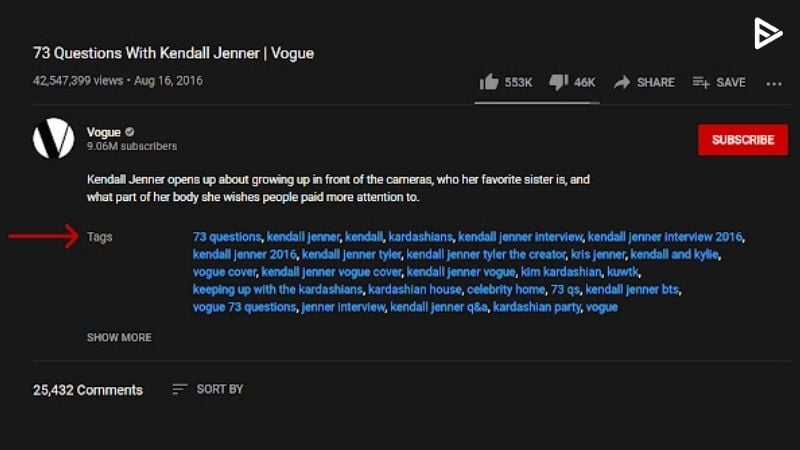
YouTube tags are keywords or short phrases that describe your video. They give the platform extra context about your topic, especially when your title uses a phrase people might search differently or spell incorrectly.
In practical terms, tags help answer the question: what is this video really about? They can reinforce your subject, niche, and audience intent when YouTube processes your metadata alongside the title, description, and transcript.
Why Tags Still Matter
So, how important are tags on YouTube in 2026? They matter, but not as much as they once did. Current guidance from Google says tags are useful, yet the title, thumbnail, and description are more important for discovery.
The best way to think about tags is as a context layer. They help YouTube categorize your video, support long-tail search variations, and cover alternate spellings or related phrases. They also help when your content belongs to a niche with overlapping terminology.
How Important Are Tags on YouTube Videos?

How important are tags on YouTube videos compared with other SEO elements? They are secondary, not central. Search, suggested videos, and browse features are driven more strongly by how compelling your title and thumbnail are, and by how well viewers respond to the video after clicking.
That means tags should not be your main optimization effort. They are worth adding, but only after you have nailed the following:
- A clear title with the target keyword.
- A description that explains the topic naturally.
- A thumbnail that drives clicks.
- A video that holds attention and keeps viewers watching.
How Tags Help YouTube SEO
Tags can still help in a few important ways. First, they make it easier for YouTube to classify your content correctly when your topic is broad or competitive. Second, they can support misspellings, abbreviations, and synonym variations that appear in real search behavior.
Tags are also useful for reinforcing topic consistency. If your title, description, transcript, and tags all point to the same subject, YouTube gets a cleaner signal about the video’s purpose. That consistency can help the platform match your content with the right audience.
Best Tag Strategy
The smartest strategy in 2026 is to use a small set of highly relevant tags. Multiple current sources point to relevance over volume, with creators commonly recommending around 5 to 10 focused tags, or roughly 10 to 20 in more aggressive setups, rather than stuffing dozens of weak ones.
Use this structure:
- Start with your main keyword.
- Add close variations.
- Include a few broader topic tags.
- Add one or two common misspellings or alternate spellings if relevant.
- Avoid irrelevant or trendy tags that do not match the video.
For example, a video about tag optimization could use:
- What are YouTube tags
- YouTube tags importance
- YouTube seo tips
- How important are tags on YouTube
- What are YouTube tags, and why are they important
That keeps the set focused while still covering the target keyword and supporting phrases.
Common Mistakes To Avoid
Many creators still overestimate what tags can do. Tags will not rescue weak content, low retention, or a bad thumbnail. If the video itself is not strong, tags cannot carry the ranking work.
Avoid these mistakes:
- Tag stuffing.
- Using unrelated trending keywords.
- Repeating the same phrase in slightly different forms too many times.
- Ignoring title and description quality.
- Forgetting to update tags when a video’s angle changes.
Also, do not treat tags as the same thing as hashtags. YouTube tags are private metadata for the algorithm, while hashtags are visible labels in the description.
How To Add Tags
You can add tags when uploading a new video or when editing an existing one in YouTube Studio.
For new uploads:
1. Open YouTube Studio.
2. Start the upload flow.
3. Open More options.
4. Add your tags in the tag field.
5. Save the video.
For existing videos:
1. Open YouTube Studio.
2. Go to Content.
3. Select the video.
4. Click Show more.
5. Edit the tags and save.
This makes it easy to refresh older uploads without republishing them.
Tools to Extract YouTube Tags
You can find tags using the online tags extractor tool. The tools find tags using the video metadata. For example, some tools use the YouTube API to find relevant tags. There are web tools and extensions that scan the HTML code of a video and find embedded tags.
There are also SEO tools that give you tags that are relevant and trending. You can also find tags by doing competitor analysis. Recently, creators started relying on AI YouTube tag extractor tools because they are quick, easy, and provide relevant tags.
Mostly, these tools need a video URL or metadata. Let’s see some of the helpful tools:
- TubeRanker
- ToolsOverflow
- VeeFly’s AI YouTube Tag Extractor
- TagBuilder
Updated 2026 View
The 2026 view of YouTube SEO is simpler than older advice suggested. Recent sources stress that YouTube now leans heavily on AI-based context understanding, which reads the title, thumbnail performance, transcript, retention, and tags together. In that system, tags help, but they are no longer the main lever.
That means your content strategy should prioritize:
- Search intent.
- Click-through rate.
- Watch time.
- Audience retention.
- Clear topical consistency.
If you update an older post about tags, this is the most important shift to include. It keeps the article accurate and aligned with current guidance.
Final Take
If you are still asking what are YouTube tags and why are they important, the answer is simple: they help YouTube understand and organize your video, but they are not the biggest SEO factor. The more accurate question in 2026 is how important are tags on YouTube compared with the rest of your optimization stack, and the answer is “useful, but secondary”.
For best results, use tags to support a strong title, description, thumbnail, and retention strategy. That approach is more realistic, more current, and more likely to improve rankings over time.
Frequently Asked Questions
Q1. Is there any limit for tags on YouTube?
You can add as many tags as you want, but the total character limit is up to 500 characters. Most videos have 5 to 8 tags.
Q2. Do YouTube tags help with views?
Yes, YT tags help you get views. But they are limited compared to the title, description, thumbnail, etc. They also allow the platform to categorize your video and suggest it in the search results.
Q3. Do tags affect the YouTube algorithm?
Yes, tags affect the YouTube algorithm. However, tags help only in categorizing; other factors, such as title and description, play a more important role.
Q4. Do tags increase YouTube views?
Although not a primary reason, tags can still contribute to YouTube views. Tags tell the YouTube algorithm the topic and context of your video. Also, put your videos in relevant queries and YouTube recommendations.
Q5. Do tags help videos show up in search?
Yes, it help videos show up in search results. The tags provide context to the algorithm, which helps the algorithm suggest videos to relevant users.