


Key Takeaways
- The best video essays on YouTube blend research-driven commentary with visual storytelling, holding viewers far longer than typical tutorials or vlogs.
- Focused niches signal clarity to the algorithm and help you own a corner of YouTube searches and suggested feeds.
- Titles, thumbnails, and metadata directly control click-through rates
- Cross-platform teasers on Tiktok and Instagram reels funnel new audience back to your long-form content.
- AdSense, sponsorships, memberships, and licensing stacks to create multiple income streams once you pass 1,000 subscribers
- Consistency beats perfection; shipping one polished essay every two weeks outperforms waiting for a cleaner execution. Analytics reveal exactly where viewers drop off, which topics resonate, and how to refine your next upload.
What Is a YouTube Video Essay?
A video essay presents an argument, analysis, or narrative thesis through spoken commentary paired with visual evidence. You are building a case or exploring an idea rather than teaching a step-by-step process. Think of it as a written essay that happens to use creative elements instead of just putting things on paper.
It’s different from documentaries, as it prioritizes objective reporting and tutorials over skill transfer. You might dissect a film’s cinematography, trace the evolution of subculture, or argue why a particular historical event still matters. The essayist’s voice drives the piece and weaves them together. As a creator, you need to understand that the audience values this format because it scratches the itch for both entertainment and engagement.
Why Are Video Essays Popular on YouTube?
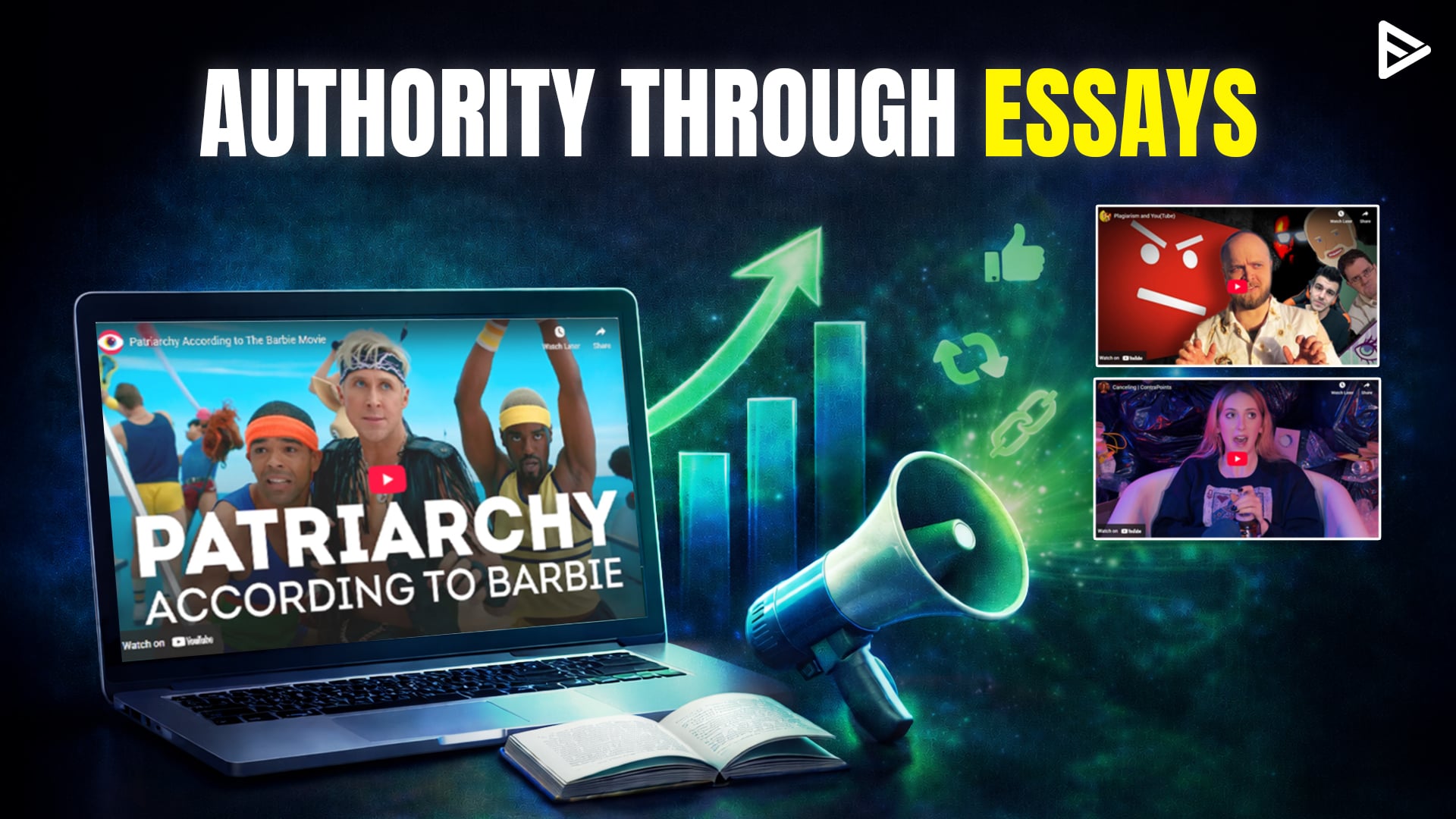
Established YouTube creators like ContraPoints and Jacob Geller, who have tapped into the genre of film analysis and social commentary to master the craft of video essays, are here to explain why many budding creators are choosing to be video essayists on YouTube:
- YouTube’s recommendation algorithm rewards session time; when viewers stick around for a video above 20 minutes, YouTube interprets that as high satisfaction and pushes your content to similar audiences.
- The next generation prefers education that’s accessible and engaging, hence when you present essays that cover well-researched topics with layered visuals, the audience base sets up smoothly.
- Search and suggested feeds favor the video essay format because YouTube wants viewers to stay on the platform for longer. Consistently, the more time viewers spend on the channel, the more likely they are to subscribe.
- Advertisers also pay more for longer paid ad placements. According to YouTube’s open-source data creators, in niche topics like philosophy, architecture, and investigative journalism, regular reports show that platform RPMs average.
- Community and shareability are enhanced when viewers who appreciate the depth. The organic word of mouth slowly compounds over time, resulting in a loyal fan base.
How to Grow on YouTube with Video Essays?
Even though they are gaining momentum, not everyone can capitalize on them. It’s important to keep in mind some pointers before producing the content:
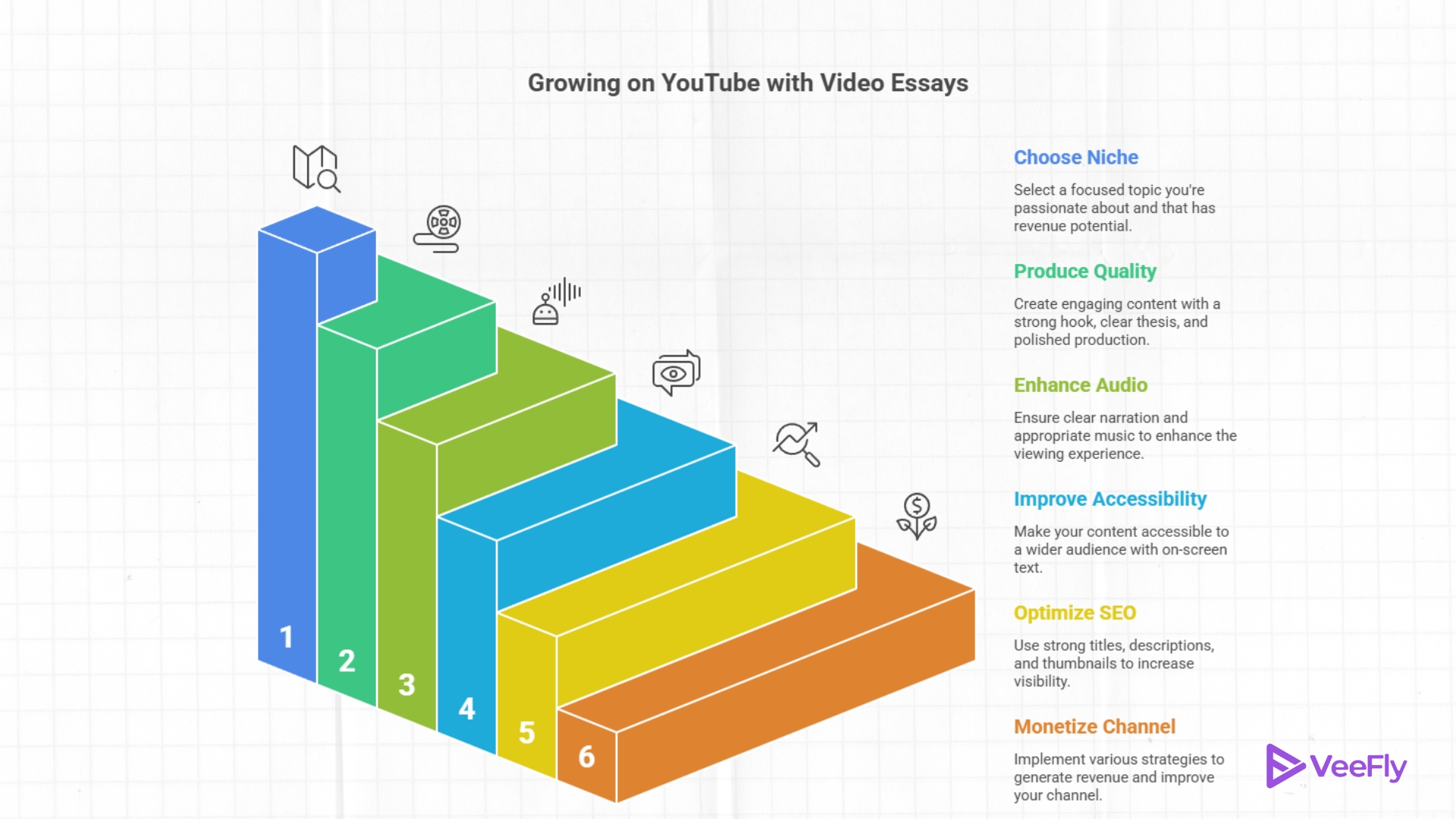
1)Choosing Video Essay Niche: A focused niche helps the algorithm to understand who you serve and signals to the viewer that you are the go-to source for a specific topic. Broad channels confuse the recommendations. It becomes non-negotiable to list topics you can talk about for hours without notes. Authentic enthusiasm will reflect better on screen as well. Further, make sure the niche you are sticking to also attracts revenue.
2)Well-Produced Video Essays: Story and production polish separate video essays that get shared from those that get skipped. Open with a hook that poses a question, presents a contradiction, or teases a surprising conclusion. The first 30 seconds decide whether viewers stay or bounce. Then lay out your thesis clearly so the audience knows where you’re headed.
3)Audio & Voiceover Quality: Apply noise reduction and normalization in post-production. License royalty-free music from YouTube’s Audio Library. Keep music low enough that it enhances the mood without competing with your narration.
4)Accessibility: Display key quotes or thesis statements as on-screen text so viewers can screenshot and share. Accessibility features aren’t just ethical; they expand your reach.
5)SEO Optimization: Metadata acts as a signal to both the algorithm and potential viewers. Strong titles and descriptions drive click-through rates, which directly impact how often YouTube recommends your content. Make sure to do basic keyword research. Generate YouTube thumbnails that give clicks.
How to Monetize Your Video Essays?
Revenue helps improve the channel, enhancing production quality and attracting more viewers. Here’s how you can keep the income stream flowing:
- Join the YouTube Partner Program once you hit 1,000 subscribers and 4,000 watch hours. Niche topics command higher CPMs than entertainment. Place mid-roll ads every 8-10 minutes in videos over 15 minutes long without disrupting narrative flow.
- Reach out to brands aligned with your niche once you cross 5,000 subscribers. Draft a one-page media kit showing your demographics, average views, and engagement rate.
- Offer exclusive perks like early access to videos, behind-the-scenes scripts, or monthly Q&A sessions. Patreon takes a 5-12% fee depending on the tier; YouTube Memberships take 30% but integrate natively.
- Launch a course teaching your research or editing process if you’ve built enough authority.
Final Thoughts
Building a video essay channel rewards patience, iteration, and a willingness to learn from data. Pick one tactic from this guide and implement it this week. Test a new thumbnail style, draft your first three video ideas, or record a practice voiceover. Growth compounds when you show up consistently and refine based on what your analytics reveal.
Frequently Asked Questions
Q1)What’s the ideal video essay length for retention?
Aim for 12-20 minutes. This range is long enough to satisfy watch time goals without testing viewer patience. Break longer topics into series or include clear chapters so viewers can return later.
Q2)Do video essays need an on-camera presence?
No, Many successful essayists never show their face, relying entirely on voiceover and visuals. On-camera segments can boost connection, but aren’t required if your script and editing hold attention.
Q3) What’s the best budget equipment setup?
A USB microphone ($80-$150), free editing software (DaVinci Resolve), and stock footage from Pexels or Pixabay cover the basics. Upgrade incrementally as revenue grows; production value matters less than strong storytelling.
Q4) How do I avoid copyright claims with footage?
Use clips under Fair Use (commentary, criticism, education) with proper context. Keep clips short, edit them, and cite your sources. Stock footage, Creative Commons material, and original recordings eliminate risk.
Q5)What’s a typical timeline to reach 1,000 subscribers?
Expect 6-12 months with weekly uploads and active promotion. Channels in high-demand niches with strong SEO can hit the milestone faster. Focus on improving each video’s CTR and retention rather than obsessing over the number.
