


Key Takeaways
- Artists can create multiple streams of income through ads, merch shelves, brand sponsorships, and Content ID.
- The YouTube Partner Program eligibility requires 1,000 subscribers and 4,000 watch hours within one year.
- Content ID is a tool that identifies and monetizes your music when others use it in their videos.
- Even “Nano” creators (500–5k subs) can earn an average of $315 per video with sponsorship deals.
- Niche Success: Growing a channel, like gaming walkthroughs, requires high audience engagement over raw sub counts.
What Is YouTube Music Monetization?
YouTube Music Monetization is a process of earning revenue from music-related content on the YouTube Platform. You can earn money through multiple sources, including paid ads, YouTube Premium, fan funding features, and third-party distribution tools. You can also earn money beyond your upload. Through the Content ID system, you can earn money when others use your music.
YouTube is the number one platform for consuming music videos. With YouTube Music, you can access multi-format monetization, global reach, and YouTube features designed for artists. Monetized music includes original songs, music videos, instrumental beats, or covers.
How to Monetize Music on YouTube?
YouTube Music Monetization enables you to convert views into revenue. Here are a couple of ways to do that:
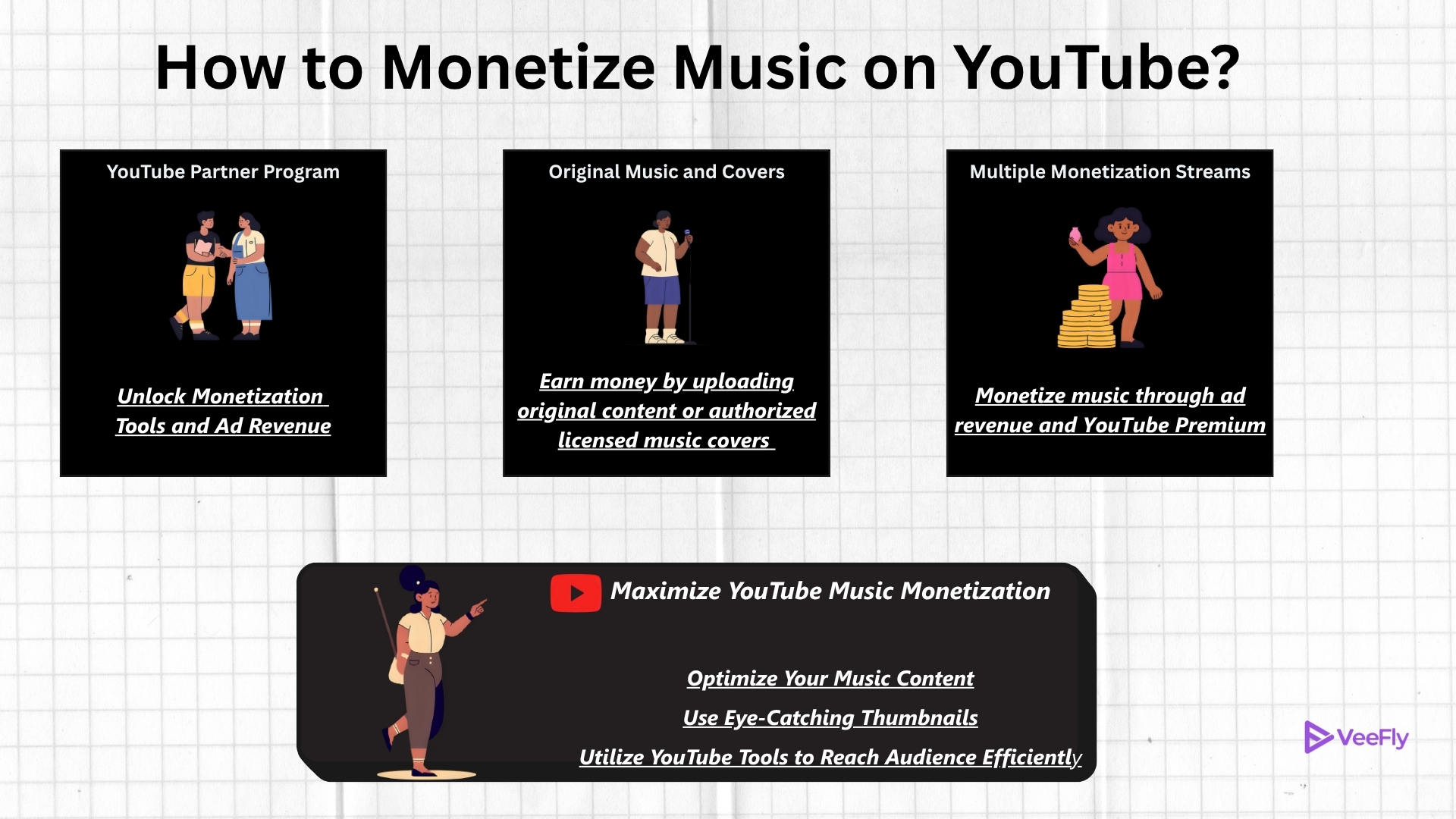
1. Join YouTube Partner Program
Before monetizing any content, you must be part of the YouTube Partner Program. It allows you to earn money through ads that will be shown during your content. Further, it unlocks various monetization opportunities as well. To join the YouTube Partner Program, you must have at least 1,000 subscribers and 4,000 watch hours in the past 12 months. If you create content through YouTube Shorts, you need to have 1,000 subscribers and 10 million views in the past 12 months.
It is essential to have a Google AdSense account linked to your YouTube Channel. Moreover, your channel should not have any active strikes. Once you are eligible, you can earn through Ad Revenue, YouTube Premium, Channel Membership, and other tools.
The most traditional way to monetize music on YouTube is through ad revenue. Once you reach the milestone of 1,000 subscribers and 4,000 watch hours, you can apply for the YPP. Once accepted, Google manages ad placements and payments through AdSense.
Common ad types include:
- Skippable In-Stream Ads: Viewers can skip after 5 seconds.
- Non-Skippable In-Stream Ads: Must be watched before the video starts.
- Bumper Ads: Short, non-skippable 6-second ads.
2. Using Content ID to Capture Missing Revenue
If you want to know how to monetize music even when you aren’t the one posting the video, YouTube Content ID is the answer. This service identifies when your music is used in other people’s content. Only original music is eligible; tracks containing uncleared samples will be denied. Once identified, you can claim the ad revenue from those videos. It can take up to 6 months for the system to fully scan older content.
3. Brand Sponsorships and Influencer Earnings
You don’t need millions of followers to land a brand deal. In fact, many brands prefer “Nano” or “Micro” influencers because of their highly engaged audiences. According to data from Klear, here is what creators can earn on average per video:
- Nano (500-5k subs): $315.
- Micro (5k-30k subs): $908.
- Power (30k-500k subs): $782.
- Celebrity (500k+ subs): $3,857.
YouTube values engagement over subscribers, and brands also have their priorities. Comment on all comments you receive to develop an engaged community.
4. Original Music and Covers
Uploading original music to YouTube enables you to monetize your content effectively. To fully monetize your music, you must own the composition, recording, and publishing rights. If someone else uses your work, you can also monetize it.
Further, if you choose to upload covers of other music, you can still monetize them to a certain extent. But the monetization here depends on the licensing. The monetization might be shared between you and the copyright holder.
5. Multiple Monetization Streams
Once you go through the monetization qualification, you can earn money through standard ad placements on videos. Furthermore, YouTube Premium allows you to earn money based on your channel’s watch time. Third-party distributor royalties can help you get paid when others use your streams.
Whether you are an independent creator or an artist signed by a label, YouTube Music Monetization is the most scalable revenue source in this digital music economy.
What Is Content ID and Why Is It Important?
Think of a system that scans every upload to detect copyright audio, video, or visual content. That’s precisely how Content ID works. YouTube’s automated copyright identification system helps you earn money from your music content. If you upload your music to YouTube and someone else uses it, Content ID will ensure you are paid for it and track its video performance. Based on this, it can decide whether to block it.
Content ID helps you earn revenue from other creators who use your music, even as a background track or remixes. Content ID is available to verified right holders. If you are an artist working with YouTube-approved distribution partners, you can also use Content ID.
Keep in mind that unless you work with a certified partner or own 100% of the rights to your music, you can’t directly upload your music to Content ID. Similarly, if you upload covers or remixes of other music artists, check whether it’s eligible for revenue sharing. Uploading copyrighted music without proper licensing can lead to demonetization, video takedowns, or even channel strikes.
How Much Can You Earn From YouTube Music Monetization?
Ad revenue is calculated using Cost Per Millie (CPM) and Revenue Per Millie (RPM). The cost per 1,000 impressions and what the creator actually earns per 1,000 views vary. The average CPM is around $2-$5, while RPM is 40-50% of CPM, after YouTube’s cut.
Additionally, you can earn through YouTube Premium users as well. Since the users don’t see ads, they spend more time viewing the content. Based on how much they spend watching your videos, you’ll be paid a portion of their subscription fee. Music distributors offer additional ways to monetize YouTube, providing payouts per stream.
Tips to Maximize YouTube Music Monetization in 2025
If you are not monetizing your music efficiently, you are missing out on good opportunities. You don’t have to wonder how to make money on YouTube as a musician, here are some ways to make the most out of it:
- Use SEO friendly video titles. Include relevant keywords in your video description. Further optimize metadata by adding tags.
- Design appealing thumbnails and maintain consistent branding throughout your videos to enhance their visual appeal.
- Utilize shorts and livestreams to reach your audience efficiently.
Final Thoughts
YouTube Music Monetization in 2026 demands a multi-faceted approach. Although earning money from the Partner Program via ads is a wonderful start, having a YouTube Merch Shelf and using Content ID will ensure you do not miss out on any extra earnings. As far as monetizing music on YouTube is concerned, the trick is to maintain consistency and build a very dedicated audience, whether by playing guitar or video games.
Frequently Asked Questions
Q1. How do I monetize my merchandise using my music on YouTube?
If you are part of the YouTube Partner Program, then you can use YouTube Merch to list your brand products and directly tag them in your video or promote them using the community tab.
Q2. How to Monetize YouTube Videos With Copyrighted Music?
You have to obtain permission or a license from the copyright holder. Some copyrighted songs allow revenue sharing to the rights owner. Without permission, you can’t monetize the video yourself.
Q3. How Does Content ID Help Musicians?
Content ID automatically scans YouTube for matches to your music. It helps you monetize if someone else uses the music you have created.
Q4. Are Shorts Monetized For Musicians?
Yes, Shorts generate ad revenue from shared creator funds. Furthermore, YouTube Shorts will facilitate quick promotion and virality.
Q5) Can I Monetize Cover Songs on YouTube?
Yes, if you have proper licensed covers or have authorized permission from the copyrighted holder, you can monetize covers of other music to a certain extent.