


Key Takeaways:
- Understanding YouTube’s algorithm signals helps you prioritize watch time, click-through rate, and viewer satisfaction over vanity metrics.
- Organic tactics like SEO optimization, collaboration, and Shorts integration build sustainable growth without ad spend.
- Paid promotion through Google Ads delivers targeted views when paired with solid content fundamentals and audience targeting.
- Tracking the right metrics and avoiding common promotion mistakes ensures your strategy scales without wasted effort.
What Is A YouTube Promotion Strategy?
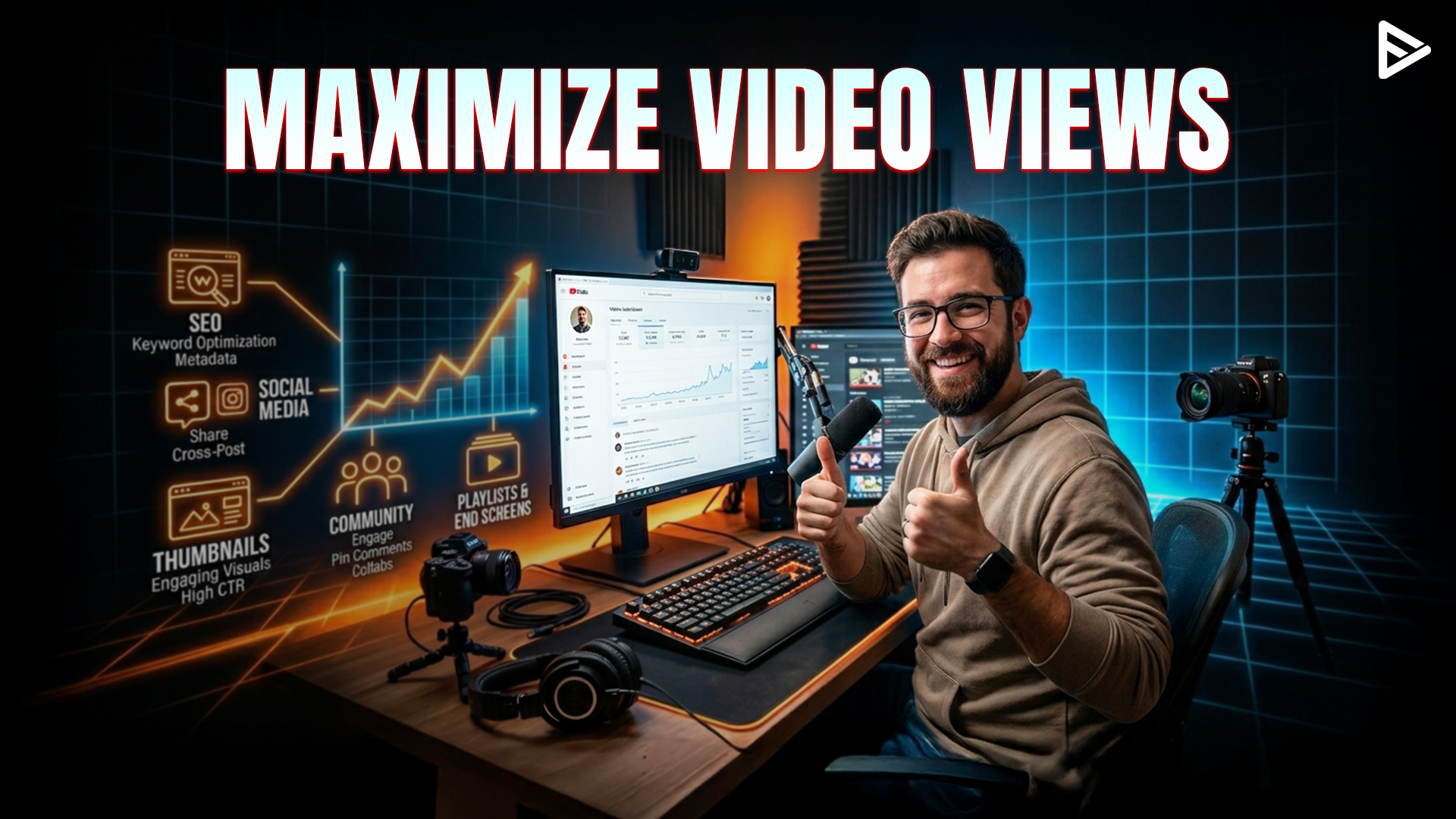
A YouTube promotion strategy is a combination of organic and paid tactics designed to increase your video’s impressions, watch time, and subscriber conversions. YouTube promotion includes on-platform optimization, such as metadata refinement and playlist organization, as well as off-platform activities, including cross-promotion, influencer partnerships, and targeted ad campaigns. According to YouTube’s official guidance, promotion works best when paired with content that satisfies viewer intent and drives repeat engagement.
How Does the YouTube Algorithm Impact Promotion?
YouTube’s recommendation system drives the majority of watch time on the platform, making algorithmic promotion the highest-leverage growth channel for most creators. The platform’s public guidance explains that recommendations and search results are tuned using watch history, engagement signals like likes and “Not interested” feedback, and viewer satisfaction metrics.
One of the most important YouTube promotion tips is to optimize for these signals rather than trying to game the system with clickbait or keyword stuffing. YouTube prioritizes videos that keep viewers on the platform longer. That means your average view duration and session watch time matter more than total views. A video that retains 60% of its audience for 8 minutes outperforms one that gets twice as many clicks but loses viewers after 2 minutes.
The algorithm also rewards consistency, Creators who publish regularly train the algorithm to expect new content, increasing the likelihood that each upload receives initial traffic. Gaps in your upload schedule reset this momentum. Research from Think with Google shows that viewers use YouTube for both information and entertainment, and their watch patterns differ based on intent. Aligning your promotion strategy with viewer behavior means optimizing for the intent your content serves.
Essential Steps Before Starting a YouTube Promotion Strategy
Promoting low-quality content wastes money and erodes audience trust, so your priority should be ensuring your videos are worth promoting. Here’s what to follow:
- Start with a clear value proposition; every video should answer a specific question, solve a problem, or deliver entertainment that justifies the viewer’s time.
- Clean sound matters more than 4K resolution. Viewers tolerate lower video quality but abandon videos with poor audio.
- Edit out dead air, repetition, and tangents. Retention curves reveal where viewers drop off.
- Your thumbnail must match the actual content of your video. Misleading thumbnails spike initial clicks but tank retention and hurt future recommendations.
- Tell viewers what to do next with a strong call to action. Subscribe to prompts, playlist links, and related video suggestions to keep viewers in your ecosystem.
- Audit your last five uploads in YouTube Studio. Sort by average view duration. If most videos lose 50% of viewers before the halfway point, promotion will amplify the problem rather than fix it.
Organic YouTube Promotion Strategies That Work
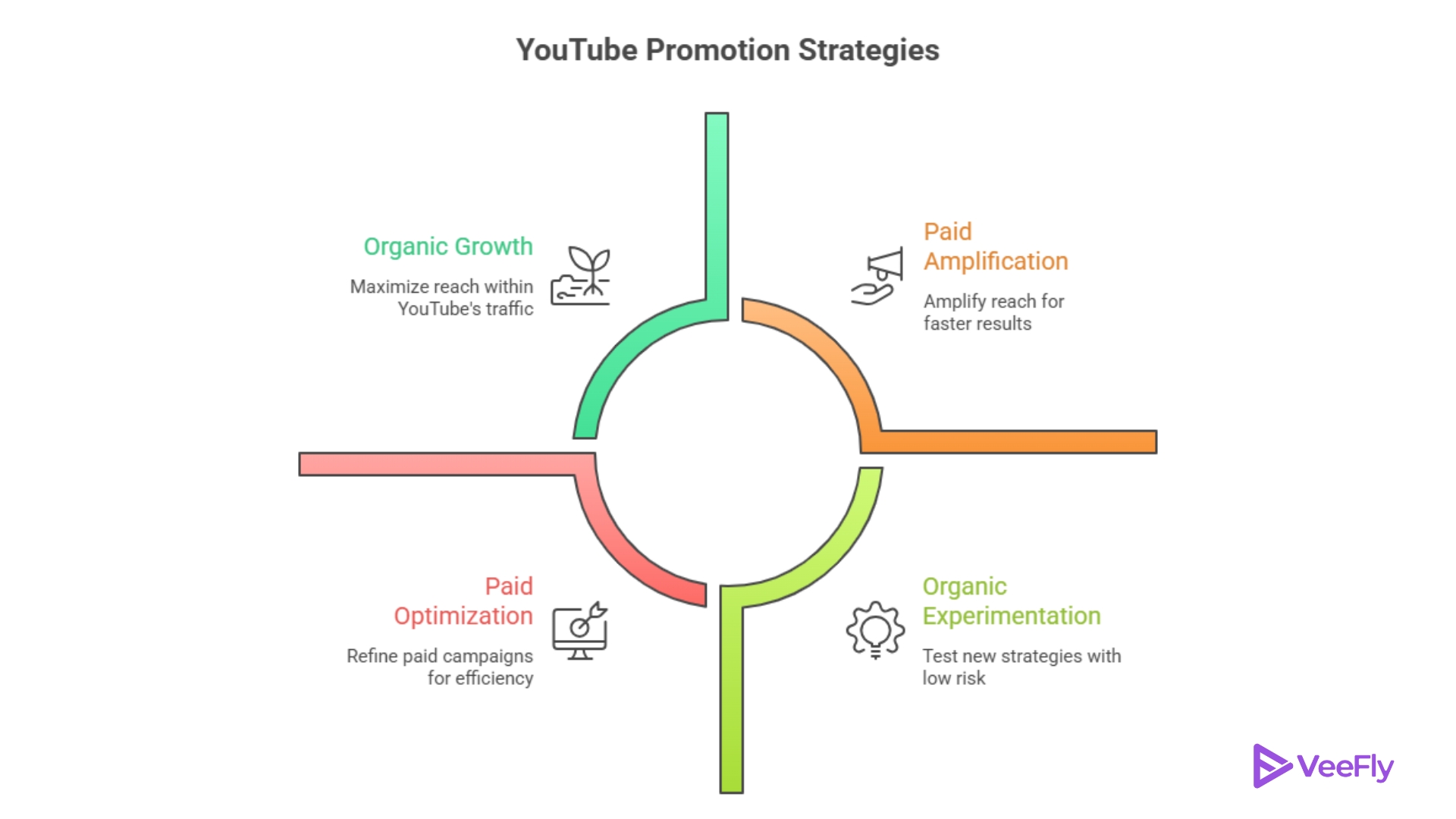
Organic YouTube promotion strategies compound over time; these tactics focus on maximizing your reach within YouTube’s existing traffic sources:
1)Optimize for YouTube Search (SEO): One of the most effective YouTube video promotion tips is front-loading your primary keyword in your title and description. Look for search terms with enough monthly volume to matter but low enough competition that a smaller channel can rank.
2)Use Suggested Video Strategy: Suggested videos next to and after high-performing content in your niche deliver more views than search for most channels. Create content that fits naturally next to those videos. Viewers should recognize your video as related content without confusing it with the original.
3)Leverage YouTube Shorts for Traffic: Pin your best long-form video as a comment on every Short. Direct Shorts viewers to deeper content that builds watch time and subscriber intent. Track conversion rates in YouTube Studio to see which Shorts actually drive channel growth, not just vanity metrics.
4)Promote Your Videos Outside YouTube: Cross-platform distribution expands your audience beyond YouTube’s algorithm and brings new viewers into your ecosystem. Sharing your videos on social platforms, email lists, and communities requires adapting your message to each channel’s format and norms. The platform tracks how viewers arrive at your video and rewards content that attracts audiences from diverse sources.
5)Collaboration As A Growth Multiplier: Collaborations work best when both creators share a similar audience size and niche. Reach out to creators with 50% to 200% of your subscriber count. Propose collaboration ideas that deliver value to both audiences. Compare the subscriber conversion rate from collaboration videos to your baseline.
When to Use YouTube Paid Promotion?
Paid promotion through Google Ads amplifies reach for creators and brands that need faster results than organic growth alone provides. YouTube offers multiple ad formats, making them ideal for content that solves specific problems. Paid promotion works best under these conditions:
- You have validated content with strong organic retention and engagement.
- You are launching a new channel and need initial momentum to train the algorithm.
- You are promoting time-sensitive content, such as product launches or event coverage.
- You have a specific subscriber or revenue goal with a defined timeline.
Best YouTube Promotion tools in 2026
As YouTube continues to evolve, leveraging the right tools to promote your videos effectively becomes crucial. Here are the top YouTube promotion tools creators can rely on in 2026 to maximize reach, optimize content, and grow their channels:
1. VeeFly
- Purpose: Streamlined paid promotion platform integrating with Google Ads.
- Why It’s Great:VeeFly simplifies running targeted cost-per-view ad campaigns, even with low budgets. Its intuitive dashboard helps you identify your ideal audience by location, interests, and keywords, perfect for scaling paid YouTube video promotion without complex setups.
- Best For: Creators and brands wanting to boost views and subscribers quickly through paid ads.
2. TubeBuddy
- Purpose: Comprehensive YouTube SEO and channel management tool.
- Why It’s Great: TubeBuddy offers keyword research, tag suggestions, YouTube thumbnail A/B testing, and bulk metadata editing. Its real-time analytics help optimize videos for search and suggested traffic.
- Best For: Creators focused on organic growth through search optimization and metadata refinement.
3. vidIQ
- Purpose: AI-powered video optimization and competitor analysis.
- Why It’s Great: vidIQ provides insights into trending topics, engagement metrics, best posting times, and competitor strategies. Its AI-driven recommendations help tailor your promotion tactics for maximum impact.
- Best For: Data-driven creators looking for actionable insights to refine their promotion strategy.
Common YouTube Promotion Mistakes To Avoid
For YouTube promotion strategy, Even experienced creators fall into promotion traps that limit growth or damage their channel reputation:
- Services that promise instant growth deliver bot traffic that YouTube detects and penalizes. Fake engagement tanks your algorithmic performance and can result in channel termination.
- Creators obsess over view counts while ignoring that 80% of viewers leave after 30 seconds. Promotion amplifies reach but cannot fix retention problems. Audit your content before scaling promotion.
- YouTube evaluates new uploads based on early performance. Promote heavily in the first 72 hours, then maintain steady distribution afterward.
- Inconsistent posting resets algorithmic momentum. Pick a realistic schedule and stick to it.
- Targeting the wrong audience with paid ads wastes money. Running ads in countries where your content’s language or topic is irrelevant yields cheap, useless views.
Final Thoughts
Sustainable YouTube growth combines consistent content quality, smart organic tactics, and strategic paid promotion when it makes sense for your goals. Create videos worth watching, optimize for search and suggested traffic, and build a repeatable promotion checklist to execute on every upload. Once organic momentum builds, layer in paid campaigns to scale reach faster. YouTube Promotion is not a one-time event; it is a system you continually improve. Test new tactics, measure results, and double down on what works for your specific niche and audience.
Your next step is simple, audit your last five uploads, identify the highest-retention video, and run a small promotion test using the tactics in this guide. Track what happens, refine your approach, and repeat. Consistent promotion paired with valuable content is how channels grow from zero to 10,000 subscribers and beyond. Start building your system today.
Frequently Asked Questions
Q1)What Is The Best YouTube Promotion Strategy For New Channels?
New channels should prioritize organic SEO and collaboration. Optimize every video for search with keyword research, detailed descriptions, and strong thumbnails. Partner with creators at a similar subscriber level to cross-promote content.
Q2)How Much Does YouTube Video Promotion Cost?
Cost varies by method. Organic promotion is free but time-intensive. Paid Google Ads campaigns start around $10 and typically range from $0.01 to $0.30 per view, depending on targeting and competition.
Q3)When Should I Use Paid Promotion Instead Of Organic Growth?
Use paid promotion when you need faster results, are launching time-sensitive content, or have validated high-retention videos that convert viewers to subscribers organically. Avoid ads for low-retention content.
Q4)How Do I Know If My Promotion Strategy Is Working?
Track impressions, click-through rate, average view duration, and subscriber conversion rate in YouTube Analytics. If these metrics improve week over week, your promotion is working. If they stagnate, test new tactics.
Q5)Can I Promote YouTube Videos On Other Social Platforms?
Yes. Cross-platform promotion works well when you tailor your message to each platform. Share key insights on X, write problem-solving posts on LinkedIn, and embed videos in email newsletters for best results.
Q6)What Are The Best Tools For YouTube Promotion?
Tools like VeeFly simplify paid promotion by integrating with Google Ads and enabling audience targeting. TubeBuddy and vidIQ offer SEO and analytics features. Choose based on whether you need paid reach, optimization help, or both.
