



Key Takeaway
-
Use the YouTube Analytics dashboard anytime to replace guessing with data on views, watch time, engagement, audience behaviour, and traffic sources.
-
You can also monitor your content’s performance by tracking YouTube analytics data, including impressions, click-through rate, average view duration, audience retention, unique viewers, and returning viewers.
-
Replaces guesswork with hard data on views, watch time, and engagement to optimise your content strategy.
-
Identifies which elements, such as thumbnails, titles, and demographics, drive audience retention and subscriptions.
-
Helps track seasonal trends and audience behaviour to build a long-term roadmap for scaling and monetisation.
-
Leverages the native YouTube Studio dashboard alongside third-party tools (VidIQ, TubeBuddy) for advanced SEO and competitor research.
- YouTube’s dashboard analytics provide insights into how viewers find, watch, and engage with your content.
Understanding the YouTube Analytics Dashboard Metrics
The YouTube Analytics Dashboard lets creators track channel performance and metrics such as views, watch time, subscribers, impressions, click-through rate, audience retention, and traffic sources. These YouTube analytics stats help creators spot trends in their content, understand viewer behaviour, and make data-informed decisions using the YouTube dashboard analytics.
“We think about Studio as a creative partner for the creator at every stage of their journey.”
— Ebi Atawodi, Product Management Lead, YouTube
What Is YouTube Analytics and Why It Matters
YouTube Analytics is an all-in-one, native analytics solution in YouTube Studio that tracks channel performance using metrics such as views, watch time, subscribers, and demographics. This tool is essential because it lets creators monitor viewer behaviour, improve content strategies, optimise thumbnails to increase click-through rates, and track earnings. YouTube’s dashboard analytics provides insights into how viewers find, watch, and engage with your content.
Key aspects of YouTube Analytics:
- Core Metrics: Tracks views, subscriptions, and watch time, a key engagement metric.
- Audience Insights: Breaks down demographics (age, gender, geography), interests, and devices to help optimise content.
- Content Performance: Reports viewer engagement with videos, including average view time, retention rate, and engagement metrics such as likes and shares.
- Traffic Sources: Reveals how viewers are accessing videos (e.g., YouTube search results, suggested videos, or other websites).
- Revenue Tracking: Partners will see ad revenue, membership, and other monetization strategies.
- Real-Time Data: Offers real-time, minute-by-minute data, although it is not the only area of interest.
Why It Matters
- Data-Driven Decisions: Helps creators understand what kind of content performs well.
- Content Optimisation: Helps you understand where the audience drops off, helping you optimise content.
- Audience Growth: Shows when your audience is most engaged, helping you schedule content.
- SEO Improvement: Assists in understanding what search terms are being used to access the content, thus improving video titles and descriptions.
Benefits of keeping track of YouTube Analytics
Regularly monitoring YouTube Analytics can also help you compare content over time, rather than judging a video on views alone.
| Metric | What It Helps You Understand |
| Views | How many views your content received during a selected period |
| Watch time | How much time viewers spent watching your content |
| Impressions CTR | How often viewers watched after seeing a registered thumbnail impression |
| Audience retention | Which parts of a video keep or lose viewer attention |
| Returning viewers | How many viewers came back during the selected period |
| Traffic sources | Where viewers discovered your videos |
How to Access YouTube Analytics?
Accessing YouTube Analytics is easy, whether you are on a computer or a mobile device.
Accessing on Desktop (YouTube Studio)
To access your YouTube Analytics on your computer, follow these steps:
- Click on your profile picture in the top right corner of the screen.
- Select ‘YouTube Studio’ from the dropdown menu.
- Click on ‘Analytics’ from the left-hand menu.
This takes you to your primary analytics page, which shows an overview of your channel’s performance.
Accessing on Mobile (YouTube Studio App)
To access your YouTube Analytics on your mobile device, follow these steps:
- Download the YouTube Studio app on your smartphone or tablet.
- Open the YouTube Studio app.
- Log in with your YouTube account.
- Tap on ‘Analytics’ from the bottom menu or the left-hand menu (depending on the app version).
The YouTube Studio app is a great way to keep track of your latest video and channel performance on the go.
Understanding Key Metrics in the YouTube Analytics Tabs
YouTube Analytics breaks down its massive amount of data into easy-to-use tabs, each providing a different insight into your channel’s performance.
1. The Overview Tab
This tab summarises your channel’s performance, giving you a quick look at the most important information.
Top videos: The overview tab also displays your top-performing videos so far.
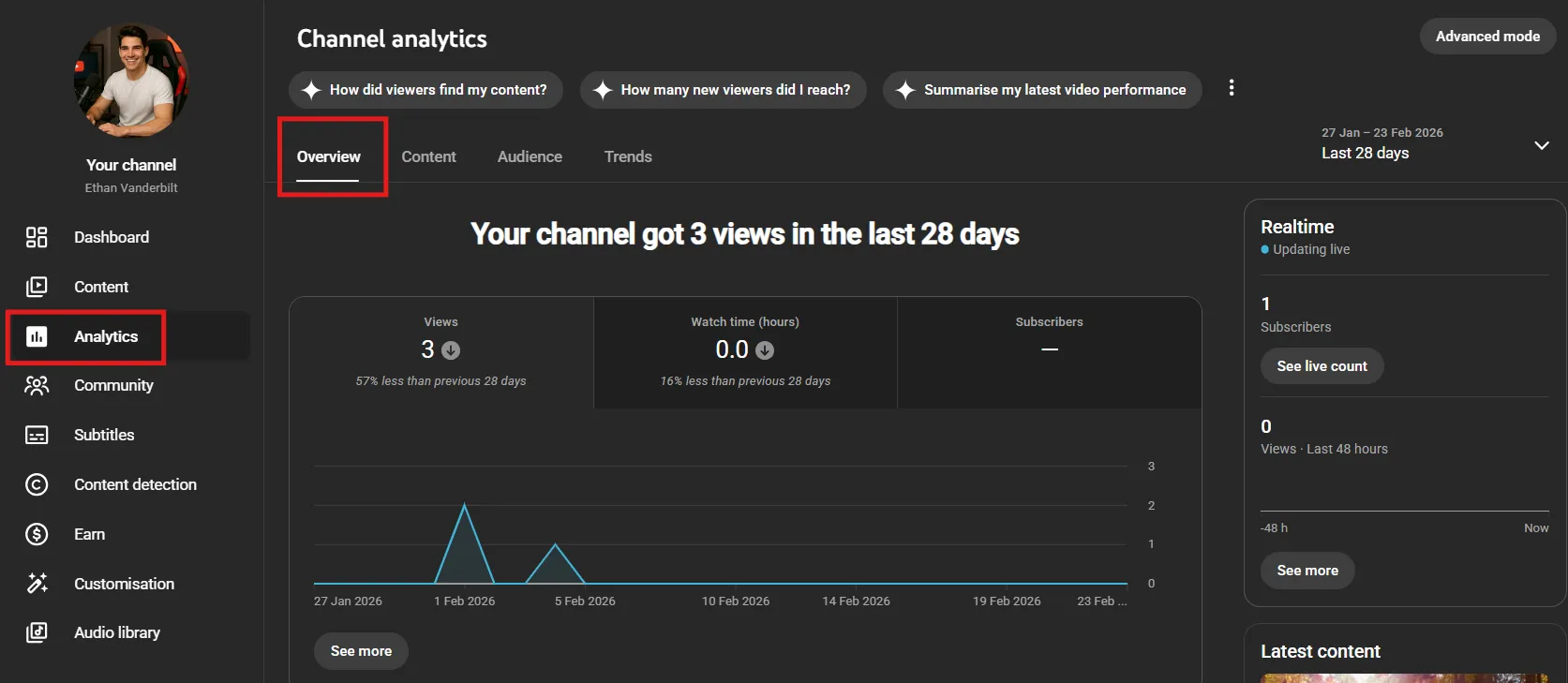
- Views: This metric shows how many times people have accessed your channel and viewed it within a chosen period. The minimum viewing time depends on the video length. Typically, 30 seconds is the standard minimum view.
- Watch time: The watch time metric provides an overall figure showing the total number of hours viewers have watched your channel.
- Subscribers: The subscribers metric is calculated by subtracting subscribers lost from subscribers gained.
- Real-time views: This metric shows the number of people who have accessed your video in the last 48 hours. This information updates in real time.
- Top videos: The Overview tab also shows your best-performing videos so far.
2. Real-Time Performance
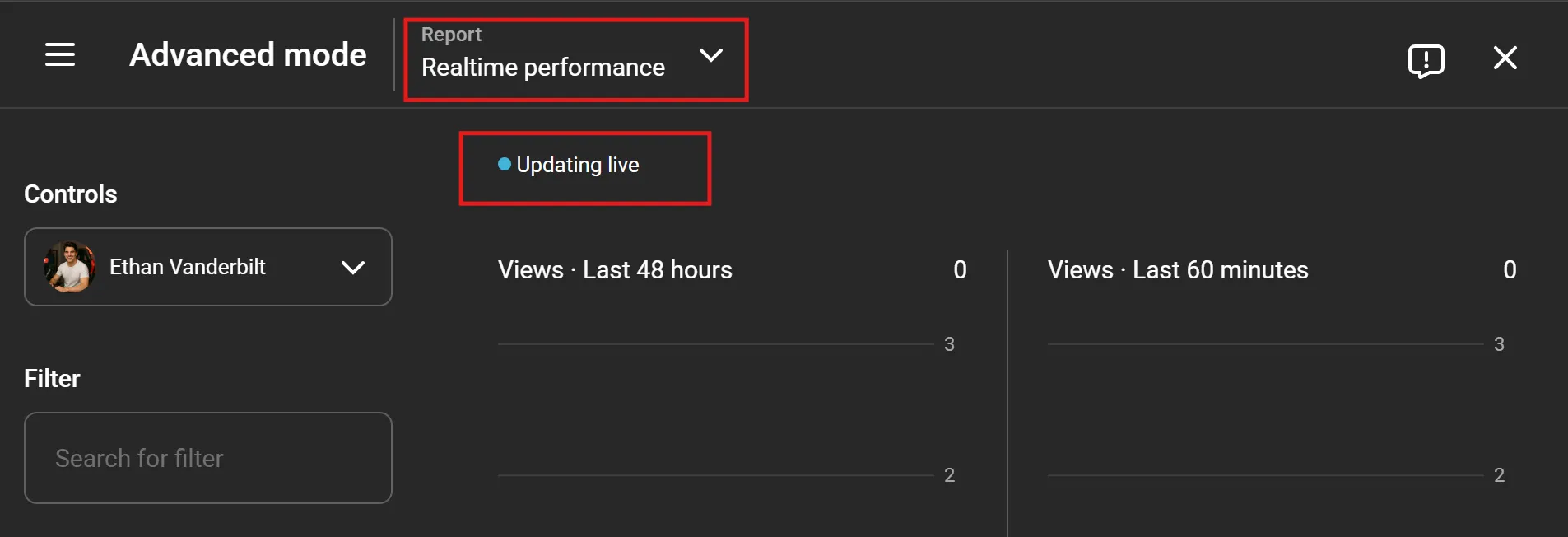
The “Real-time” report displays the total number of views your videos have received in the last 48 hours and the last 60 minutes. This is a quick way to check the performance of new videos or trending content.
For older videos, this report can also help you detect renewed interest in existing content. You can analyze these changes with traffic source and geography data to determine the origin of any new views.
You can use ongoing or older videos to identify re-emerging interest patterns, often tied to shifts in search demand or algorithmic surfacing. In addition to view metrics, you can analyse the Real-Time report alongside traffic source and geography information.
3. The Content Tab
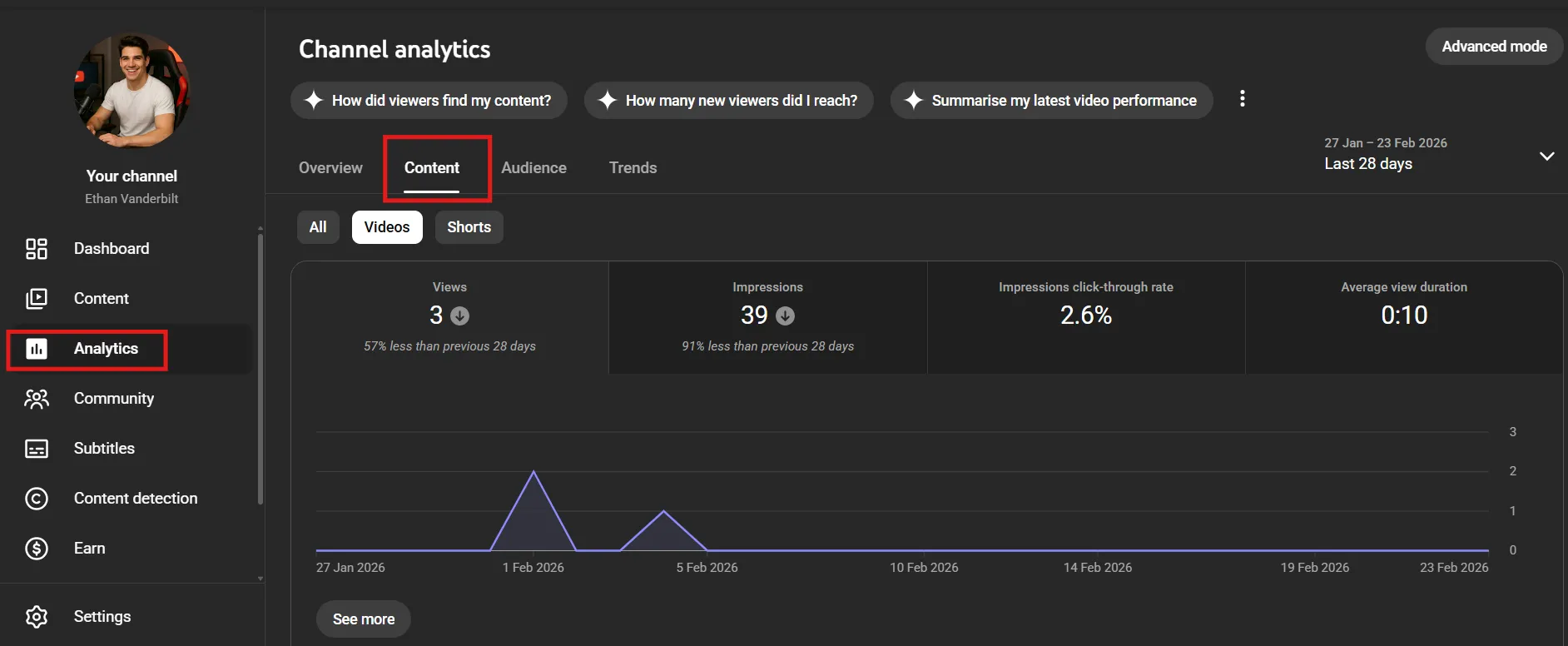
The ‘Content’ tab shows how your videos, Shorts, and Live content are viewed and interacted with.
Impressions and Click-Through Rate (CTR)
- Impressions: This is the number of times your video thumbnails were viewed by YouTube users (e.g., on the homepage, in search results, or in the ‘Up Next’ section).
- Impressions click-through rate: This is the percentage of impressions that led a user to click on your video and watch it. This indicates how attractive your video titles and thumbnails are.
4. Traffic Source in YouTube Analytics
This section will help you understand the sources of your views. Some of the common sources of traffic are:
- YouTube Search: Views from people searching for videos on YouTube.
- Browse Features: Views from the homepage, subscription feed, or ‘Watch Later’ feature.
- Suggested Videos: Views from videos suggested alongside or after other videos.
- External: Views from outside YouTube (such as social media sites).
5. The Audience Tab
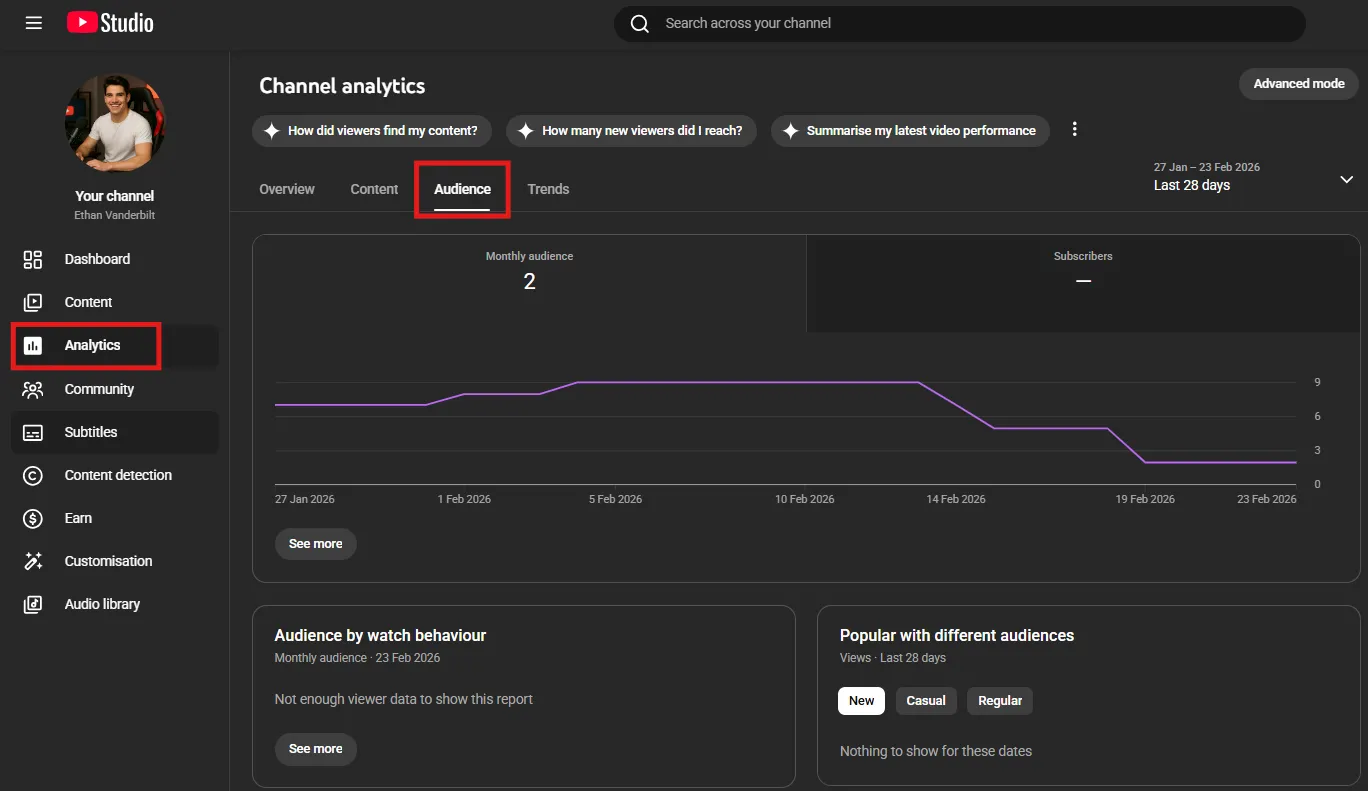
This is where you can learn more about your audience and gain insights into their behavior and demographics.
Returning vs. New Viewers & Unique Viewers
- New viewers: People who watched your channel for the first time during the chosen time period.
- Returning viewers: People who have watched your channel before and came back during the chosen time period. A good mix of both indicates growth and loyalty.
- Unique viewers: This is the total number of people who have watched your videos, irrespective of how many times they have watched.
How to use YouTube Analytics
YouTube Analytics in YouTube Studio helps video creators monitor channel performance through key reports covering Overview, Content, Audience, and Revenue.
The best data points depend on the creator’s goals, but average view duration, audience retention, traffic sources, impressions, and click-through rate can provide context when evaluating content performance.
Accessing YouTube Analytics
- Desktop: Go to YouTube Studio and click Analytics in the left menu for channel-level information.
- Video-Level: Click Content in the left menu, then hover over a video and click the Analytics icon.
- Mobile: Open the YouTube Studio app and tap Analytics.
Key Tabs and Metrics to Track
- Overview: Offers a broad summary of views, watch time, and subscribers for a selected period.
- Content: Breaks down where your viewers are coming from, with impressions, click-through rate (CTR), and key moments for audience retention.
- Audience: Examines who is watching your content, with unique viewers, returning viewers, age, gender, and geography.
- Revenue: Monitors estimated earnings from advertising, memberships, and other sources.
Final Thoughts
As a content creator on YouTube, you need to understand the YouTube analytics dashboard to grow your channel. Without it, expanding your channel’s reach to a new audience will be like finding a needle in a haystack. It provides massive data points about your channel’s performance that you can use to grow your YouTube channel. To conclude, we covered how to understand YouTube analytics, the nuances of each metric, and the benefits for growing your channel.
By continuously monitoring YouTube analytics, you can understand patterns in your content, gain better insight into your viewers, and make better decisions for your upcoming videos. VeeFly’s creator tools can also integrate with YouTube Studio to help you manage your channel growth on a larger scale.
Frequently Asked Questions
Q1. What metrics should I track on YouTube Analytics?
Focus on metrics like watch time, viewer sources, key demographics, engagement rate, audience retention rate, and average view duration per video.
Q2. What Is The Most Important metric for a YouTube channel?
The most important metric differs for each channel. Watch time, audience retention, average view duration, impressions, CTR, and returning viewers can reveal different insights depending on your channel’s content and focus.
Q3. Is YouTube Studio analytics free?
Yes, YouTube Studio is free, and every channel/account can use the feature at no cost.
Q4. How long does YouTube Studio analytics take to update?
Different YouTube Analytics reports have varying refresh schedules. Some information is available quickly, but other statistics may take longer to process. YouTube Studio displays the available data for the selected reporting period.
Q5. What is the YouTube analytics summary?
The YouTube analytics summary shows you an overview of the critical data and insights into your channel’s performance. It provides a quick snapshot of the key metrics, such as total views, watch time, and subscriber count.
