



Key Takeaways:
- YouTube’s real-time Content ID system will instantly mute or block your stream if unlicensed music or video is detected.
- A single community guideline violation on a livestream revokes your live streaming privileges for up to 14 days.
- You need at least 50 subscribers to live stream from a mobile device, and streams with fewer than 1,000 subscribers may face viewer limits.
- Streams marked as “Made for Kids” automatically have live chat and personalized ads disabled for COPPA compliance.
- Avoid shady engagement tactics and use compliant promotional tools to ensure your channel remains eligible for the YouTube Partner Program.
What are YouTube Live streaming Rules?
YouTube streaming rules are the official enforcement guidelines that govern live broadcasts, covering everything from Content ID copyright detection to community safety standards. They serve as the boundary for what is permissible on the platform in real time. These rules matter because live content is monitored heavily by automated systems that can instantly terminate non-compliant broadcasts.
Are There Any Restrictions to YouTube Streaming?
Many rules vary from YouTube mv streaming rules to live to stream! But first, we are targeting the restrictions on live streaming! You can take a look below for the reason why your channel may get banned.
- YouTube live stream rules can be applied when your channel has got community guidelines strike. This can be implemented if their guidelines are not respected in any sense.
- There can be global blockage which can act as a hurdle when you try to go live. Global blocking is also known as a content-id claim. This can take place when you have uploaded copyrighted content.
- There is also a time limit for live streams. You can’t stream more than the designated period. After you have maxed out the number of live streams, you can again try after 24 hours.
- There can also be chances where your features cannot find their way on YouTube. This can also lead to tumult when you live stream.
- This is the reason why you should know the streaming rules on YouTube. Another thing to keep in mind is that when you are prohibited from going live on your channel, you cannot use another channel to do so. Ignorance of this policy can lead to your account getting banned. You can also face YouTube live stream rules if there is any involvement of firearms.
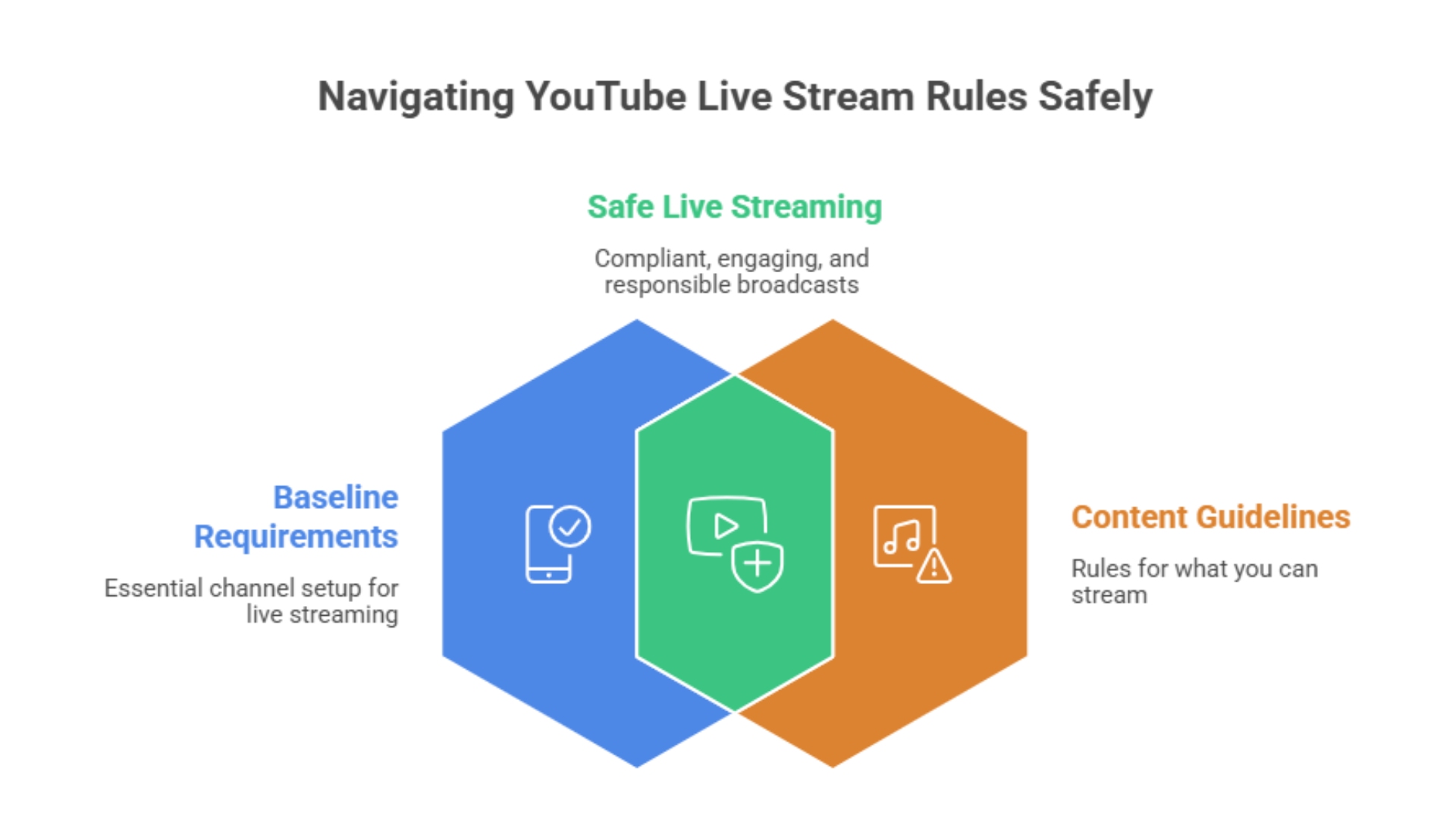
How to Navigate YouTube Live Stream Rules Safely?
- Before you can worry about content rules, you must meet the baseline requirements to go live. Channels must be verified with a phone number and must not have received any live streaming restrictions in the past 90 days.
- For mobile creators, the YouTube streaming guidelines are slightly stricter. You must have at least 50 subscribers to stream from a mobile device. If you have between 50 and 1,000 subscribers, your mobile streams may have viewer limits applied to prevent spam.
- Copyright is the most frequent stumbling block for live streamers. YouTube uses a highly advanced Content ID system that scans live broadcasts in real time. This system matches your audio and video against a massive database of copyrighted material.
- If you broadcast unlicensed music, movies, or even unpermitted gameplay footage, the system reacts instantly. YouTube will replace your stream with a placeholder graphic and mute your audio. If you do not stop the copyrighted media, the stream is permanently shut down.
- The YouTube live community guidelines mirror the rules for standard video uploads, but enforcement happens faster. Harassment, hate speech, explicit content, and dangerous acts are strictly prohibited.
- Creators are also responsible for their live chat. You must actively moderate your community or utilize automated tools to filter out spam and abusive language. Failing to moderate a toxic chat can result in a strike against the creator’s channel.
- If your livestream is targeted at children, you are subject to strict COPPA (Children’s Online Privacy Protection Act) compliance rules. YouTube requires creators to explicitly label their streams as “Made for Kids.”
Final Thoughts.
The fastest way to lose your channel is by treating a livestream like an unmoderated private video call. YouTube enforces stricter real-time moderation on livestreams to prevent the immediate spread of harmful content or severe copyright infringement. Understanding the rules for live streaming on YouTube isn’t just about basic compliance. It is fundamentally about protecting your primary revenue engine and ensuring your channel remains in good standing.
